fufufafa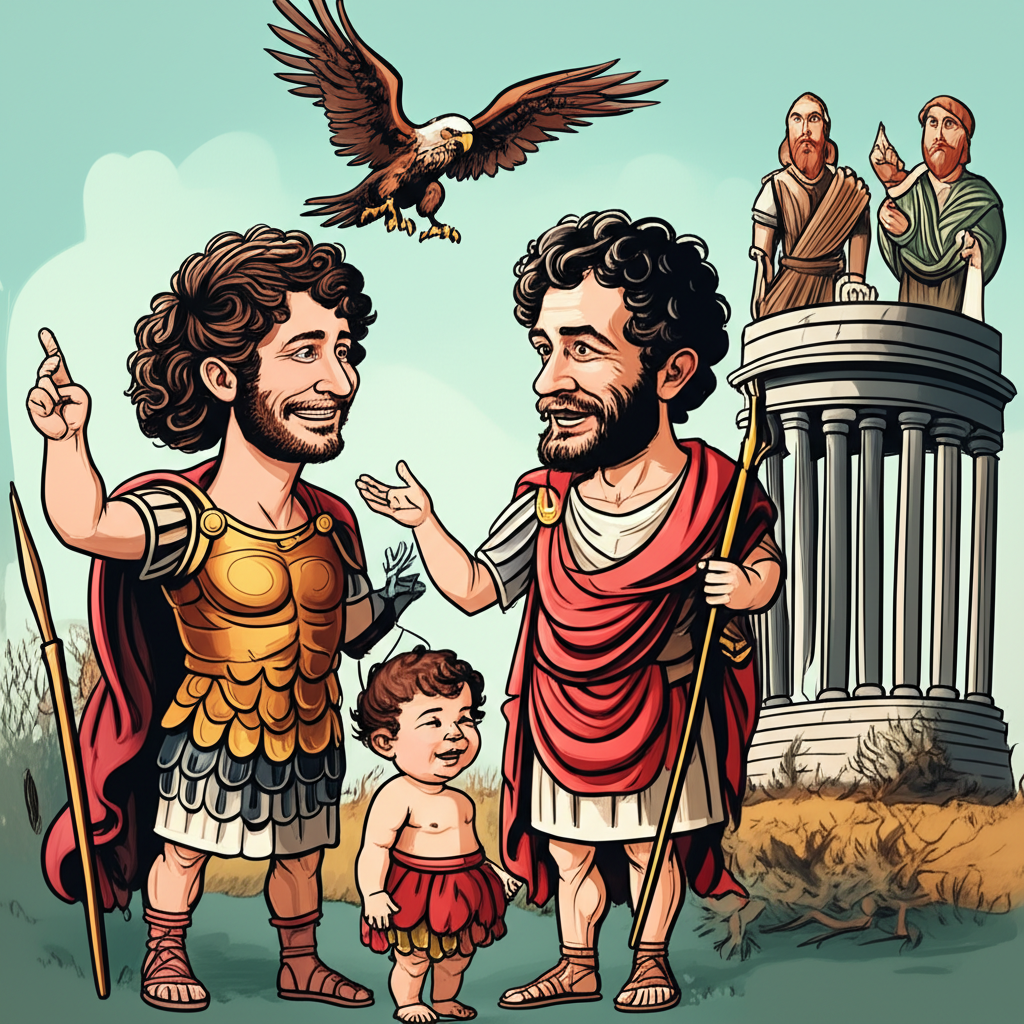
The ancient world, particularly the fertile lands surrounding the Tiber River, was a tapestry woven with tales of gods, heroes, and the very origins of their civilizations. Among the most enduring of these narratives is the founding of Rome, a story steeped in prophecy, divine intervention, and the untamed spirit of early Italy. This is not a historical account etched in stone, but rather a cherished legend, a traditional story passed down through generations by the ancient Romans, offering insight into their worldview and their understanding of destiny.
The era in which these tales took root was one where the boundaries between the mortal and the divine were fluid, where natural phenomena were often attributed to the will of powerful deities, and where the future was believed to be foretold through omens and divine pronouncements. The landscape itself, with its rugged terrain and the life-giving flow of the Tiber, was imbued with a sacred quality. The Romans of that time, like many ancient peoples, sought meaning and order in the world around them, often finding it in elaborate myths that explained their existence and their place in the grand cosmic scheme. The founding of Rome, a city that would eventually dominate the Mediterranean, was a monumental event that naturally demanded an equally grand and portentous genesis.
At the heart of this origin story lies a figure whose very existence is shrouded in legend: Romulus. He is not presented as a mere mortal, but as a descendant of the god Mars, the Roman deity associated with war and, by extension, with strength and virility. This divine lineage is not meant to be taken as a literal claim of deification in the modern sense, but rather as a symbolic attribute. Mars, in this context, represents the martial prowess, the fierce independence, and the inherent destiny for power that the Romans believed characterized their founder. Romulus is often depicted as a strong, determined leader, embodying the qualities of a warrior and a visionary, a man destined to forge a new civilization from the wild landscape. His twin brother, Remus, also plays a crucial role, representing a counterpoint, a shadow to Romulus’s ascendant light, and their story underscores the complex and often tragic nature of power and destiny.
The narrative of Rome’s founding, with its prophetic whispers on Capitoline Hill, unfolds like a dramatic epic. It begins with the plight of Rhea Silvia, a Vestal Virgin, who is divinely visited by Mars. From this union, twins, Romulus and Remus, are born. Fearing their lineage and the potential threat they posed, their uncle, the usurper Amulius, orders them to be cast into the Tiber River. Miraculously, they are found and suckled by a she-wolf, a creature that would become an enduring symbol of Rome. This act of primal nurturing, by a wild animal, speaks to the ruggedness and resilience of the land and its eventual inhabitants.
Raised by a shepherd, the twins grow to discover their true parentage and, driven by a sense of justice and destiny, they reclaim their birthright, overthrowing Amulius. However, their paths soon diverge. They decide to found a new city, but a dispute arises over its exact location and who will rule it. Romulus favors a spot on the Palatine Hill, while Remus favors the Aventine. To settle this, they agree to consult the will of the gods through augury, the practice of observing the flight of birds.
It is here that the prophecy on Capitoline Hill enters the narrative, though the specific location of the augury itself can vary in different tellings. The important element is the divine sign. Remus, observing from the Aventine, sees six vultures. Shortly after, Romulus, from the Palatine, sees twelve. This is interpreted as a sign from the gods, with the greater number of birds signifying a more powerful omen, thus favoring Romulus. This divine sanction, though contested, sets the stage for the tragic confrontation. In a fit of rage or a zealous defense of his divinely appointed position, Romulus kills Remus. The blood of brother upon brother, a grim foundation, marks the genesis of Rome. Romulus then proceeds to lay the walls of his new city, naming it after himself: Rome.
The symbolism embedded within this myth is rich and multifaceted. The she-wolf, for instance, represents the wild, untamed nature of the land from which Rome emerged, as well as the fierce maternal instinct that protected and nurtured the founders. The divine parentage of Romulus and Remus signifies the perceived destiny of Rome to be a powerful and dominant force, blessed by the gods. The dispute between the brothers and the ultimate fratricide can be interpreted as a reflection of the inherent conflicts and struggles that often accompany the birth of new societies, the difficult choices and sacrifices required to establish order. Capitoline Hill itself, later the site of important temples and civic buildings, becomes a focal point of divine favor and the ultimate validation of Rome’s destiny. The augury of the birds symbolizes the ancient belief in the ability to decipher the will of the gods and to understand the unfolding of fate.
In the modern world, this myth continues to resonate, albeit in different forms. It is a cornerstone of classical literature and art, inspiring countless paintings, sculptures, and literary works. In popular culture, the legend of Romulus and Remus, and the iconic image of the she-wolf, frequently appears in movies, video games, and historical fiction, serving as a potent symbol of Roman identity and its legendary origins. In academic circles, the story is a vital subject of study in classical mythology, history, and cultural anthropology, offering invaluable insights into the beliefs, values, and societal structures of ancient Rome.
In conclusion, the story of Rome’s founding, with its prophecy on Capitoline Hill, is a captivating cultural narrative. It is a testament to the power of storytelling and the human desire to understand our origins and our place in the world. As Muslims, we recognize that only Allah, the Exalted, is the true Creator and Sustainer of all existence. This ancient legend, while devoid of divine truth, serves as a valuable window into the imagination and cultural heritage of a past civilization, reminding us of the enduring human tradition of weaving tales to make sense of the world and to imbue our existence with meaning. It is a story that, when understood in its proper context, enriches our appreciation for the diverse tapestry of human storytelling and the rich tapestry of cultural expression throughout history.