
 fufufafa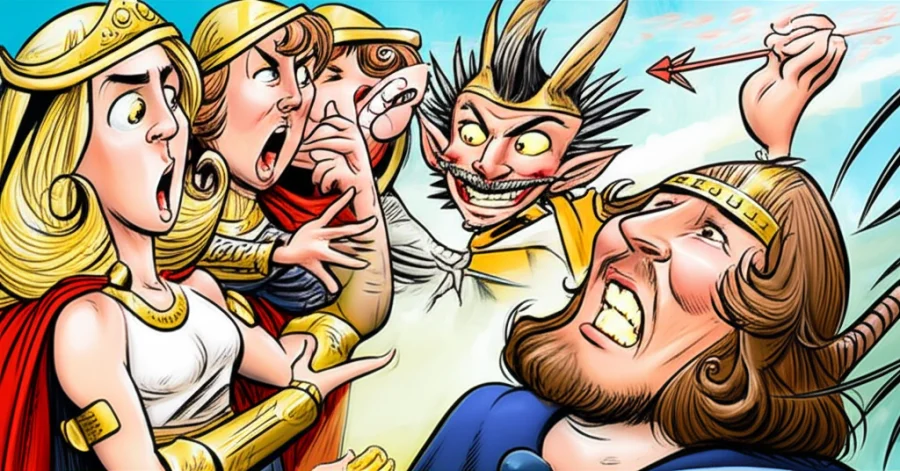
In the frigid, windswept lands of ancient Scandinavia, where the harsh realities of survival intertwined with a rich tapestry of folklore, the Æsir and Vanir, divine beings from their shared cosmology, populated the imagination of a people deeply connected to the cycles of nature. Among the most poignant and enduring tales whispered around hearth fires and carved into rune stones is the myth of Baldr’s death, a story that resonates with a profound sense of loss and the enduring power of storytelling. This narrative, passed down through generations, offers a glimpse into the worldview of the Norse people, a society that navigated a world teeming with unseen forces, where the balance between order and chaos was a constant, delicate dance.
The cultural era in which these myths flourished was one of transition and resilience. The Norse people were primarily agrarian and seafaring, their lives dictated by the rhythms of the seasons, the unpredictable fury of the ocean, and the ever-present threat of famine or conflict. Their understanding of the cosmos was often anthropomorphic, imbuing natural phenomena with personality and agency. Gods and goddesses, giants and elves, dwarves and spirits were not abstract concepts but active participants in the unfolding drama of existence. The world was a vibrant, often perilous, place, and these stories served as both explanation and catharsis, providing a framework for understanding the mysteries of life, death, and the inexorable march of fate. The myth of Baldr’s death, embedded within the broader saga of the Norse pantheon, emerges from this fertile ground of cultural storytelling.
At the heart of this tragic tale stands Baldr, often depicted as the fairest and most beloved of the Æsir gods. His radiance was said to be so profound that he illuminated all realms, a beacon of light and purity. He was the god of summer, of joy, and of peace. His beauty was not merely physical; it represented an innate goodness, a gentle presence that fostered harmony. He was the embodiment of all that was good and noble within the divine community, a stark contrast to the more volatile and martial figures that also populated the Norse pantheon. His symbolic attributes lie in his connection to light, purity, and the transient nature of perfection. He represented an ideal, a state of being that was deeply cherished but, as the myth tragically illustrates, inherently vulnerable.
The narrative of Baldr’s demise begins with a series of unsettling dreams that plague the fair god. He dreamt of his own death, of a darkness encroaching upon his brilliant light. These forebodings, shared with the other Æsir, cast a shadow of unease over Asgard, the celestial city. In an effort to protect their beloved deity, his mother, the goddess Frigg, embarked on a perilous quest. She traversed all nine realms, extracting oaths of safety from every conceivable entity – from the mighty oaks to the tiniest herbs, from the fiercest beasts to the most insidious poisons. It was a monumental undertaking, a testament to the profound love and desperation felt for Baldr. It was believed that nothing in creation would harm him.
However, in her exhaustive quest, Frigg, in her haste and perhaps a moment of oversight, neglected one seemingly insignificant entity: the mistletoe. This small, parasitic plant, clinging to the branches of trees, was considered too young and harmless to warrant an oath. This oversight, this single forgotten detail, would prove to be the linchpin of tragedy.
Meanwhile, Loki, the cunning trickster god, a figure often characterized by his mischievousness and a profound resentment towards the Æsir, learned of Frigg’s promise and the singular exemption. His heart, often a vessel of envy and malice, saw an opportunity to sow discord and bring about a devastating blow to the divine order. Driven by a complex mix of jealousy and a desire to disrupt the peace, Loki devised a sinister plan.
He approached Baldr, who, assured of his invincibility, would playfully entertain the other gods by standing as a target while they hurled various objects at him. Nothing could harm him; stones would bounce off, arrows would veer away, and weapons would shatter. Loki, however, approached Baldr with a seemingly innocent offer. He presented him with a dart fashioned from the very mistletoe that Frigg had overlooked. Blinded by his trust and the collective assurances of his safety, Baldr accepted the gift.
As the next round of divine sport commenced, Loki, with a wicked glint in his eye, directed Baldr to throw the mistletoe dart at him. In that fateful moment, the seemingly harmless plant, devoid of any oath, struck Baldr with a deadly force. The god of light, the embodiment of purity and joy, fell to the ground, mortally wounded. A gasp of horror echoed through Asgard as the light that had illuminated their world flickered and began to fade.
The death of Baldr sent ripples of grief and despair throughout the cosmos. The Æsir were plunged into mourning, their celestial halls filled with sorrow. The gods, consumed by their anguish, pleaded with Hel, the grim ruler of the underworld, to release Baldr from her grasp. Hel, however, agreed to let him return only if all beings in creation wept for him.
Again, the Æsir dispatched messengers throughout the realms, begging for tears. From every corner of existence, a chorus of sorrow arose. Trees wept, stones shed their moisture, and every creature, great and small, mourned the loss of the beloved god. All, it seemed, were moved by Baldr’s goodness. All, except for one.
Deep within a desolate cave, a giantess named Thökk, whom many suspect to be Loki in disguise, refused to shed a single tear. Her coldhearted refusal, her utter lack of empathy, sealed Baldr’s fate. He remained in the underworld, his light forever extinguished from the mortal and divine realms. This event is often seen as a harbinger of Ragnarök, the prophesied twilight of the gods, a cataclysmic battle that would bring about the end of the current world order.
The story of Baldr’s death is rich with symbolism that would have resonated deeply with the Norse people. Baldr himself can be interpreted as a symbol of the sun, its cyclical journey from dawn to dusk, its vital warmth and light, and its eventual descent into darkness, only to be reborn. His death, therefore, could represent the fading of summer, the onset of winter, and the natural cycle of life and death that governed their existence. The mistletoe, a plant that thrives in darkness and is often associated with the winter solstice, becomes a potent symbol of betrayal and the insidious nature of evil lurking even in the most unexpected places. Loki, the agent of this tragedy, represents chaos, deceit, and the disruptive forces that threaten the established order. The inability of the gods to prevent his death underscores the Norse belief in fate, or wyrd, a powerful and often inescapable destiny that even the gods could not fully control. The story also speaks to the fragility of goodness and the devastating consequences of even the smallest oversight or act of malice.
In contemporary times, the myth of Baldr’s death continues to capture the imagination. It has been reinterpreted in various forms of modern media, from epic fantasy novels and role-playing games to video games and scholarly analyses of Norse mythology. These interpretations often focus on the tragic hero, the cunning villain, and the profound themes of loss, betrayal, and the inevitability of change. The story’s enduring appeal lies in its universal themes of love, grief, and the struggle between light and darkness, concepts that transcend cultural boundaries and historical periods.
It is crucial to reiterate that the narrative of Baldr’s death is a traditional story, a product of the rich cultural heritage of ancient Scandinavia. It reflects the worldview, fears, and hopes of people from a bygone era. As Muslims, we recognize that the ultimate reality of creation and sustenance rests solely with Allah (God), the One and Only Creator. These ancient tales, while fascinating for their cultural and historical insights, do not alter this fundamental truth.
The enduring power of such myths lies not in their literal truth, but in their ability to illuminate the human condition, to explore complex emotions, and to provide a lens through which to understand the world and ourselves. The Songs of Vanaheim, and the tragic melody of Baldr’s demise, serve as a testament to the enduring human need to tell stories, to grapple with the mysteries of existence, and to preserve the echoes of our ancestors’ imagination for generations to come. They remind us of the power of narrative to shape our understanding, to evoke empathy, and to connect us to the vast, intricate tapestry of human culture.







