
 fufufafa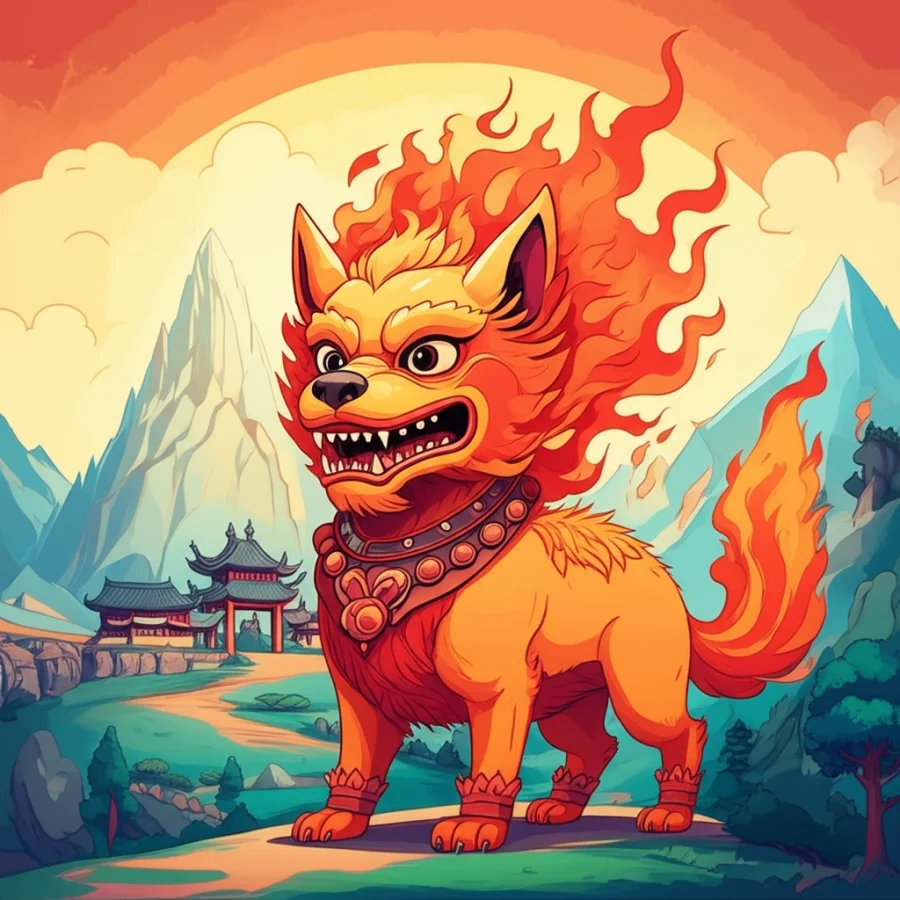
From the mists of ancient Korea, a rich tapestry of myths and legends emerges, woven from the dreams, fears, and aspirations of its earliest inhabitants. Among these cherished narratives is the profound tale of Hwanung, his descent from the celestial realm, and the cosmic challenges represented by beings like the Bulgae. This story is not a record of historical events, nor is it meant to be believed as literal truth; rather, it is a traditional narrative passed down through generations, offering a glimpse into the worldview and cultural heritage of a people long past. It stands as a testament to the human imagination, a powerful story meant for cultural, historical, and educational understanding.
Origins and Cultural Background
The myth of Hwanung, often considered a foundational narrative for the Korean peninsula, finds its roots in a period preceding the formation of the unified Three Kingdoms, stretching back into the Bronze Age and early Iron Age. This was an era when human societies were deeply entwined with the natural world, their lives dictated by the rhythms of seasons, the bounty of the earth, and the unpredictable forces of weather. Ancient Korean communities were predominantly agricultural, fostering a worldview that held profound reverence for nature, often personifying its elements and attributing divine presence to mountains, rivers, and the expansive sky.
In this animistic and shamanistic context, the world was perceived as a vibrant realm teeming with spirits, ancestors, and celestial beings. People sought to understand the cosmos, to find order amidst chaos, and to explain phenomena ranging from bountiful harvests to devastating droughts, from the rising sun to the eerie darkness of an eclipse. Leadership was not merely a matter of earthly power but often seen as a divine mandate, a connection to a higher order that could ensure prosperity and harmony for the community. These myths, therefore, served not only as entertainment but also as a means to codify moral values, explain the origins of their society, and establish the legitimacy of their rulers, all within a framework of cosmic interconnectedness.
Character and Creature Description
At the heart of this narrative stands Hwanung, the central figure of the heavenly descent. He is depicted as the son of Hwanin, the supreme Lord of Heaven. Unlike a distant deity, Hwanung is portrayed with a profound compassion for humanity, observing the earthly realm with a desire to descend and govern, to bring order, enlightenment, and civilization to the human world. He symbolizes benevolent leadership, divine mandate, and the civilizing force that transforms a wild land into a thriving society. His attributes are wisdom, compassion, and the power to establish a harmonious human existence.
Contrasting Hwanung’s ordered benevolence are the Bulgae, often translated as "Fire Dogs." These are mythical creatures from the Kingdom of Darkness, a realm shrouded in eternal night, presided over by its own king. The Bulgae are typically described as fierce, shadowy canine beings, whose primary role in mythology is associated with the celestial events of eclipses. They are said to chase and attempt to devour the sun or the moon, plunging the world into temporary darkness. Symbolically, the Bulgae represent cosmic disruption, the unpredictable and untamed forces of nature, and the primal chaos that challenges the established order of the heavens and earth. They embody the unknown and the momentarily terrifying aspects of the natural world, demanding explanation and resolution.
Finally, the Heavenly Descent Site, often identified with a sacred sandalwood tree (Sinsu Dan) on Baekdu Mountain, is not merely a location but a potent symbol. It represents the nexus between the divine and the terrestrial, a sacred portal through which celestial power can flow into the human world. It is the birthplace of a new civilization, a place of profound transformation, signifying the very origins of culture, governance, and human society under divine guidance.
The Main Story: A Narrative Retelling
In the boundless expanse of the Heavenly Realm, where celestial light shimmered and divine harmony reigned, dwelt Hwanung, the compassionate son of the mighty Hwanin, the Lord of Heaven. From his lofty perch, Hwanung gazed down upon the human world, a realm then characterized by a certain wildness and lack of order. His heart stirred with empathy for the scattered tribes and nascent communities below, observing their struggles and their yearning for guidance. He envisioned a world where enlightenment, morality, and justice would flourish.
Moved by his son’s benevolent aspirations, Hwanin granted Hwanung permission to descend. As a testament to his divine authority and the powers he would wield, Hwanin bestowed upon Hwanung three sacred seals, known as the Cheonbuin – potent artifacts symbolizing leadership, wisdom, and governance. With a retinue of 3,000 celestial beings, including the Earl of Wind, the Master of Rain, and the Master of Clouds – spirits essential for sustaining life and agriculture – Hwanung began his majestic descent.
His chosen landing place was the peak of a sacred mountain, often identified as Baekdu Mountain, under the shade of a magnificent sandalwood tree, the Sinsu Dan. This spot, imbued with celestial energy, became the "City of God," or Sinsi, the very cradle of civilization on the earthly plane. Here, Hwanung began his monumental task. He established laws, taught the people agriculture, introduced principles of medicine, and instilled virtues of morality and justice. Under his enlightened rule, humanity began to thrive, moving from a state of raw existence to one of organized society.
Yet, the establishment of a harmonious world was not without its challenges. The cosmos, in its intricate balance, also contained forces of unpredictability. At times, a profound disquiet would ripple through the land. The brilliant sun, a symbol of life and Hwanung’s benevolent rule, would mysteriously dim, or the luminous moon would vanish into an oppressive gloom. These were the moments when the Bulgae, the fearsome Fire Dogs from the shadowy Kingdom of Darkness, would emerge. Driven by an insatiable desire, these shadowy canines would chase the celestial bodies, attempting to devour them, plunging the world into an eerie, temporary night.
Such events would sow confusion and fear among the nascent human population. They saw the cosmic order, so carefully established by Hwanung, momentarily disrupted by these primal forces. The Bulgae were not direct adversaries to be vanquished in battle by Hwanung, but rather a manifestation of the untamed aspects of the universe, a reminder that even in a divinely guided world, there existed phenomena beyond immediate human control or understanding. Hwanung, with his celestial wisdom and the aid of his elemental ministers, would not fight the eclipses themselves, but rather would guide humanity to understand these cycles, to see them as part of the grand cosmic dance, and to maintain their faith and order despite temporary darkness. His role was to bring enlightenment, even in the face of cosmic mysteries, allowing humanity to cope with the natural world’s unpredictable grandeur. He ensured that the light always returned, reassuring his people and cementing the belief in a benevolent, overarching order.
Symbolism and Meaning
The myth of Hwanung, the Bulgae, and the Heavenly Descent Site is rich with layers of symbolism that resonated deeply with ancient Koreans. Hwanung himself embodies the ideal ruler – a benevolent, wise, and compassionate leader who brings not only material prosperity but also moral and spiritual enlightenment. His descent from heaven provides a divine justification for leadership, suggesting that true governance is a sacred duty aimed at the betterment of humanity. He represents the transition from a primitive existence to an ordered, civilized society, marking the birth of a cultural identity rooted in heavenly wisdom.
The Heavenly Descent Site, the Sinsu Dan on Baekdu Mountain, is more than just a geographical location; it is a spiritual nexus. It symbolizes the sacred connection between the mundane and the divine, the point where human destiny was forever altered by celestial intervention. It represents the origin point of their civilization, a hallowed ground where the foundation of their culture, laws, and societal structure was laid.
The Bulgae, the Fire Dogs, serve as powerful symbols of the untamed forces of nature and the mysteries of the cosmos. Their pursuit of the sun and moon offers a mythological explanation for eclipses, which would have been terrifying and inexplicable phenomena to ancient peoples. They represent the challenges to human understanding, the moments of chaos and uncertainty that punctuate the otherwise ordered world. Yet, the temporary nature of their success – the sun and moon always return – also symbolizes the enduring cosmic balance and the ultimate triumph of light and order over temporary darkness. They teach that even in moments of fear, the fundamental rhythms of the universe prevail.
Collectively, the story illustrates humanity’s journey from chaos to order, the profound importance of benevolent and enlightened leadership, and the eternal quest to understand and harmonize with the vast, often mysterious, universe. It emphasizes the foundational belief that their society was divinely sanctioned and that the natural world, while sometimes challenging, was ultimately part of a greater, ordered design.
Modern Perspective
Today, the myth of Hwanung, the Bulgae, and the Heavenly Descent Site continues to echo through Korean culture, though its interpretation has evolved. It is no longer seen as a literal historical account, but rather as a profound national founding myth, a cornerstone of Korean identity and cultural heritage. In modern literature, these ancient tales inspire fantasy novels, poems, and plays that reimagine the struggles and triumphs of these mythical figures.
The narrative threads of divine descent and civilizing heroes are frequently adapted into popular culture. K-dramas, animated series, and films often draw inspiration from the themes of establishing a new world, the conflicts between cosmic forces, and the journey of a hero to bring enlightenment. Video games, particularly MMORPGs, frequently incorporate elements of Korean mythology, featuring characters, creatures, and lore reminiscent of Hwanung’s heavenly origins or the shadowy Bulgae. Academics and cultural scholars study these myths to understand ancient Korean worldview, social structures, and the development of national consciousness, viewing them as invaluable insights into the collective psyche of a people. Baekdu Mountain, regardless of the precise location of Sinsu Dan, remains a deeply revered and symbolic site for Koreans, representing spiritual origins and national pride.
Conclusion
The narrative of Hwanung, the Bulgae, and the Heavenly Descent Site stands as a vibrant example of humanity’s ancient endeavors to make sense of their world through the power of storytelling. It is a testament to the imaginative spirit of early Korean civilization, offering explanations for cosmic phenomena and establishing foundational principles for governance and morality. It is crucial to reiterate that this is a cultural story, a product of human imagination and tradition, not a belief system to be adopted or practiced.
As Muslims, we recognize that the universe, in its boundless complexity and perfect order, is the creation of Allah, the One True Creator and Sustainer, whose power and wisdom encompass all things. We understand that only Allah is to be worshipped, and that ultimate truth resides in His divine revelations.
Nevertheless, such cultural narratives are invaluable. They enrich our understanding of diverse human experiences, reflecting universal themes of leadership, the search for meaning, and the human desire to connect with something greater than themselves. These echoes of Hwanung, Bulgae, and the Heavenly Descent Site serve as a precious part of cultural heritage, reminding us of the enduring power of imagination and the timeless tradition of storytelling that binds generations and cultures across the vast expanse of human history.







