fufufafa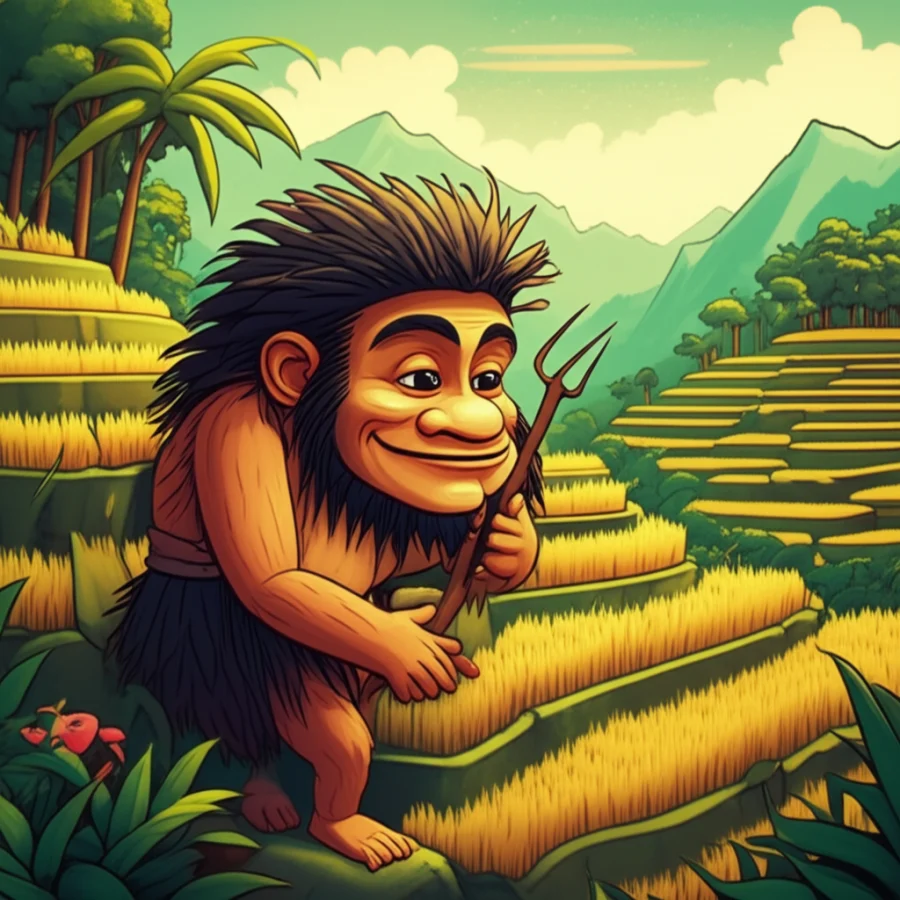
The archipelago of the Philippines, a mosaic of islands shimmering under a tropical sun, is a land steeped in ancient lore. From the crashing waves of its countless shores to the mist-shrouded peaks of its formidable mountains, every facet of its diverse landscape breathes tales of old. Among these myriad stories, one finds a fascinating narrative that intertwines the elemental power of a sea deity, the enigmatic presence of a colossal forest guardian, and the monumental ingenuity of an ancient people etched into the very earth: the "Echoes of Amanikable" resonating through the domain of the Kapre amidst the majestic Ifugao Terraces. This is a traditional story, a product of the rich imagination and worldview of the ancient people of this land, recounted not as a claim of truth, but as a window into their cultural heritage and understanding of the world around them.
Origins and Cultural Background
This particular tapestry of myth draws from a pre-colonial era in the Philippines, a time when human life was intimately connected with the natural world. The various indigenous communities, like the Ifugao of the Cordillera mountains and the Tagalog people of the lowlands, lived in harmony with their environment, their survival intricately linked to the rhythms of nature. Their society was largely animistic, believing that spirits resided in all aspects of nature – trees, rocks, rivers, mountains, and the sea. The world was perceived not as inert matter, but as a living, breathing entity, populated by unseen forces, deities, and ancestral spirits who could influence human affairs. People of that time viewed the world as a complex interplay between the seen and the unseen, where reverence for nature was paramount, and every significant natural phenomenon was attributed to the will or presence of powerful entities. Their myths served as explanations for the unexplainable, moral guides, and reminders of humanity’s place within the vast cosmic order.
Character and Creature Description
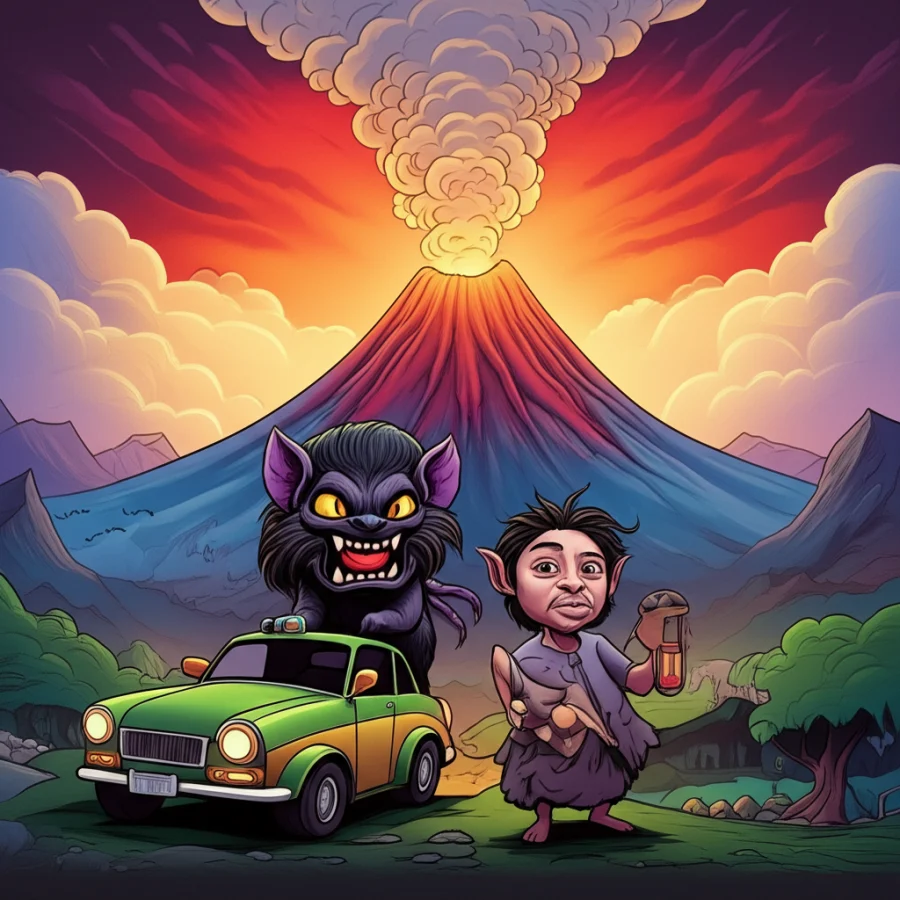
At the heart of this interconnected tale stands the Kapre, a figure that looms large, both literally and figuratively, in Filipino folklore. Depicted as a giant, tree-dwelling entity, the Kapre is often described as having dark, coarse hair covering its massive, muscular body, red glowing eyes, and a perpetually lit cigar clutched between its thick fingers. It is said to reside in ancient, towering trees like the balete, banyan, or mango, its presence often marked by the faint scent of tobacco in the evening air.
Symbolically, the Kapre is far more than just a giant. It embodies the untamed, ancient spirit of the forest and mountains. It represents the raw, primal power of nature, a guardian of the old ways, and a manifestation of the spirits that dwell within the oldest trees. While often portrayed as mischievous or even intimidating, the Kapre is not inherently malevolent. Instead, it serves as a powerful reminder of the hidden forces that command respect, warning against encroachment or disrespect towards the natural world. Its presence, a silent sentinel over the land, is a living echo of the immense, foundational powers that shaped the archipelago, much like the profound, elemental force embodied by Amanikable, the ancient Tagalog deity of the sea, a fierce hunter and guardian of its depths. The Kapre, in this narrative, becomes the terrestrial counterpart, a formidable guardian whose silent watch reminds humanity of the boundless power of the earth itself.
Main Story / Narrative Retelling
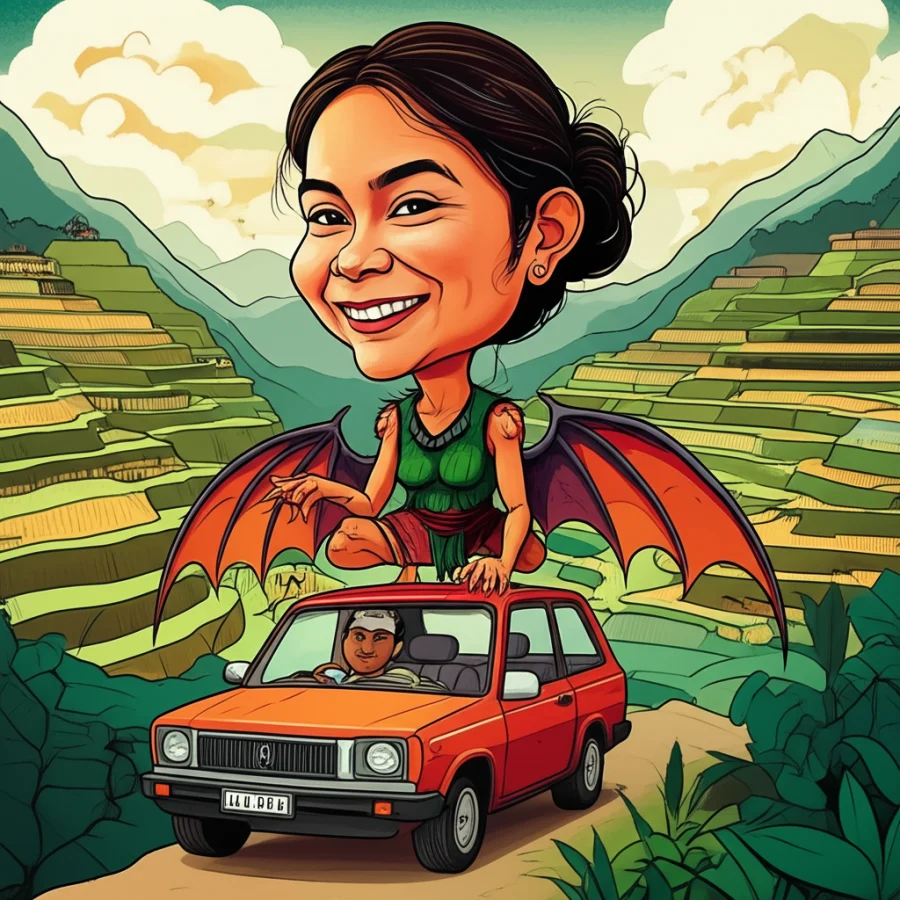
In the verdant heart of Luzon, where the mountains clawed at the clouds, lived the ancient Ifugao people. With ingenuity born of necessity and spirit forged by the rugged land, they embarked on an endeavor that would forever mark their existence: the carving of the Banaue Rice Terraces. Layer upon layer, they sculpted the mountainsides into colossal staircases of irrigated paddies, a breathtaking testament to human will and communal labor. They channeled mountain springs, redirected rivers, and moved mountains of earth, transforming the wild terrain into a fertile cradle for their staple crop.
Yet, such a monumental undertaking, touching the very sinews of the earth, was not without its whispers and omens. The elders spoke of the deep respect due to the anitos, the spirits of the land and ancestors. They cautioned against arrogance, reminding their people that while they might shape the land, they did not own it. For centuries, the Kapre had dwelled among the colossal balete trees that dotted the higher slopes, a silent, smoke-wreathed observer of the mountains. Its presence was a legend, a shadow in the twilight, a rustle in the ancient leaves. But as the terraces grew, pushing higher and wider, the Kapre’s deep red eyes, it is said, watched with a growing intensity.
The narrative suggests that the sheer scale of the Ifugao’s ambition began to resonate with the ancient, elemental forces of the archipelago. Tales of Amanikable, the fierce Tagalog sea deity, a god whose wrath could conjure typhoons and whose bounty fed coastal tribes, were known even in the distant mountains through trade and shared lore. While Amanikable’s domain was the restless sea, his essence – the raw, untamed power of nature, the immense forces that could both give and take – became an "echo" in the mountains. The elders spoke of how such grand human ambition might stir the sleeping giants of the earth, akin to challenging the very depths ruled by Amanikable. The Kapre, the ancient guardian of the mountain forests, was seen as the physical manifestation of these stirred energies, a living reminder of the land’s ancient claim.
One particularly dry season, when the intricate irrigation systems seemed to falter and cracks appeared in the newly carved terraces, fear began to grip the Ifugao. The springs that fed their paddies dwindled, and the mountain streams slowed to a trickle. Whispers spread: "The Kapre stirs. The spirits are displeased. We have disturbed the ancient ones." It was said that the Kapre’s glowing eyes were seen more frequently, its cigar smoke drifting heavier through the moonlit valleys, a silent, imposing figure observing their struggle. This was interpreted not as malicious intent, but as a test, a reminder from the mountain’s ancient heart, an echo of the formidable power that even Amanikable commanded over the waters and the land.
The Ifugao, with their deep wisdom, did not seek to fight the Kapre. Instead, their leaders, the mumbakis (shaman-priests), urged a return to humility and deeper respect. They performed rituals, offering prayers and sacrifices not to appease a vengeful Kapre, but to honor the anitos and the elemental spirits of the land, acknowledging their profound reliance on nature’s benevolence. They sought not to conquer, but to coexist. The story suggests that as their reverence deepened, as they renewed their vows of respect for the land and its unseen guardians, the springs slowly returned, the rains fell, and the terraces flourished once more. The Kapre, it is said, retreated further into the ancient trees, its watchful gaze now a testament to a renewed balance between humanity and the formidable, enduring spirit of the earth.
Symbolism and Meaning
This rich narrative offers profound insights into the worldview of ancient Filipinos. The Kapre symbolizes the untamed wilderness, the unseen forces of nature that demand respect, and the boundaries of human ambition. Its presence in the story serves as a reminder that humanity, despite its ingenuity, remains part of a larger, powerful ecosystem. The Ifugao Terraces themselves symbolize incredible human perseverance, communal effort, and the capacity for ingenuity, but also the critical need for harmony with nature. They are a testament to how humans can shape their environment while, ideally, remaining in balance with it. The "Echoes of Amanikable" represent the enduring, pervasive power of the elemental forces that govern the natural world – the raw strength of the sea and the land, reminding humanity that even their grandest achievements are subject to the vastness and authority of nature. Morally, the story emphasizes humility, environmental stewardship, and the importance of community and spiritual reverence in the face of daunting challenges.
Modern Perspective
Today, the Kapre continues to be a vibrant part of Filipino popular culture. It appears in countless children’s stories, horror films, animated series, and even video games, often depicted as a mysterious, sometimes benevolent, sometimes terrifying, forest giant. It represents the lingering mystery of the wild, the unexplained, and serves as a cultural touchstone for conversations about environmental preservation and indigenous folklore. The Ifugao Terraces are recognized globally as a UNESCO World Heritage site, admired not just for their engineering marvel but as a living cultural landscape, a symbol of indigenous knowledge and sustainable agriculture. This myth, therefore, transcends mere entertainment; it is interpreted today in cultural studies as a narrative that underscores indigenous perspectives on nature, land stewardship, and identity, highlighting the enduring relevance of traditional ecological knowledge.
Conclusion
The tale of the Kapre watching over the Ifugao Terraces, with the "Echoes of Amanikable" as a resonant backdrop, is a testament to the profound imagination and cultural depth of the ancient Filipino people. It is a story woven from the threads of their environment, their beliefs, and their aspirations. It is crucial to remember that this narrative, like all myths, is a cultural artifact, a traditional story passed down through generations, rather than a factual account or a basis for belief or worship. As Muslims, we recognize that Allah (God) is the one true Creator and Sustainer of all existence, and it is to Him alone that all worship and reverence are due. These cultural stories, while not to be believed as truth, offer invaluable insights into the human condition, the power of imagination, and the timeless tradition of storytelling that connects us to our shared heritage and the diverse ways humanity has sought to understand its place in the world.