fufufafa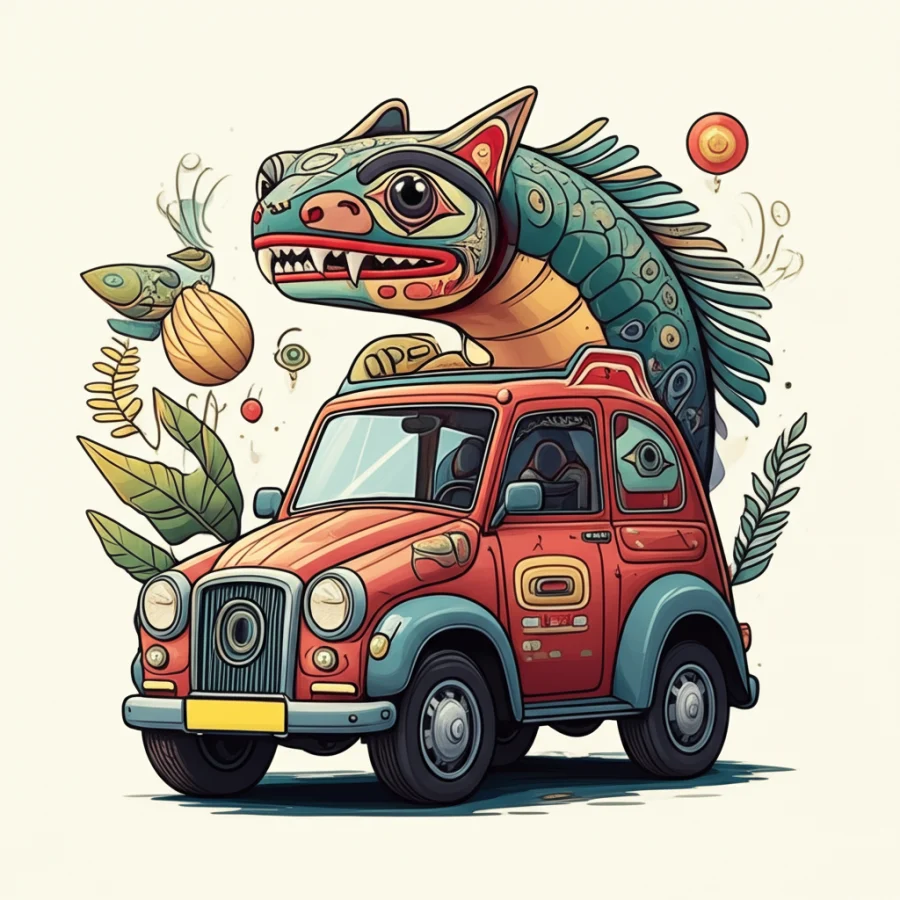
Introduction: Threads of Ancient Storytelling
In the rich tapestry of Indigenous oral traditions across North America, certain archetypal figures and themes resonate with profound power, transcending geographical boundaries. While the mighty Sedna, the sea goddess, hails from the frigid waters and ice-bound territories of the Inuit peoples of the Arctic, her powerful narrative of creation, sacrifice, and the deep ocean’s bounty finds compelling echoes in the diverse mythologies of the Pacific Northwest. Here, amidst the towering cedars and mist-shrouded fjords, the Horned Serpent emerges as a dominant, enigmatic entity. This article delves into a conceptual exploration of how the profound themes associated with Sedna—the delicate balance of marine life, the consequences of human actions, and the unfathomable depths of the ocean—might find a compelling manifestation within the established lore of the Pacific Northwest’s Horned Serpent. It is crucial to understand that this is an imaginative synthesis, a way of understanding how powerful archetypes can resonate across cultures, presented purely as a traditional story told by ancient peoples for cultural, historical, and educational understanding, not as a factual or devotional account.
Origins and Cultural Background: The Lifeline of the Coast
The Indigenous cultures of the Pacific Northwest—including nations such as the Haida, Tlingit, Kwakwaka’wakw, Coast Salish, and many others—flourished in a verdant, resource-rich environment defined by the Pacific Ocean and its intricate network of rivers, inlets, and islands. For millennia, their lives were inextricably linked to the sea, which provided abundant salmon, halibut, shellfish, and marine mammals, forming the very foundation of their societies. This was a cultural era where the natural world was not merely a backdrop but a living, breathing entity, imbued with spirits and immense power.
People of this time viewed the world through a holistic lens, understanding the profound interconnectedness of all life. Every tree, every salmon run, every rock formation held spiritual significance. Their worldview emphasized respect, reciprocity, and the delicate balance between humanity and nature. Oral traditions, passed down through generations around crackling fires, served as the primary means of education, law, history, and spiritual guidance. These stories wove intricate narratives that explained the origins of the world, moral codes, the behavior of animals, and the mysteries of the deep, often featuring powerful beings that shaped their understanding of existence and their place within it. The sea, in particular, was revered as both provider and a realm of immense, unpredictable power, harboring ancient secrets and formidable guardians.
Character Description: The Horned Serpent of the Deep
Within this rich cultural context, the Horned Serpent, known by various names across different nations (such as Sisiutl among the Kwakwaka’wakw), stands as a creature of immense power and captivating mystery. Unlike Sedna, who is anthropomorphic, the Horned Serpent is typically depicted as a majestic, serpentine being, often adorned with prominent horns, vibrant scales that shimmer with iridescent hues, and sometimes a human-like face or a double head. In the conceptual lens we are exploring, this Horned Serpent of the Pacific Northwest embodies the "Echoes of Sedna" by serving as a guardian of the deep, a formidable force deeply intertwined with the ocean’s bounty and its potentially wrathful nature.
Symbolically, the Horned Serpent is a creature of duality and transformation. Its horns, often resembling mountain goat horns or the antlers of a deer, signify wisdom, power, and connection to both land and water. Its serpentine form speaks to primal energy, regeneration, and the mysterious depths. As a guardian, it represents the profound spiritual energy of the ocean itself—the source of life, but also a realm of danger and the unknown. When viewed through the lens of Sedna’s narrative, this Horned Serpent could be seen as the ultimate arbiter of the sea’s generosity, reflecting the consequences of human greed or disrespect, much like Sedna holds dominion over the marine animals. It is a creature that demands reverence, its presence a reminder of the ocean’s immense power and the delicate balance that sustains all life. Its symbolic attributes revolve around wealth (often associated with precious coppers and abundance), protection, transformation, and the perilous majesty of the natural world, rather than promoting any form of belief in its literal existence.
Main Story: The Reckoning of the Deep
In a time long past, when the villages of the coast thrived on the ocean’s generous yield, there lived a young fisherman named K’uul. He was known for his skill with the spear and net, but also for a growing arrogance that dimmed the humility of his youth. K’uul believed the ocean was an endless larder, a resource to be plundered without limit. He would take more salmon than his village needed, leaving the excess to rot, and he often mocked the elders who spoke of spirits in the waves and the delicate balance that must be maintained.
One season, the salmon runs grew scarce. The nets came up empty, the canoes returned with meager catches, and hunger began to whisper through the longhouses. The elders spoke of imbalance, of the deep ocean’s displeasure, and they called for ceremony and respectful offerings. But K’uul scoffed, declaring he would venture further, deeper, to where no man had dared, to claim the ocean’s bounty by force if necessary.
Ignoring the warnings, K’uul set out in his sleek, cedar canoe, paddling beyond the familiar fishing grounds, past the craggy islands and into the open, turbulent waters. The sky grew dark, the waves swelled, and a strange, unearthly mist began to cling to the surface. As K’uul navigated the eerie calm within the mist, a colossal form began to coalesce beneath his canoe. The water around him glowed with an internal, phosphorescent light, revealing scales of deepest jade and shimmering obsidian.
Then, from the depths, the Horned Serpent emerged. It was a creature of breathtaking, terrifying beauty. Its immense head, adorned with magnificent, spiraling horns that pierced the mist, rose from the water. Its eyes, ancient and fathomless, fixed upon K’uul, reflecting the vastness of the ocean and the countless lives within it. Along its serpentine body, images flickered: the teeming schools of salmon, the sleek seals, the migrating whales—all the marine life K’uul had taken for granted, and some he had wasted.
The Serpent did not speak with a voice of thunder, but with a presence that resonated directly in K’uul’s heart. He felt the weight of his disrespect, the emptiness of his greed, and the profound interconnectedness of all life in the ocean. He saw the suffering of the marine creatures, their numbers depleted, their balance disturbed by thoughtless hands. The Serpent’s gaze conveyed the consequence of such actions: the ocean, the source of life, could also withhold its bounty, just as Sedna, in other tales, controlled the marine animals from her deep dwelling.
Terrified, humbled, and deeply ashamed, K’uul dropped his spear and paddle. He offered no resistance, only a silent plea for understanding. The Horned Serpent slowly descended, its horns disappearing into the glowing depths, leaving K’uul adrift in a newfound silence. The mist lifted, the sun broke through, and the waters calmed. K’uul found his way back to his village, no longer arrogant, but profoundly changed. He became a protector of the ocean, teaching others the vital lessons of respect and balance, understanding that the bounty of the sea was a sacred trust, held in the ancient gaze of its formidable guardians.
Symbolism and Meaning: Lessons from the Deep
To the ancient peoples, this story of the Horned Serpent would have represented far more than a simple cautionary tale. It would have served as a powerful allegory for the unfathomable power and mystery of the natural world, particularly the ocean, which sustains life but can also unleash immense force. The Horned Serpent embodies the delicate balance of ecosystems, illustrating that human actions have profound consequences. K’uul’s journey from arrogance to humility highlights the importance of respect and reciprocity with nature, warning against the dangers of greed and thoughtless exploitation.
The creature’s association with wealth (the abundance of the sea) combined with its fearsome aspect underscores that true prosperity comes with responsibility and reverence. It teaches that wisdom lies not in conquering nature, but in understanding and living harmoniously with it. The narrative would also have reinforced the authority of traditional knowledge and the wisdom of elders, who understood the deep spiritual connections to the land and sea. Ultimately, such stories provided a moral compass, guiding community behavior and fostering a deep, abiding respect for the source of their existence.
Modern Perspective: Echoes in a New Era
Today, these traditional narratives, including those featuring the Horned Serpent, continue to resonate deeply, both within Indigenous communities and in broader cultural discourse. They are not merely relics of the past but living stories that inspire and inform. In contemporary Indigenous art, literature, and even film, the Horned Serpent remains a potent symbol, often reinterpreted to address modern concerns such as environmental stewardship and climate change. Its image is used to advocate for the protection of marine ecosystems, reminding us of the dire consequences of neglecting our planet.
Academically, these myths are studied for their profound insights into Indigenous philosophies, ecological knowledge, and narrative structures. They offer a vital counter-narrative to colonial perspectives, highlighting the sophisticated worldview of ancient peoples. In a broader sense, the archetypal themes of powerful nature spirits, moral lessons, and the consequences of human actions continue to inspire contemporary storytellers in literature, movies, and games, albeit often in generalized forms. The enduring power of these stories lies in their ability to transcend time, offering timeless wisdom about our place in the natural world.
Conclusion: A Heritage of Imagination
The exploration of "Echoes of Sedna" through the lens of the Pacific Northwest’s Horned Serpent serves as a testament to the profound interconnectedness of human imagination and the universal quest to understand our world. These are not accounts of factual events or divine beings, but rather intricate cultural narratives, rich with symbolism and moral guidance, crafted by ancient peoples to make sense of their existence and to teach future generations.
As Muslims, we affirm our belief that only Allah (God) is the true Creator and Sustainer of all existence, the One who fashioned the heavens and the earth, and everything within them, including the vast oceans and their mysteries. We recognize that the diverse mythologies of the world, while not aligning with our creed, represent the creative spirit and cultural heritage of humanity. They are powerful expressions of imagination and the enduring tradition of storytelling, reminding us of the human capacity to find meaning, beauty, and wisdom in the narratives passed down through the ages.