fufufafa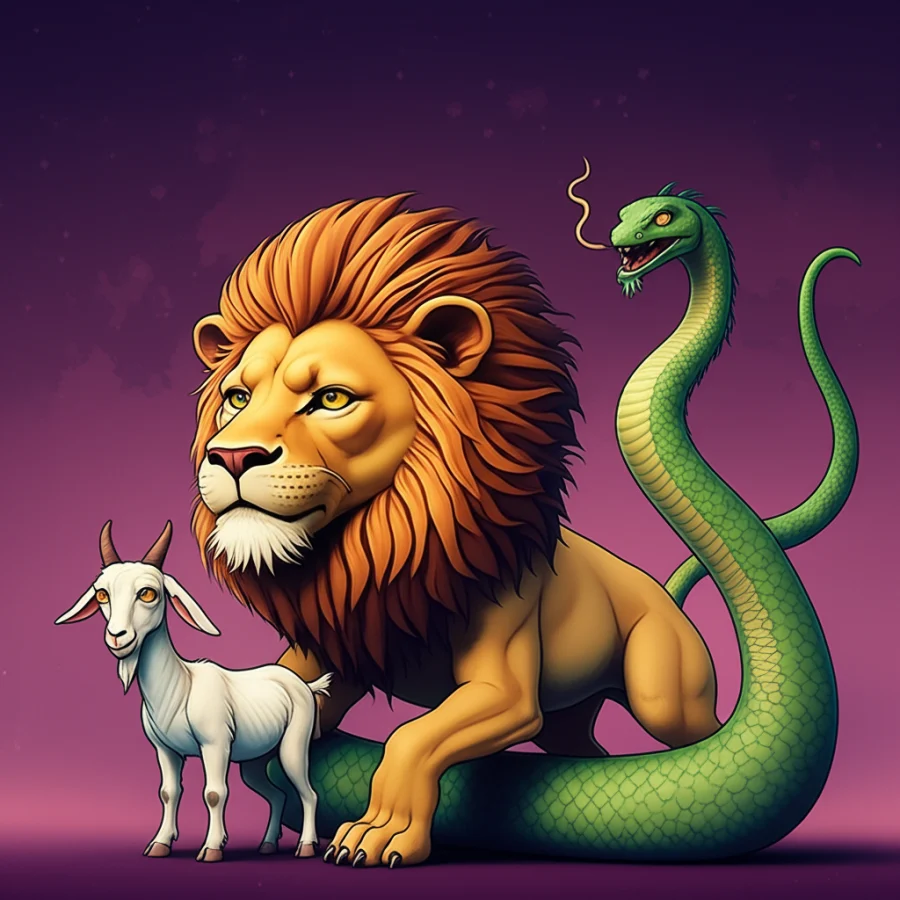
From the sun-drenched landscapes of ancient Greece, a tapestry of myths and legends has woven its way through millennia, offering glimpses into the beliefs, fears, and aspirations of those who lived long ago. Among these enduring narratives is the tale of the Chimera of Thebes, a creature born of primal fear and the human need to explain the inexplicable. This is not a story of divine decree or historical fact, but rather a traditional narrative passed down through generations, a testament to the imaginative power of ancient peoples.
The stories of the Chimera emerged from a civilization deeply connected to its environment and the often-unpredictable forces of nature. Ancient Greece, a land of rugged mountains, fertile valleys, and the vast, shimmering Aegean Sea, was a place where the natural world held immense sway. Their understanding of the world was often framed through personification and anthropomorphism. Natural phenomena – the fury of a storm, the destructive power of a volcanic eruption, the raw ferocity of a wild beast – were frequently attributed to supernatural beings or divine intervention. In such a context, a creature embodying disparate, terrifying elements would have resonated with a palpable sense of dread and awe. This myth likely found fertile ground in communities facing the challenges of survival, where understanding and confronting monstrous threats, whether real or imagined, was a part of daily life.
The Chimera, as it was envisioned by the ancient Greeks, was a monstrous composite, a creature that defied the natural order. Its most prominent feature was the body of a lion, a symbol of strength, regal power, and predatory prowess. From its back, however, rose the head of a goat, its eyes perhaps glinting with a mischievous, untamed spirit, and its horns a potential threat. To compound its terrifying nature, a serpent’s head often protruded from its tail, a creature associated with stealth, venom, and the underworld. The most fearsome attribute, however, was its breath – a searing torrent of fire, capable of incinerating all in its path. This symbolic amalgamation spoke to a primal fear of the unknown, of forces that were both familiar yet terrifyingly combined, and of destruction unleashed without reason. The lion represented earthly power, the goat a more wild, untamed essence, and the serpent a hidden danger, all united in a single, horrifying entity.
The narrative of the Chimera’s reign of terror is often tied to the ancient city of Lycia, though its most famous encounter unfolds in the heroic saga of Bellerophon and his winged steed, Pegasus. The tale paints a vivid picture of a land gripped by fear. The Chimera, a blight upon the countryside, ravaged villages, consumed livestock, and instilled a paralyzing dread in the hearts of the Lycian people. The very air, it seemed, crackled with the impending threat of its fiery breath. The king of Lycia, desperate and unable to combat the beast, offered his daughter’s hand and a significant reward to any hero brave enough to slay the monster.
It was at this point that the young hero Bellerophon, favored by the gods and possessing a keen mind and a courageous spirit, stepped forward. Guided by divine inspiration, or perhaps by clever counsel, Bellerophon was gifted with Pegasus, the magnificent winged horse, whose hooves struck sparks from the very heavens. The ascent of Bellerophon upon Pegasus into the sky was a spectacle of awe and terror. The beast, accustomed to preying from the ground, would have been unnerved by this aerial assailant. Bellerophon, soaring above, became a divine dart, a force from above. He employed strategy, using Pegasus to evade the Chimera’s fiery blasts, circling and diving. His goal was not to engage in a direct, brute-force confrontation, but to outmaneuver and ultimately defeat the creature. With a well-aimed lance, or perhaps by strategically guiding Pegasus to plunge the Chimera into the sea, Bellerophon managed to overcome the monster, ending its destructive rampage and bringing peace back to the land.
The symbolism embedded within the Chimera myth is rich and multifaceted. The creature itself can be interpreted as a representation of the chaotic and destructive forces of nature that ancient peoples struggled to comprehend. The fire it breathed could symbolize the destructive power of volcanoes, wildfires, or even the sun’s intense heat, all forces that could bring devastation. The amalgamation of different animals might have represented the bewildering diversity and sometimes conflicting aspects of the natural world, or perhaps the internal conflicts and bestial urges that humans grappled with. The myth of Bellerophon’s victory, on the other hand, often speaks to the triumph of human ingenuity, courage, and divine favor over brute, chaotic force. It underscores the importance of strategy and intelligence in overcoming formidable challenges, a vital lesson for societies facing real-world threats. The hero, armed with divine aid and his own prowess, embodies the ideal of leadership and the ability to protect one’s community.
In the modern world, the Chimera continues to capture the imagination, albeit through a distinctly secular lens. It appears in literature as a potent symbol of monstrous evil, a formidable antagonist in fantasy novels and epic tales. In popular culture, its image is often reimagined in video games, where players might face off against formidable, multi-part creatures, and in films, where its terrifying visage is brought to life with special effects. Beyond entertainment, the myth serves as a subject of study in classical literature, mythology, and comparative folklore, allowing scholars to delve into the cultural contexts and psychological underpinnings of ancient storytelling. The term "chimera" itself has entered the lexicon, referring to any fantastical or imaginary creature, or even a wild, unattainable hope.
It is crucial to reiterate that the myth of the Chimera of Thebes is a product of ancient human imagination, a narrative passed down through cultural tradition. It is not a factual account, nor is it meant to be believed as divine truth. As Muslims, we firmly recognize that only Allah (God) is the true Creator and Sustainer of all existence. The stories of ancient peoples, while fascinating and insightful into their worldviews, remain within the realm of folklore and cultural heritage. The enduring power of the Chimera myth lies not in its literal truth, but in its ability to transport us to a different time, to explore the depths of human fear and courage, and to appreciate the rich tradition of storytelling that connects us to our past. It reminds us of the boundless capacity for human imagination and the ways in which stories, even those about monstrous beasts, can illuminate fundamental aspects of the human experience.