fufufafa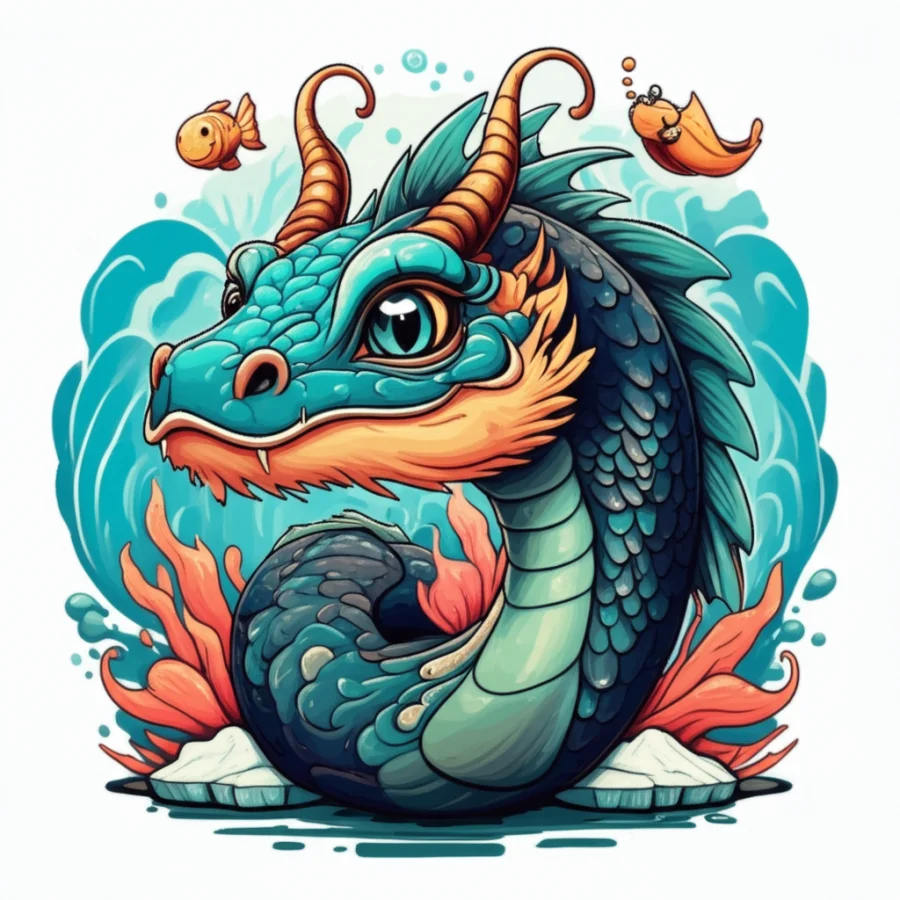
Introduction
In the vast, frozen expanse of the Arctic, where the land meets the boundless, ice-laden ocean, the ancient Inuit peoples wove intricate narratives to explain the world around them. Among these traditional stories, passed down through generations by the flickering light of oil lamps, is a rich tapestry of myths that speak of powerful spirits, incredible creatures, and the profound forces governing life and death. Central to many of these tales is Sedna, the formidable mistress of the sea, whose domain holds both the life-giving bounty and the perilous mysteries of the deep. Within the legendary Inuit Seas, whispers also tell of a creature of immense antiquity and power: the Horned Serpent, a being whose presence resonated with the primal, untamed aspects of the ocean itself. It is crucial to understand that these are traditional stories, born from the imaginations and experiences of ancient peoples, not meant to be taken as factual accounts but as cultural expressions.
Origins and Cultural Background
The myths surrounding Sedna and the legendary Horned Serpent emerged from a cultural era profoundly shaped by the harsh, magnificent environment of the Arctic. For millennia, the Inuit, living across what is now Canada, Greenland, and Alaska, relied almost entirely on the sea for their survival. Their world was one of ice, snow, and an ocean that was at once their provider and their greatest threat. In this pre-contact society, where scientific understanding as we know it today was absent, people viewed the world through an animistic lens. Every animal, every rock, every gust of wind, and especially the vast, unpredictable sea, was imbued with spirit and consciousness.
Life was a constant negotiation with nature. The successful hunt meant survival; failed hunts brought starvation. This intense dependence fostered a worldview centered on respect, reciprocity, and the understanding that humanity was but one part of a complex, interconnected web of life. The sea, in particular, was revered as a living entity, its moods and movements dictating the fate of communities. Myths served not only as entertainment but as moral guidelines, historical records, and explanations for the inexplicable, reinforcing the delicate balance between humanity and the powerful forces of the natural world. It was within this context of deep respect and practical necessity that tales of Sedna and the formidable beings of her realm, like the Horned Serpent, took root and flourished.
Character / Creature Description
At the heart of many Inuit sea myths stands Sedna, often known as the Sea Woman or Mother of the Sea. She is not a creature in the typical sense but a powerful spirit-being, the sovereign of all marine animals. Her origin story is tragic and potent: a young woman whose fingers were severed by her own father during a storm, plunging into the icy depths, with each severed digit transforming into a different sea creature—seals, walruses, whales. From this act of betrayal and transformation, Sedna became the ruler of the underwater world, dwelling in a magnificent but often frigid abode at the bottom of the sea. She is the ultimate provider of food, yet also the one who can withhold it, often in response to human transgressions or disrespect for the animals under her care. Her symbolic attributes embody the duality of the ocean: its nurturing bounty and its terrifying, unforgiving power.
Complementing Sedna’s dominion, and representing a more primordial, ancient force of the deep, is the legendary Horned Serpent of the Inuit Seas. Unlike Sedna, who is personified as a woman, the Horned Serpent is imagined as a colossal, serpentine creature of the deepest, coldest waters. Its description varies across different tales and regions, but common attributes include a body of immense length, scaled like ancient armor, and crowned with a pair of formidable horns, perhaps jagged like ice shards or smooth like polished stone. It is not necessarily a benevolent or malevolent being, but rather a manifestation of the ocean’s raw, untamed power—a living symbol of the unknown depths, the crushing pressure, and the ancient mysteries that lie far beneath the ice. It is often depicted as a creature of immense age, perhaps even predating Sedna’s reign, a silent, powerful guardian of submerged realms, or a force that even the great Sea Woman herself must acknowledge or contend with. Its presence evokes a sense of awe, dread, and the profound realization of humanity’s smallness in the face of such ancient, elemental might.
Main Story / Narrative Retelling
In the heart of a season where the ice clung relentlessly and the hunting grounds lay barren, the small Inuit community of Aivilik faced a chilling threat: starvation. The seals, the walruses, even the mighty whales, had vanished from their customary routes. Day after day, the hunters returned with empty sleds and heavy hearts, their harpoons unused, their spirits dimming with each passing sunrise. The children cried from hunger, and the elders spoke in hushed tones of Sedna’s displeasure.
Old Anung, the community’s venerable shaman, felt the weight of his people’s despair. He knew that the only path to salvation lay in journeying to the spirit world, to the very depths where Sedna resided, to plead for her mercy. For days, he prepared, fasting and chanting, until his spirit was ready to embark on its perilous voyage.
With the community gathered, their faces etched with hope and fear, Anung entered his trance. His spirit, guided by ancient chants and the rhythmic beat of a drum, left his body and plunged into the frigid abyss of the Inuit Seas. Deeper and deeper he sank, past schools of phantom fish and the spectral shapes of seals, through layers of dark water that pressed in on him like a physical weight.
Eventually, the light of Sedna’s dwelling emerged from the gloom—a magnificent, yet stark, ice palace at the bottom of the world. But as Anung approached, a profound tremor resonated through the water, a vibration that spoke of immense, ancient power. Before the very entrance to Sedna’s domain, coiled in the abyssal currents, lay the legendary Horned Serpent. Its scales shimmered with the iridescence of deep-sea minerals, and its immense, horned head rose slowly, its eyes like twin pools of obsidian reflecting the faint light from Sedna’s realm. It was a creature of vast, terrifying beauty, its presence a formidable challenge to any who dared approach.
Anung, despite his fear, knew he had to pass. The Horned Serpent, he realized, was not merely an obstacle, but a manifestation of the sea’s primal will, an ancient guardian or perhaps a symbol of the ocean’s untamed depths that even Sedna herself acknowledged. He approached with utmost humility, offering silent prayers and respect to the creature, acknowledging its ancient power. He did not seek to fight it, but to pass with reverence, understanding that the serpent embodied a force that simply was.
As Anung moved cautiously, the serpent’s gaze seemed to pierce his very soul, testing his resolve, his purity of intent. He felt the ancient wisdom of the ocean flowing from it, a silent warning against disrespect and greed. When his heart proved true and his purpose solely for the survival of his people, the colossal serpent slowly, majestically, uncoiled slightly, granting him passage.
Within Sedna’s dwelling, Anung found the Sea Woman herself, her long, tangled hair a mass of seaweed, often matted and dirty from the sins and disrespect of humanity. He saw her sorrow, her weariness. With gentle hands, he carefully combed her hair, an act of ritual purification and empathy, cleansing the burdens of her realm. He spoke of his people’s plight, their hunger, and their renewed vow to respect the creatures of the sea.
Sedna listened, her eyes eventually softening. She spoke not in anger, but with the quiet authority of one who holds the balance of life. She reminded him of the importance of gratitude and the consequences of waste. As Anung finished his task, he felt a shift in the deep currents. A silent agreement had been reached.
His spirit returned to his body, and Anung awoke to a community still waiting in anxious silence. He recounted his journey, the terrifying beauty of the Horned Serpent, and his plea to Sedna. The next morning, as the sun broke over the ice, the hunters discovered the sea teeming with life once more. Seals basked on the ice floes, and the waters pulsed with the familiar thrum of whales. The Horned Serpent had allowed passage, and Sedna had granted her bounty. Life had returned to Aivilik, a testament to the delicate balance between humanity, the powerful spirits of the deep, and the ancient forces that govern the Inuit Seas.
Symbolism and Meaning
The tale of Sedna and the Horned Serpent is rich with symbolic meaning, offering profound insights into the worldview of the ancient Inuit. Sedna herself symbolizes the absolute dependence of the Inuit on the sea. She is the ultimate provider, but also a stern reminder of the consequences of disrespect for nature and its resources. Her matted hair, often cleansed by the shaman, represents the pollution and spiritual transgressions of humanity, highlighting the belief that human actions directly impact the natural world and its bounty. She embodies the delicate balance of life, death, and renewal, and the powerful feminine principle in creation.
The Horned Serpent, less frequently described in specific narratives but alluded to as a formidable presence, symbolizes the primordial, untamed power of the ocean itself. It represents the profound unknown depths, the ancient forces that existed long before humanity, and the inherent dangers and mysteries of the Arctic sea. Its horns might symbolize power, age, or even the jagged, dangerous nature of ice and deep-sea formations. The serpent’s role as a guardian or a silent, ancient presence before Sedna’s dwelling emphasizes that even the mistress of the sea must contend with or acknowledge deeper, more ancient powers. It teaches humility, the vastness of nature, and the limits of human understanding and control. Together, Sedna and the Horned Serpent illustrate the Inuit understanding of a living, powerful world that demands constant respect, negotiation, and spiritual connection for human survival.
Modern Perspective
Today, the myths of Sedna and the legendary Horned Serpent are not regarded as literal truths but are cherished as vital components of Inuit cultural heritage. They are studied in anthropology, folklore, and indigenous studies, offering invaluable insights into pre-contact Inuit societies, their spiritual beliefs, and their profound connection to the Arctic environment. These narratives continue to inspire contemporary Inuit artists, writers, and storytellers, finding new life in literature, visual arts, and even modern media like video games or animated shorts that draw on indigenous mythology for fantastical creatures and compelling narratives.
Academically, these stories are analyzed for their ecological messages, their moral frameworks, and their psychological depth. Sedna, in particular, has become a potent symbol for environmentalism, representing the consequences of humanity’s actions on the oceans and the urgent need for sustainable practices. The Horned Serpent, while less frequently depicted, provides a compelling figure for exploring themes of ancient power, ecological balance, and the awe-inspiring mysteries that still lie hidden in the vast, unexplored depths of our world. These myths, far from being forgotten, serve as a bridge between the past and the present, reminding us of the enduring power of storytelling and the deep wisdom embedded in traditional knowledge.
Conclusion
The "Echoes of Sedna – Horned Serpent – Inuit Seas" represent a rich vein of cultural heritage, offering a glimpse into the imaginative and spiritual world of the ancient Inuit. These are traditional stories, born of a specific time and place, crafted by ancient peoples to understand their formidable environment, convey moral lessons, and maintain their connection to the natural world. As Muslims, we recognize that only Allah is the true Creator and Sustainer of the universe, and that all power and dominion belong to Him alone. We understand that these mythological narratives, while culturally significant, are products of human imagination and a worldview different from our own. Yet, they stand as powerful testaments to the universal human impulse to create meaning, to explain the inexplicable, and to pass down wisdom through the compelling art of storytelling. They remind us of the enduring power of cultural heritage, the boundless reach of human imagination, and the timeless tradition of sharing narratives that connect us to our past and illuminate our shared human experience.