fufufafa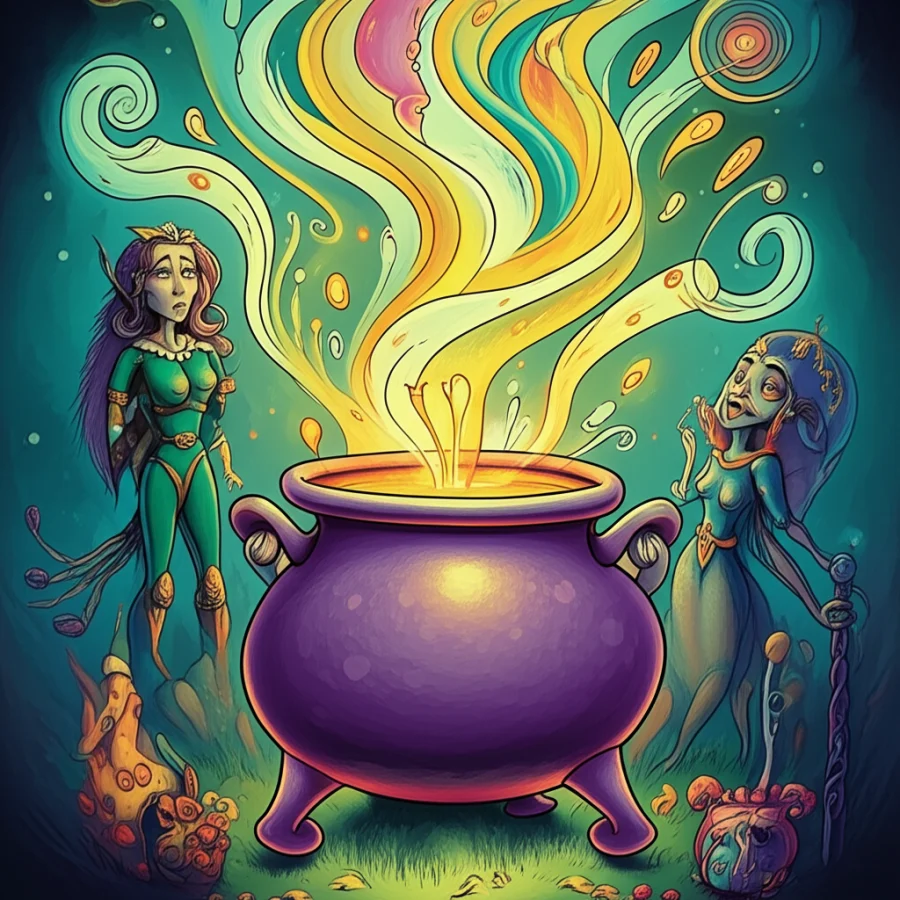
In the misty, verdant landscapes of ancient Ireland, where rolling hills met the churning grey sea, tales of gods and heroes were woven into the very fabric of existence. These were not merely bedtime stories, but rather profound narratives that explained the world, the cycles of life and death, and the forces that shaped human destiny. Among the most potent and enigmatic figures in this rich tapestry of folklore is the Morrigan, a complex entity often associated with war, fate, and sovereignty. And intertwined with her power, in some of these ancient narratives, is the legendary Cauldron of the Dagda, an artifact of immense, albeit symbolic, significance.
This is a story from the heart of Celtic mythology, a legacy passed down through generations of storytellers, bards, and scholars. It is a glimpse into the imaginative world of people who sought to understand the mysteries of the cosmos and their place within it through vibrant myths and legends. We delve into these tales not as a matter of current belief, but as a cultural exploration, an appreciation of the enduring power of human storytelling.
The cultural era from which these myths spring is generally considered to be the Iron Age and early medieval period in Ireland. This was a time of tribal societies, of chieftains and warrior prowess, where life was often a delicate balance between the bounty of the land and the ever-present threat of conflict. The natural world held immense sway – the changing seasons dictated survival, the wildness of the forests and the unpredictable nature of the sea instilled a sense of awe and respect. In such an environment, it was natural for people to personify the forces they observed. The thunder and lightning might be the anger of a deity, the fertility of the earth a blessing from a divine presence, and the chaos of battle a domain ruled by powerful, often terrifying, beings. The concept of the divine was deeply embedded in their understanding of existence, often perceived as active participants in the human realm.
Within this mythological framework, the Morrigan emerges as a figure of potent symbolism. She is not a single goddess, but often a collective of three powerful female deities, or a shapeshifting entity who embodies different aspects of sovereignty, war, and prophecy. Her presence is often foretold by the sight of a raven or a crow, birds associated with battlefields and the shedding of blood. The Morrigan represents the terrifying, yet essential, aspect of war – the cleansing fire that can precede renewal, the ultimate test of strength and will. She is the embodiment of the land’s fierce protectiveness, a force that demands respect and acknowledges the cyclical nature of life and death, victory and defeat. Her power is not one of gentle nurturing, but of potent influence over the very outcome of conflict, the fate of nations, and the destiny of kings.
Now, let us journey into a narrative, a retelling of an ancient story, to understand the interplay of these mythological elements. Imagine the scene: the air is thick with the scent of peat smoke and damp earth. A grand feast hall, dimly lit by flickering torches, is filled with the boisterous sounds of warriors and chieftains. Here sits the Dagda, a god of immense power and benevolent nature, often depicted as a father figure to his people. And before him, or perhaps within his domain, lies his legendary Cauldron.
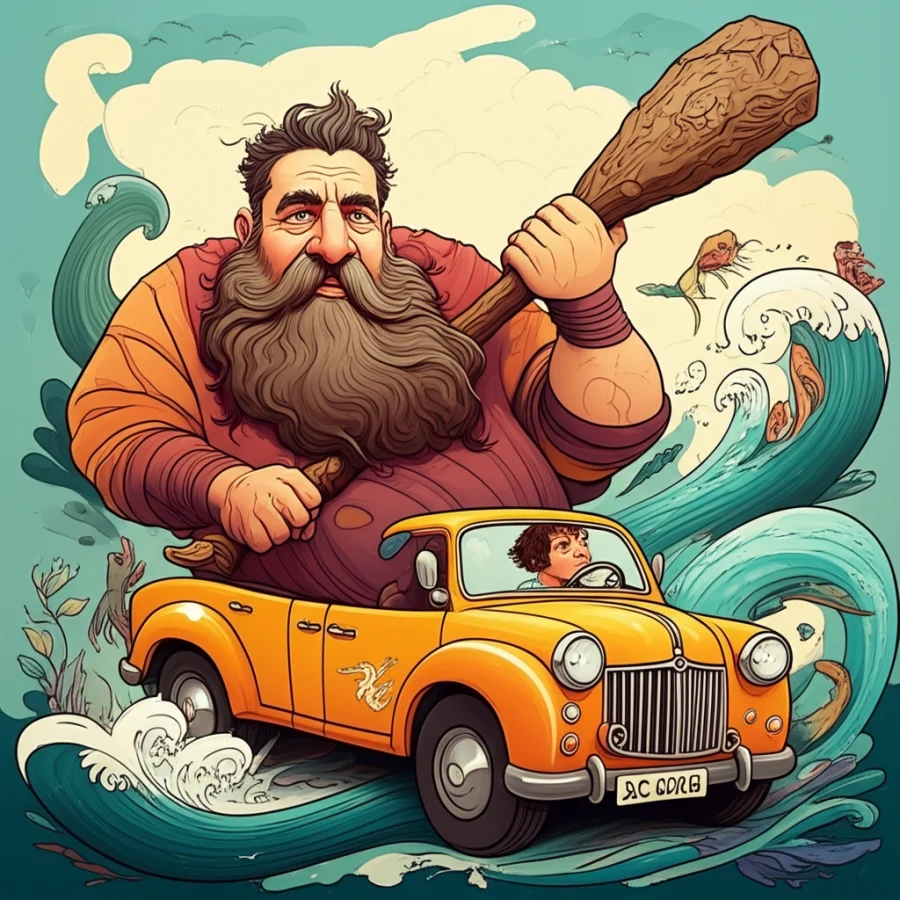
This is no ordinary cooking pot. The Cauldron of the Dagda is a vessel of extraordinary properties. It is said that no company would ever leave it unsatisfied, that it could provide an endless supply of food and drink. It symbolizes abundance, sustenance, and the prosperity of the land. However, its power is not merely passive. The Dagda, a god of many attributes, also possesses a formidable club, and his strength is legendary. Yet, in certain tales, the influence of the Morrigan is felt, even in relation to this symbol of plenty.
Consider a scenario where a great battle looms, and the morale of the warriors wavers. The Morrigan, in her guise as a raven or a spectral woman, might appear on the eve of conflict, her presence a chilling omen, a harbinger of the bloodshed to come. Her whispers could sow fear, or her pronouncements, imbued with prophetic foresight, could steel the resolve of those who dared to listen. It is in these moments, when the fate of armies hangs precariously in the balance, that the Cauldron of the Dagda’s abundance takes on a deeper meaning. The promise of sustenance, of a full belly after the fray, becomes a symbol of hope, a tangible reward for courage and sacrifice.
Perhaps the Morrigan, in her multifaceted nature, might even be seen as the ultimate arbiter of who feasts from the Dagda’s Cauldron. For in the brutal calculus of war, not all return to break bread. Her presence on the battlefield, her influence over the outcome, could be interpreted as the determining factor in who lives to be nourished and who falls to the earth, their sustenance forever denied. The Cauldron, therefore, becomes not just a symbol of plenty, but also a stark reminder of the precariousness of life and the ultimate power of fate, a concept intimately linked with the Morrigan. Her power is not in the creation of the cauldron, but in her dominion over the circumstances that allow one to benefit from its bounty. She is the force that dictates the very possibility of enjoying such a gift.
The symbolism within this narrative is rich and multifaceted. The Cauldron of the Dagda speaks to the fundamental human need for sustenance and security, representing the prosperity and well-being of a community. It embodies the ideal of a leader who can provide for his people, a source of unending bounty. The Morrigan, on the other hand, represents the wilder, more unpredictable forces of existence. Her association with war highlights the brutal realities of life in ancient times, the constant threat of violence and the inevitability of death. Together, their mythological interplay can be seen as representing the inherent duality of existence: the balance between peace and conflict, abundance and scarcity, life and death. The Morrigan’s power, in this context, is the power to influence the very conditions under which the Dagda’s gifts can be appreciated – a stark reminder that even the greatest abundance is fragile in the face of overwhelming forces.
In the modern world, these ancient tales continue to resonate, finding new life in various forms of popular culture. The Morrigan, with her dark and compelling aura, is a popular figure in fantasy literature, video games, and role-playing games, often portrayed as a powerful sorceress or a formidable warrior goddess. Her symbolism of war, fate, and sovereignty continues to captivate audiences. The Cauldron of the Dagda, while perhaps less frequently depicted, remains a potent symbol of abundance and magical provision, appearing in stories as a powerful artifact. These modern interpretations, while often inspired by the original myths, are creative expressions rather than direct retellings, demonstrating the enduring appeal of these ancient narratives and their capacity to spark imagination. Cultural studies scholars also analyze these myths to understand the values, beliefs, and social structures of ancient Celtic societies.
In conclusion, the story of the Cauldron of the Dagda and the power of the Morrigan is a fascinating glimpse into the rich mythology of ancient Ireland. It is a testament to the enduring power of storytelling, a tradition that allowed ancient people to grapple with the complexities of life, death, and the forces they perceived to be at play in their world. It is important to reiterate that these are traditional stories, products of human imagination and cultural expression, not factual accounts or matters of current belief. As Muslims, we recognize that the true Creator and Sustainer of all existence is Allah alone. Nevertheless, we can appreciate these narratives for their cultural heritage, their imaginative depth, and their contribution to the vast tapestry of human storytelling that continues to shape our understanding of the past and inspire our present. These ancient echoes remind us of the power of myth to explore fundamental human questions and to weave narratives that resonate across centuries.