fufufafa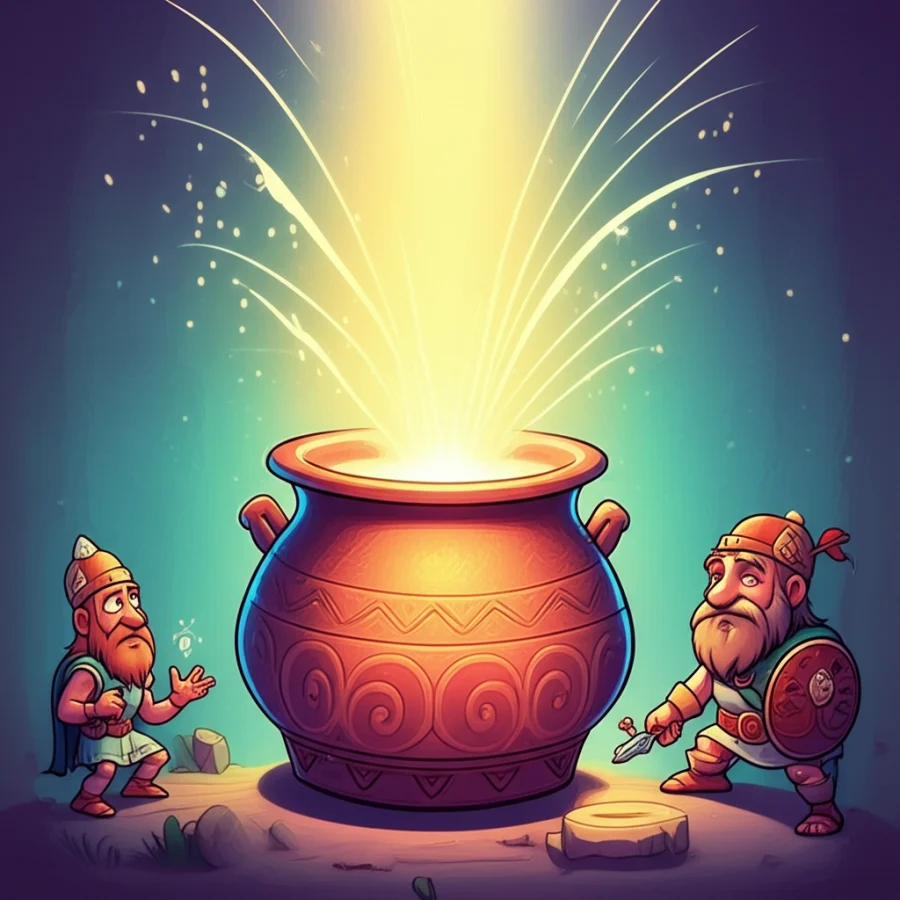
From the emerald isle of Ireland, a land steeped in mist and legend, springs a rich tapestry of myths and stories passed down through generations. These are not accounts of historical fact, but rather the imaginative narratives of ancient peoples, reflections of their understanding of the world, their fears, and their aspirations. Among these tales, the figure of the Dagda, a benevolent and powerful deity in Irish mythology, and his extraordinary Cauldron, interwoven with the essence of the sun god Lugh, offer a fascinating glimpse into the worldview of those who first shared these traditions.
Origins and Cultural Background: A World Alive with Spirits
The myths surrounding the Dagda and his Cauldron belong to the broader corpus of Celtic mythology, primarily associated with the Gaelic peoples of Ireland and Scotland. These stories likely took shape during the Iron Age and early medieval periods, a time when society was largely agrarian, with strong tribal structures. The natural world was not merely a backdrop but a living, breathing entity, imbued with spiritual force. Trees, rivers, mountains, and the celestial bodies were all believed to be inhabited by or connected to divine beings and supernatural forces.
The ancient Celts possessed a cyclical view of time, with emphasis on the rhythms of nature – the changing seasons, the waxing and waning of the moon, the journey of the sun. They believed in a vibrant underworld, a realm of the dead, and a powerful pantheon of gods and goddesses who influenced human affairs. This world was one of awe and mystery, where the boundaries between the mortal and the divine were often blurred. Storytelling was a vital part of their culture, serving not only as entertainment but also as a means of transmitting history, wisdom, moral codes, and a shared understanding of their place in the cosmos.
Character Description: The Dagda and the Radiant Lugh
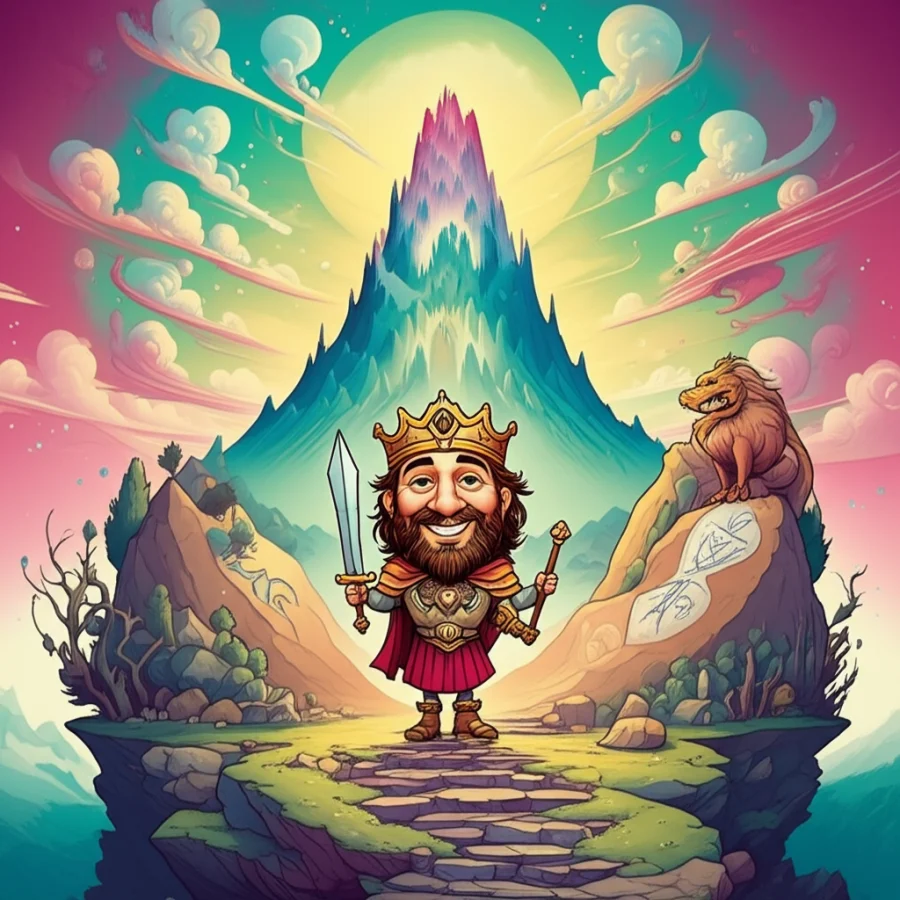
The Dagda, often translated as "the Good God" or "the Great God," was a central figure in the Tuatha Dé Danann, the mythical race of gods who inhabited Ireland. He was depicted as a figure of immense strength and wisdom, a veritable embodiment of abundance and sovereignty. His attributes were numerous: a great club that could crush mountains and then bring life back to the slain, a magical harp that could play music to evoke laughter or slumber, and perhaps most famously, his inexhaustible Cauldron. The Dagda was seen as a provider, a protector, and a leader, embodying the fertile earth and the bounty it offered.
Intertwined with the Dagda’s power, particularly concerning the Cauldron, is the symbolic presence of Lugh. Lugh, often associated with the sun, light, skill, and mastery, was a prominent deity known for his multifaceted talents and his radiant, life-giving energy. He was a skilled warrior, a craftsman, and a master of many arts. While not directly the owner of the Cauldron in most narratives, Lugh’s attributes of light, sustenance, and boundless potential are often reflected in the Cauldron’s legendary properties, suggesting a shared cosmic resonance. Lugh’s brilliance and the Cauldron’s inexhaustible nature speak to a similar theme of unending life and power.
The Cauldron’s Tale: A Feast of Eternal Plenty
The Cauldron of the Dagda was no ordinary vessel. It was a treasure of the Tuatha Dé Danann, brought from their mythical homeland. This magnificent Cauldron was said to be so large that a hundred men could feast from it at once. But its true marvel lay in its inexhaustible nature. No matter how much food was taken from it, it would always be replenished, always full. It was a symbol of perpetual abundance, a divine source of sustenance that could banish hunger and want.
Imagine a scene in ancient Ireland, perhaps within the walls of a chieftain’s hall or a sacred grove. The air hums with an almost palpable energy, a blend of the earthy scents of peat smoke and damp soil, and the ethereal glow that sometimes accompanied the presence of the gods. The Cauldron, perhaps crafted from gleaming bronze or even starlight, sits at the heart of this gathering. When the Dagda, a figure of imposing stature with a booming voice and a kindly gaze, commands it, the Cauldron would begin to fill.
As the hungry gathered, the Cauldron would offer forth roasted meats, hearty stews, and warm bread, a never-ending bounty. It was said that the food from this Cauldron would satisfy every craving, leaving no one wanting. It could also, in some retellings, heal the sick and restore the weary. This was a power that resonated deeply with a people whose lives were often at the mercy of the harvest and the vagaries of nature. The Cauldron represented the ultimate security, the promise of a world where no one would ever go hungry, a reflection of the ideal of a benevolent ruler ensuring the well-being of his people.
The story of the Cauldron is often intertwined with tales of its acquisition and protection. It was a prize fought over, a symbol of the power and prosperity of the Tuatha Dé Danann. The idea of its inexhaustibility also carried a subtle connection to the radiant energy of Lugh. Just as Lugh’s light illuminated and sustained the world, so too did the Cauldron offer a perpetual, life-affirming sustenance. This wasn’t just about physical nourishment; it was about the continuation of life, the flourishing of the community, and the enduring power of the divine to provide.
Symbolism and Meaning: Sustenance, Sovereignty, and the Cycles of Life
To the ancient peoples who shared these stories, the Cauldron of the Dagda held profound symbolic weight. Primarily, it represented abundance and sustenance. In a world where food security was a constant concern, the idea of an inexhaustible supply was a powerful aspiration, a wish for a world free from want and famine. It symbolized the benevolent provider, the divine king who ensured the well-being of his people.
The Cauldron also spoke to the concept of sovereignty. The ability to provide for one’s people was a key aspect of leadership and legitimate rule. The Cauldron, therefore, was a symbol of the rightful and prosperous reign of the Tuatha Dé Danann. Its power was a testament to their divine authority.
The association with Lugh, the god of light and life, further deepened its meaning. Lugh’s radiant energy, which fueled growth and dispelled darkness, found a parallel in the Cauldron’s ceaseless provision. It suggested a connection to the life-giving forces of the cosmos, the cycles of renewal, and the enduring power of nature. The Cauldron could be seen as a microcosm of the earth’s fertility, blessed by celestial forces.
Furthermore, the Cauldron could also symbolize healing and restoration. In some tales, its contents could mend wounds and revive the weak, reflecting a desire for well-being and resilience in the face of hardship. It was a potent symbol of hope and the promise of a brighter future.
Modern Perspective: Enduring Echoes in Art and Culture
The myths of the Dagda and his Cauldron, like many ancient tales, have endured, finding new life in modern interpretations. In literature, they serve as inspiration for fantasy novels, where magical artifacts and divine powers are common themes. Authors draw upon the rich imagery and symbolic potential of these stories to craft new narratives of adventure and wonder.
In the realm of video games and role-playing games, the Cauldron of the Dagda can manifest as powerful magical items, granting players unique abilities or serving as central quest objectives. These digital worlds often draw heavily on mythological archetypes, allowing players to interact with echoes of ancient legends.
In popular culture, the imagery of the Cauldron often evokes a sense of mystery, power, and ancient magic. While the direct worship or belief in these figures has long since faded for many, the stories themselves continue to capture the imagination, reminding us of the enduring power of human storytelling and the universal themes that have resonated across cultures and time. Cultural studies scholars also delve into these myths to understand the beliefs, values, and societal structures of ancient peoples.
Conclusion: A Tapestry of Imagination and Heritage
It is crucial to reiterate that the Cauldron of the Dagda and the power attributed to Lugh are elements of ancient mythology and folklore. These are traditional stories told by ancient peoples, offering a window into their worldview, their understanding of the world, and their imaginative expression. As Muslims, we recognize that only Allah is the true Creator and Sustainer of all that exists. These stories, while rich in cultural significance, are not to be considered divine truth or objects of worship.
However, the enduring presence of these myths in our cultural heritage speaks volumes about the human capacity for storytelling and the power of imagination. They are a testament to the creativity of past generations, their efforts to make sense of the world around them, and their desire to imbue life with meaning and wonder. The Cauldron of the Dagda, with its echoes of Lugh’s radiant power, remains a fascinating thread in the vast and intricate tapestry of human cultural heritage, reminding us of the stories that shaped our ancestors and continue to inspire us today.