fufufafa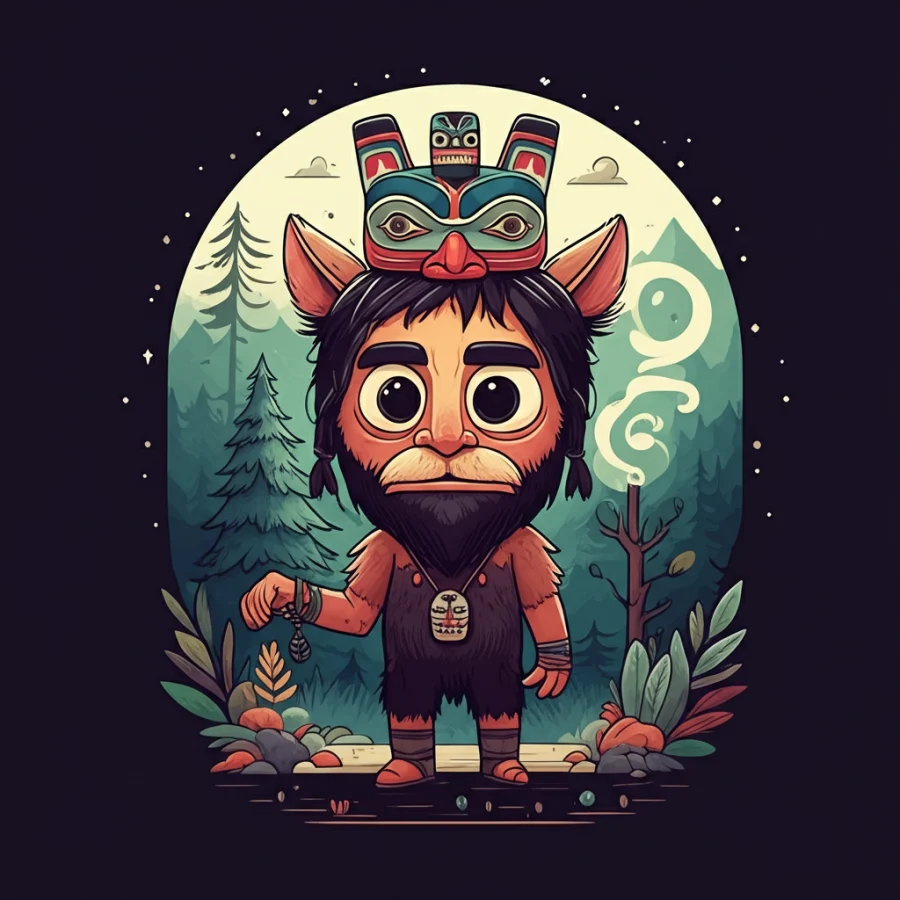
Echoes of Raven and the Winter Wind: A Tale of Two Traditions
Introduction
In the vast tapestry of North American Indigenous folklore, stories serve as maps for living, warnings against darkness, and explanations for the world’s wonders and sorrows. These are not historical accounts but imaginative narratives, passed down through generations by ancient peoples to impart wisdom. The story we will explore is a conceptual weaving of two powerful figures from distinct cultural regions: the Raven, a central being in the mythology of the Pacific Northwest peoples like the Haida and Tlingit, and the Wendigo, a spirit of dread from the traditions of the Algonquian-speaking peoples of the Great Lakes and Eastern Canada. This narrative is a fictional synthesis, an imagined meeting of two profound concepts, presented for cultural, historical, and educational understanding. It is a traditional-style story, meant to be appreciated as a product of human imagination and cultural expression, not as a statement of fact or belief.
Origins and Cultural Background
To understand these figures, we must step into the worldviews of the peoples who first told their stories. In the Pacific Northwest, life was defined by abundance and immense natural power. Towering cedar and spruce forests met a cold, life-giving sea. The world was seen as a dynamic place, inhabited by spirits in animals, trees, rivers, and mountains. Balance was paramount. Humans were not masters of nature but one part of a complex, interconnected web. Stories of the Raven Trickster often explain how the world came to be in its present form—how the sun was placed in the sky, how the tides were created, and how humans received the gift of fire.
Far to the east, in the boreal forests and around the Great Lakes, the Algonquian peoples faced a different reality. Winters were long, brutal, and unforgiving. Starvation was a real and terrifying threat. Their worldview was also one of a spirit-filled world, but their stories often carried stark warnings about survival. The legend of the Wendigo was born from the harshest realities of this environment. It was a cautionary tale about the fragility of the human spirit in the face of extreme desperation, greed, and the ultimate taboo of turning against one’s own kind to survive.
Character and Creature Description
The Raven is not a simple hero. In the lore of the Pacific Northwest, he is a complex and often contradictory being. Visually, he is a great bird with feathers like polished jet and eyes that hold the cleverness of starlight. Symbolically, he is a creator, a transformer, and a trickster. His actions are often driven by his own voracious appetite and curiosity, yet they frequently result in great benefits for humankind. He is the spirit of ingenuity, cunning, and the chaotic spark of creation. He is not worshipped as a deity but respected as a powerful ancestral figure from the mythic age when the world was still being formed.
The Wendigo, in its original folkloric form, is not a physical monster with antlers as often depicted in modern media. It is more accurately understood as a malevolent, cannibalistic spirit, or the manifestation of a human transformed by greed and desperation. It is described as gaunt and emaciated to the point of skeletal translucence, with a heart of ice. Its defining attribute is insatiable hunger. No matter how much it eats, it remains starving, forever seeking to consume. Symbolically, the Wendigo represents the abyss of human selfishness—the idea that unchecked greed and the abandonment of communal values can strip a person of their humanity, leaving only a cold, consuming void. It is a cautionary symbol of what happens when a person gives in to the darkest parts of their nature.
Main Story: The Whispering Famine
This is a retelling in the style of a traditional oral narrative. It is an imaginative story, not a factual account.
They say there was a winter so long and so cold that the great cedars groaned and the sea itself seemed to hold its breath beneath a sheet of ice. In a village nestled in a cove, the people’s stores of dried salmon and berries dwindled to nothing. The hunters returned with empty hands, their tracks swallowed by endless snow. The world grew dim and gray, and the laughter of children faded from the longhouses.
It was then that a new wind began to blow from the east, a wind that did not carry the familiar scent of pine and salt, but the thin, sharp whisper of an empty stomach. It was a foreign cold, one that chilled not just the body, but the spirit. This was the breath of the Wendigo, a spirit of unending hunger that had drifted far from its frozen homelands, drawn by the scent of despair.
It did not arrive as a monster. It came as a thought, a seed of ice planted in the hearts of the desperate. A man would look at his neighbor’s dwindling pile of firewood and feel a bitter envy. A woman would hide the last strip of dried fish from her own family. The spirit of sharing, which had kept the people strong for generations, began to fray. The community was turning inward, each person becoming an island of fear and hunger.
One hunter named Kael, a strong man whose pride was wounded by his inability to provide, ventured farther into the frozen forest than anyone had dared. For days he found nothing. Cold, starved, and lost, he collapsed at the foot of an ancient spruce. It was there the whisper found him, coiling in his mind. “You are alone,” it hissed. “Your strength is your own. Why share it? Eat. Survive. All is food for the one who is strong enough to take it.” The thought was monstrous, yet in his delirium, it felt like a terrible kind of warmth. His heart began to freeze.
Watching from a high branch, unseen, was Raven. He had noticed the imbalance. The sun he had long ago placed in the sky seemed weaker, its light thin and watery. The vibrant world he had helped shape was losing its color. Curious and hungry as always, he had followed the strange, cold scent to the village and then to the lost hunter. He saw the shadow flickering around Kael, a spirit not of the coastal forests, but of a bleaker, more desperate land.
Raven recognized the spirit for what it was: pure, insatiable hunger. A foolish being might have tried to fight it, but Raven was not foolish. He was clever.
He transformed himself into a small, shivering rabbit, its fur the color of fresh snow. He hopped weakly near Kael’s hand. The hunter, his mind clouded by the Wendigo’s influence, saw only a meal. He lunged. But just as his fingers brushed the fur, the rabbit vanished, and in its place was a gleaming salmon, flopping on the snow. Kael lunged again, and again the prize shifted, becoming a fat grouse, then a handful of ripe berries, then a steaming piece of seal blubber.
The hunter, driven by a hunger that was no longer his own, chased these illusions, scrambling through the snow, his spirit consumed by the chase. The Wendigo spirit within him howled with frustration. It could feel the presence of a great trickster.
Finally, Raven appeared before Kael in his true form, a magnificent bird blotting out the gray sky. He did not speak in words but in a vision projected into the hunter’s mind. He showed Kael not food, but the face of his wife, weaving a cedar blanket. He showed him his son, carving a small wooden canoe. He showed him the elders in the longhouse, sharing the last of their tea around a dying fire, their faces etched with worry for him. He showed him the warmth of community, the strength that came not from taking, but from giving.
Then, Raven did his greatest trick. He looked at the Wendigo spirit that clung to Kael and offered it a vision of its own: a feast that stretched to the horizon, an endless banquet that could never be consumed. The spirit of pure hunger, unable to resist such a promise, uncoiled itself from the hunter’s soul and lunged toward the grand illusion. Raven snapped his beak, and the vision shattered like ice. The spirit, tricked and unmoored, was caught in a sudden gust of wind—a warm Chinook wind that Raven had called from the coast—and was blown back eastward, howling its eternal hunger into the wilderness.
Kael awoke, the frost in his heart melted. He was weak and ashamed, but he was himself again. Raven, with a satisfied caw, led him back to the village. As they arrived, the clouds broke, and the sun shone with its true strength. The ice on the cove began to crack, and a seal surfaced, a promise of life’s return. The people learned a powerful lesson that winter: the greatest famine is not of the body, but of the spirit, and the only cure is to share the fire of community.
Symbolism and Meaning
To the ancient peoples who might have told such a story, its meaning would be clear and profound. The Wendigo was a powerful symbol for the destructive nature of greed and the breakdown of social bonds. In a society where survival depended on cooperation, the idea of an individual putting their own needs above all others was the ultimate threat. The story served as a moral lesson: succumbing to selfishness, especially during hard times, is to lose one’s humanity.
Raven, in this context, represents wisdom, ingenuity, and the resilience of culture. He doesn’t defeat the Wendigo with force, but with cleverness and by reminding the hunter of his communal ties. He restores balance not by destroying the darkness, but by re-igniting the light of human connection. The story reinforces the idea that the greatest strength of a people is their ability to care for one another.
Modern Perspective
Today, these mythological figures continue to resonate, though often in altered forms. The Wendigo has become a popular monster in horror literature, films (like Antlers), and video games (like Until Dawn). This modern interpretation often focuses on its physical monstrosity, depicting it as a creature of flesh and bone rather than the more nuanced spiritual threat of the original folklore. The term "Wendigo psychosis" was also explored by early psychologists to describe a culture-bound syndrome related to fears of succumbing to cannibalism during starvation.
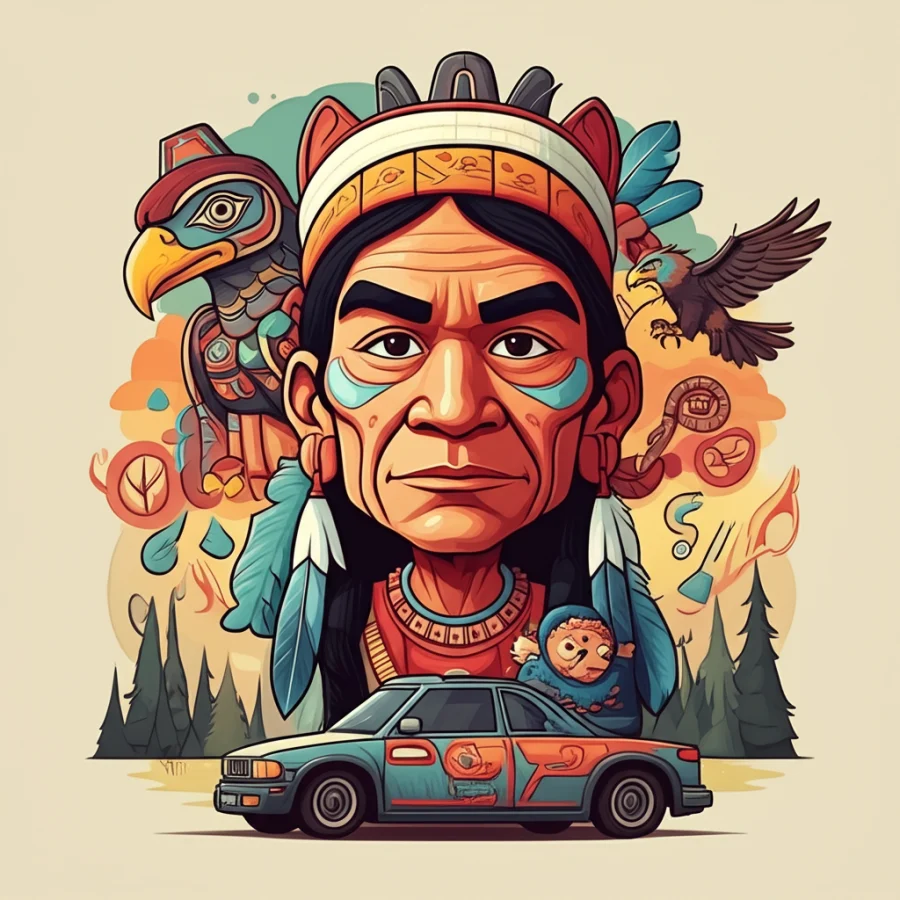
Raven remains a powerful and respected figure in contemporary Pacific Northwest Indigenous art, ceremony, and storytelling. He is a symbol of cultural identity and creativity, his image adorning everything from totem poles to modern graphic designs. In academic and cultural studies, both figures are examined as complex metaphors for human psychology, social ethics, and humanity’s relationship with the natural world.
Conclusion
The tale of Raven’s encounter with the spirit of the Wendigo is a narrative bridge between two distinct cultural traditions, a story built to explore timeless human struggles. It is essential to remember that this and all such myths are cultural treasures, products of the imagination that served to guide, teach, and explain the world for ancient peoples. They are not articles of faith but windows into the rich and diverse heritage of human storytelling.
As Muslims, we recognize that only Allah is the true Creator and Sustainer of the universe, the sole source of all power and reality. These folkloric tales are creations of humankind, not divine truths. By studying them with respect and an educational lens, we can gain a deeper appreciation for the different ways cultures have sought to understand morality, nature, and the human condition, celebrating the enduring power of stories to shape our world.