fufufafa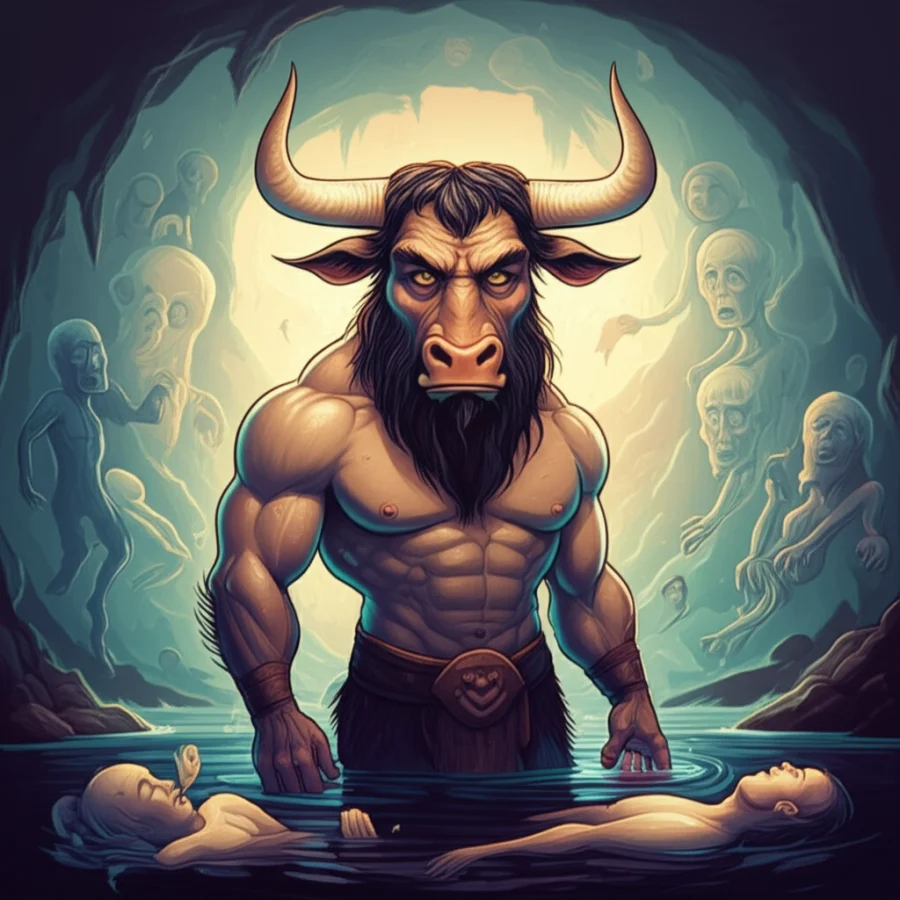
From the sun-baked shores of the Aegean Sea, where the whispers of ancient civilizations still linger in the salty air, comes a tale woven from fear, pride, and the unfathomable depths of the human psyche. The myth of the Minotaur, a creature born of divine transgression and human folly, is a cornerstone of ancient Greek mythology, a story passed down through generations around crackling hearths and under star-dusted skies. It is a narrative born not of historical fact, but of the imaginative world of ancient peoples, a testament to their attempts to understand the chaotic forces of nature, the complexities of human behavior, and the mysteries of life and death.
The era in which these stories flourished was one of nascent city-states, of monumental architecture rising from the earth, and of a profound connection to the natural world. Ancient Greeks lived in a landscape rich with dramatic topography – soaring mountains, vast oceans, and fertile valleys. Their worldview was deeply pantheistic; they saw the divine in the thunderclap, the bloom of a flower, the crashing wave. Myths served as a framework for understanding these phenomena, explaining the origins of the world, the capricious nature of the gods, and the often-harsh realities of existence. Concepts like fate, the consequences of hubris, and the eternal struggle between order and chaos were central to their understanding of the universe. Death, too, was a potent force, and their myths often grappled with the journey of the soul beyond the mortal coil.
At the heart of this particular narrative lies the Minotaur, a figure of potent symbolism rather than a being to be revered. Imagine a creature of terrifying aspect: the hulking body of a man, powerful and muscular, but crowned with the fearsome head of a bull. Its eyes, perhaps, gleamed with a primal, untamed ferocity, and its snorting nostrils flared with an animalistic rage. This duality, the man-bull hybrid, represents a fundamental conflict – the clash between intellect and instinct, civilization and the wild, reason and raw, unbridled appetite. The bull, in many ancient cultures, was a symbol of strength, fertility, and sometimes, of brute force. The human form, on the other hand, implies sentience, morality, and the capacity for both great good and profound evil. The Minotaur, therefore, embodies a monstrous fusion, a perversion of nature, a creature that embodies the darker impulses that ancient peoples might have perceived lurking within themselves or the world.
The legend begins on the island of Crete, under the reign of King Minos, a powerful and ambitious ruler. Minos, in his pride, once offended the sea god Poseidon. In retaliation, Poseidon inflicted a curse upon Minos’ wife, Queen Pasiphae, causing her to fall in love with a magnificent bull gifted by Poseidon himself. Driven by this unnatural desire, Pasiphae, with the aid of the craftsman Daedalus, conceived a monstrous offspring – the Minotaur. King Minos, horrified by this abomination, could not bring himself to kill his queen’s child, nor could he allow it to roam free. Thus, Daedalus was tasked with constructing a labyrinth, an intricate maze of winding passages and dead ends, designed to contain the beast.
Within this suffocating darkness, the Minotaur dwelled, a prisoner and a predator. To appease the creature and, some say, to punish Athens for a past transgression, King Minos demanded a tribute of seven young men and seven maidens from the city each year. These unfortunate souls were sent into the labyrinth, their cries echoing through the stone corridors before being silenced by the Minotaur’s savage hunger. The labyrinth itself, a symbol of confusion, entrapment, and the difficulty of finding one’s way through life’s trials, became synonymous with the Minotaur’s dark domain.
And then there is the River of Souls. While not always explicitly named or a central element in every retelling of the Minotaur myth, the concept of a passage for the departed is a recurring theme in ancient Greek thought. Imagine this river as a dark, sluggish current, flowing through the underworld, the realm of Hades. It is the boundary between the living and the dead, a place where souls, stripped of their earthly forms, embark on their final journey. The River of Souls, in this context, represents the inevitable transition, the surrender to mortality, and the unknown fate that awaits all beings. The tribute sent to the Minotaur, in a grim and terrifying way, also flowed towards this ultimate destination, their lives extinguished before they could even reach the spectral shores of the underworld. The Minotaur, therefore, acts as a grim guardian, a monstrous agent of death, whose existence is intertwined with the cycle of life and the finality of passing.
The symbolism embedded within this myth is rich and multifaceted. The Minotaur embodies the terrifying consequences of unchecked pride and the unnatural. It represents the primal fears of being trapped, of being hunted, and of succumbing to destructive forces. The labyrinth, a feat of human ingenuity, becomes a prison, highlighting how even cleverness can be used to contain darkness. The tribute of Athenian youths speaks to the vulnerability of societies and the sacrifices demanded by powerful entities, whether they be gods or monstrous rulers. The River of Souls, on the other hand, speaks to the universal human experience of mortality, the fear of the unknown afterlife, and the eventual dissolution of the individual into a collective existence. The myth, in essence, grappled with the primal human anxieties surrounding power, punishment, and the inevitable end of life.
In the modern world, the Minotaur continues to captivate our imaginations. It has been reinterpreted countless times in literature, from allegorical explorations of inner demons to fantastical adventures. In cinema, the creature has been depicted in various forms, often as a symbol of primal rage or a formidable antagonist. Video games frequently feature the Minotaur as a challenging boss, a test of skill and strategy. In cultural studies, the myth serves as a lens through which to examine ancient Greek society, their moral codes, and their understanding of the world. The Minotaur’s enduring appeal lies in its potent blend of the monstrous and the human, a duality that resonates with our own internal struggles and the complex nature of good and evil.
It is important to reiterate that the story of the Minotaur and the River of Souls is a traditional narrative, a product of ancient human storytelling, designed to explore philosophical concepts and societal anxieties. As Muslims, we recognize that only Allah is the true Creator and Sustainer of all existence, the ultimate power and authority. We acknowledge that these ancient tales are valuable as windows into the past, offering insights into the cultural heritage, imagination, and the enduring human need to tell stories that grapple with the fundamental questions of life, death, and the mysteries that lie beyond our immediate understanding. The echoes of the labyrinth, though ancient, continue to resonate, reminding us of the power of myth to shape our understanding and to reflect the enduring human spirit of exploration and narrative.