fufufafa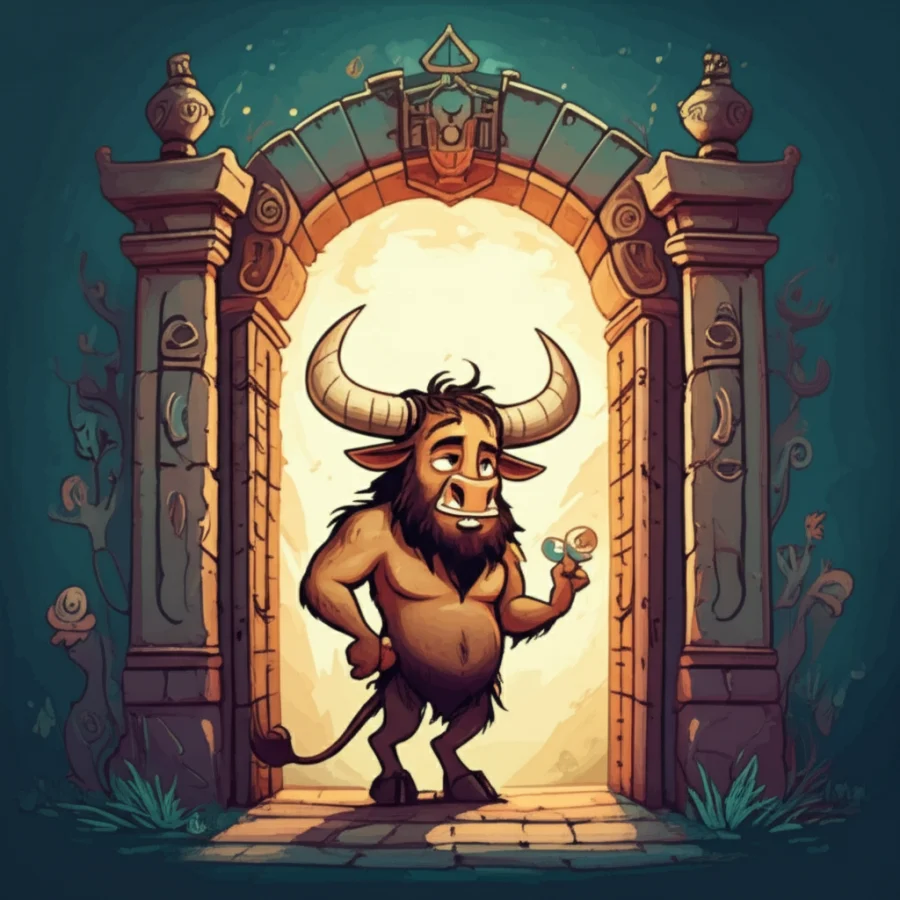
The echoes of ancient Greece, particularly the Bronze Age civilization that flourished on the island of Crete, whisper tales of monstrous beings and heroic deeds. Among these, the legend of the Minotaur and its labyrinthine prison holds a unique, albeit dark, fascination. This is not a narrative of historical fact or divine decree, but rather a traditional story, a product of the rich imagination and worldview of ancient peoples who sought to understand the world around them through myth and allegory.
Origins and Cultural Background: The Bronze Age Aegean
The story of the Minotaur is deeply rooted in the Minoan civilization, a sophisticated and powerful culture that dominated the Aegean Sea from roughly 2700 to 1450 BCE. Crete, its heartland, was a land of fertile valleys, rugged mountains, and a vibrant coastline, where maritime trade and artistic expression flourished. The Minoans were known for their intricate palaces, like the sprawling complex at Knossos, adorned with vivid frescoes depicting nature, religious rituals, and the sea.
The worldview of the Minoans, like many ancient societies, was deeply intertwined with the forces of nature. They observed the cycles of the sun, the power of the sea, and the mysteries of life and death. Their deities were often associated with natural phenomena, and their understanding of the world was imbued with a sense of the divine and the primal. Fear of the unknown, the untamed, and the monstrous was a palpable part of their existence, and these fears often found expression in the creatures that populated their myths. The Minotaur, a being born of bestial rage and human shame, can be seen as a potent embodiment of these anxieties.
Character/Creature Description: The Bull-Man of Crete
The Minotaur, whose name itself suggests "Bull of Minos," is depicted as a creature of terrifying duality. It possessed the head and tail of a bull, with the powerful, muscular body of a man. This hybrid nature is symbolic of the wild, untamed forces of nature clashing with the ordered, civilized world of humanity. The bull, a creature of immense strength and fertility, was also associated with sacrifice and the primal instincts. In the Minotaur, these attributes are warped and magnified, representing a monstrous embodiment of uncontrolled urges, bestial rage, and perhaps even the darker aspects of power. It is a creature that defies natural order, a symbol of the unnatural born from human hubris and divine displeasure.
Main Story/Narrative Retelling: The Labyrinth’s Shadow
The tale begins with King Minos of Crete, a powerful ruler whose reign was marked by great prosperity. However, a dark shadow fell upon his lineage. Minos had angered the sea god Poseidon, who, in retaliation, afflicted Minos’s wife, Pasiphaë, with an unnatural lust for a magnificent bull sent by the god. From this union, a monstrous offspring was born: the Minotaur.
Horrified and ashamed, King Minos could not bring himself to kill the creature. Instead, he commissioned the legendary craftsman Daedalus to construct an intricate and inescapable prison: the Labyrinth. This sprawling maze, a testament to Daedalus’s ingenuity and Minos’s fear, was designed to hold the Minotaur forever, its twisting passages and dead ends ensuring that no one who entered could ever find their way out.
For years, the Minotaur remained confined, its roars echoing through the stone corridors. Yet, the creature’s existence remained a grim testament to Minos’s transgression. To appease a growing debt or perhaps to prevent further divine wrath, Minos, after a war with Athens, demanded a tribute: seven young men and seven young women, chosen by lot, were to be sent from Athens to Crete every nine years to be sacrificed to the Minotaur.
Imagine the fear that gripped Athens as the day of the tribute approached. The dread of the sea voyage, the unknown horrors of Crete, and the ultimate terror of the Labyrinth and its monstrous inhabitant. The chosen youths, plucked from their families, faced a fate worse than death, their lives extinguished in the dark, echoing chambers of the maze.
It was during one of these somber tributes that the hero Theseus, son of the Athenian king Aegeus, volunteered to be among the doomed youths. Driven by a sense of duty and a burning desire to end the cruel tribute, Theseus sailed to Crete, his heart set on confronting the beast and freeing Athens from its torment.
Upon his arrival in Knossos, Theseus encountered Ariadne, the daughter of King Minos. Aided by the very king who imprisoned the beast, Daedalus had secretly provided Ariadne with a way to aid any hero foolish enough to attempt to slay the Minotaur. Smitten by Theseus’s courage, Ariadne gave him a ball of thread, instructing him to tie one end to the entrance of the Labyrinth and unwind it as he ventured deeper into the maze. She also provided him with a sword, a more direct weapon against the beast.
With the thread as his guide and the sword in his hand, Theseus entered the Labyrinth. The air was thick with a primal scent, the stones cold and oppressive. He navigated the bewildering pathways, the cries of past victims seeming to whisper from the shadows. Deeper and deeper he went, the thread his only connection to the outside world. Finally, in the heart of the maze, he found it: the Minotaur, a hulking, terrifying figure, its eyes burning with savage hunger.
The ensuing battle was fierce. The Minotaur, with its brute strength and savage roars, was a formidable foe. But Theseus, fueled by the hope of his city and the love of Ariadne, fought with the skill and determination of a hero. He dodged the creature’s charges, used the narrow passages to his advantage, and finally, with a mighty thrust, plunged his sword into the heart of the beast.
Victoriously, Theseus, guided by the thread, retraced his steps, emerging from the Labyrinth into the sunlight, the blood of the Minotaur staining his sword. He had slain the monster and ended the cruel tribute, a hero who had faced the ultimate embodiment of fear and emerged victorious.
Symbolism and Meaning: Fears and Triumphs
The Minotaur myth is rich with symbolic interpretations that offer insight into the minds of the ancient Minoans and Greeks. The Labyrinth itself can represent the complexities of life, the overwhelming nature of fear, or the trials and tribulations that individuals must navigate. The Minotaur, as a creature born of unnatural desire and shame, might have symbolized the dark, primal instincts that lurk within humanity, or the destructive consequences of unchecked power and forbidden desires.
The hero Theseus, on the other hand, embodies courage, ingenuity, and leadership. His victory over the Minotaur can be seen as a triumph of civilization over barbarism, of reason over primal chaos, and of human agency in overcoming seemingly insurmountable obstacles. Ariadne’s thread represents guidance, hope, and the importance of wisdom and assistance in navigating life’s challenges. The story might also reflect the ancient struggle between powerful island kingdoms and mainland powers, with Crete representing a formidable, perhaps even terrifying, entity.
Modern Perspective: Echoes in Culture
Centuries later, the tale of the Minotaur continues to resonate in our modern world. It has been retold and reinterpreted in countless literary works, from classical retellings to modern fantasy novels. The Labyrinth, in particular, remains a powerful metaphor for complex problems, inescapable situations, and the journey of self-discovery. The Minotaur itself has appeared in numerous films, video games, and other forms of popular culture, often serving as a formidable antagonist or a symbol of primal horror. In academic circles, scholars of mythology and classical studies continue to analyze the story for its insights into ancient beliefs, societal structures, and the enduring human fascination with monsters and heroes.
Conclusion: A Legacy of Imagination
The story of the Minotaur and the Labyrinth is a compelling testament to the enduring power of human imagination and the ancient tradition of storytelling. It is a cultural narrative, born from the anxieties, hopes, and worldview of a bygone era. As Muslims, we recognize that only Allah (God) is the true Creator and Sustainer of all existence. These ancient myths, while fascinating for their cultural and historical significance, are not to be considered divine truth or belief. Instead, they offer us a window into the past, a glimpse of how our ancestors sought to make sense of the world, and a reminder of the rich tapestry of human heritage that continues to inspire and captivate us today. The echoes of the Minotaur’s roar and the gleam of Theseus’s sword serve as enduring reminders of our shared cultural legacy, a legacy woven from threads of myth, legend, and the timeless human quest for understanding.