fufufafa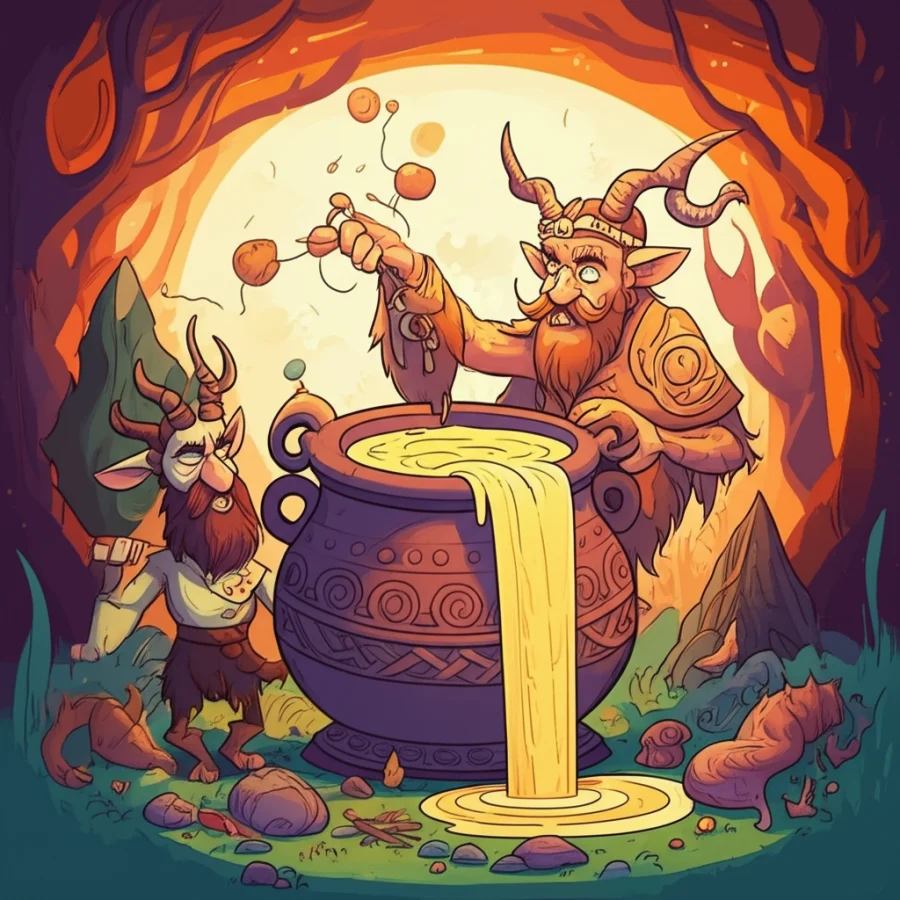
The mists that cling to the emerald hills of Ireland have long carried tales of gods, heroes, and the potent magic woven into the fabric of existence. Among these narratives, the story of the Cauldron of the Dagda and its connection to the primal force often associated with Cernunnos, the horned god, offers a fascinating glimpse into the worldview of ancient Celtic peoples. These are not accounts of historical fact, but rather traditional stories, passed down through generations, reflecting the deep reverence these ancient cultures held for the natural world, its cycles, and the unseen forces they believed governed them.
The cultural landscape from which these myths emerged was one of a vibrant, agrarian society deeply intertwined with the rhythms of nature. For the ancient Celts, life was lived in close communion with the land, the forests, the rivers, and the ever-shifting seasons. Their world was not neatly divided into the secular and the sacred; rather, it was imbued with a spiritual essence that permeated every aspect of existence. They perceived the world as alive, inhabited by spirits and deities who influenced the fertility of the soil, the bounty of the hunt, the passage of time, and the very essence of life and death. Their cosmology was often cyclical, mirroring the turning of the wheel of the year, with an understanding of rebirth and renewal inherent in the natural world. This perspective fostered a deep respect, and sometimes a profound awe, for the forces that shaped their lives, leading to the creation of rich mythologies that sought to explain and honor these potent energies.
Within this tapestry of belief, figures like the Dagda and the symbolism associated with Cernunnos emerge. The Dagda, often depicted as a powerful and benevolent chieftain of the Tuatha Dé Danann, the supernatural race of gods in Irish mythology, was a figure of immense strength, wisdom, and abundance. His most renowned possession was his Cauldron, a symbol of inexhaustible sustenance and nourishment. This was no ordinary cooking pot; it was a vessel capable of feeding an entire host, providing an unending supply of food. Its symbolic weight lay in its representation of prosperity, generosity, and the ability to sustain life, a vital concern for a people whose survival depended on the land’s bounty.
The association with Cernunnos, often depicted as a wild, horned god of nature, fertility, and the untamed aspects of the wild, adds another layer of primal power to these narratives. Cernunnos, with his antlers reaching towards the sky and his association with animals, particularly stags and serpents, represented the raw, untamed forces of the natural world. He embodied the virility of the forest, the abundance of the wild, and perhaps even the mysteries of life and death. While not always explicitly linked in every telling, the Cauldron of the Dagda, as a symbol of ultimate provision and sustenance, could be seen as drawing upon or being influenced by the very generative power that Cernunnos embodied. The abundance it represented was, in essence, the overflowing vitality of the natural world, a concept intrinsically tied to the essence of the horned god.
The narrative surrounding the Cauldron of the Dagda often unfolds in tales of conflict and sustenance. Imagine a scene where the Tuatha Dé Danann face hardship, perhaps a famine or a siege. The Dagda, with his imposing stature and his deep, resonating voice, would bring forth his legendary Cauldron. As the story would unfold, the Cauldron would begin to fill, not with mere ingredients, but with the very essence of life itself. Meats would cook, grains would bake, and an endless stream of nourishment would pour forth, banishing hunger and despair. It was a symbol of the gods’ power to overcome adversity and to provide for their people, a testament to their benevolent rule and their connection to the fertile energies of the earth.
The presence of Cernunnos, or the primal forces he represents, would be felt not in direct action but in the very nature of the Cauldron’s power. The inexhaustible supply of food, the abundance of life, could be interpreted as a reflection of the wild, fertile spirit of nature that Cernunnos symbolized. It was as if the Cauldron tapped into the deep wellspring of creation, a power that Cernunnos, as a god of fertility and the wild, was intrinsically linked to. The story is not about a god wielding a tool, but about the symbolic representation of sustenance derived from the potent, life-giving forces of the world.
The symbolism embedded within these stories is multifaceted and deeply resonant. The Cauldron of the Dagda clearly represented prosperity, generosity, and the vital importance of sustenance for a community. It spoke to the desire for security and the hope for abundance, especially in a world where unpredictable harvests could spell disaster. The potential connection to Cernunnos highlights the ancient understanding of life as a wild, untamed force, a source of both immense creativity and potential danger. Together, they might have represented the delicate balance between human civilization and the powerful, often unpredictable, forces of nature that sustained and threatened it. The stories served as a way to understand these forces, to pay homage to them, and perhaps to seek their favor.
In the modern world, these ancient myths continue to captivate imaginations and find new expressions. The Cauldron of the Dagda and the symbolism of Cernunnos are frequently explored in literature, fantasy novels, and role-playing games, where they often serve as potent symbols of magic, power, and primal connection to the earth. Cernunnos, in particular, has seen a resurgence in Neo-Pagan and Wiccan traditions, where he is sometimes revered as a god of nature and fertility. In academic circles, these myths are studied within the fields of folklore, mythology, and Celtic studies, offering insights into the beliefs, values, and societal structures of ancient peoples. They serve as invaluable windows into the human condition, exploring themes of power, provision, and our relationship with the natural world.
In conclusion, the story of the Cauldron of the Dagda and its implicit connection to the power of Cernunnos is a rich tapestry woven from the threads of ancient Celtic imagination. These are not divine pronouncements but rather profound narratives, born from a deep connection to the earth and a desire to understand the forces that shaped life. As Muslims, we recognize that all creation, and the sustaining power behind it, originates from Allah, the One True Creator and Sustainer. These ancient stories, however, offer a valuable glimpse into the cultural heritage and the enduring power of human storytelling. They remind us of the universal human need to find meaning, to explain the world around us, and to celebrate the cycles of life, abundance, and the enduring magic of the imagination.