
 fufufafa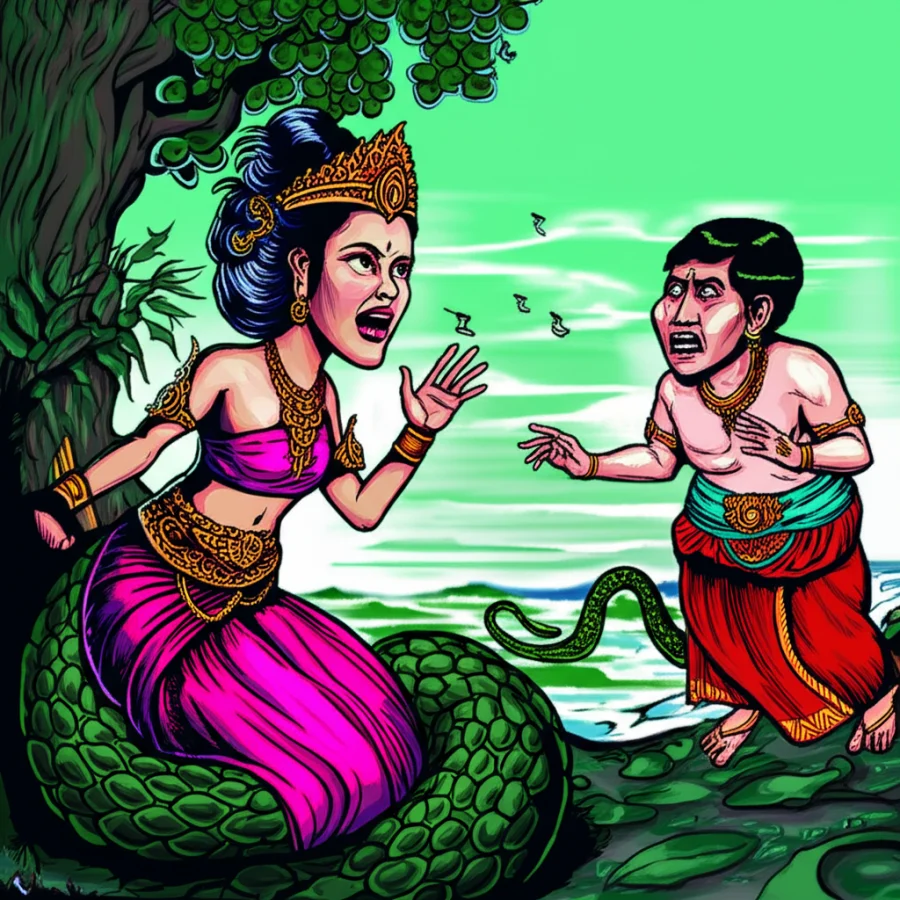
Introduction:
The tale of Nyai Blorong, the Queen of the South Sea, is a vibrant thread woven into the rich tapestry of Javanese folklore. This is a story passed down through generations, whispered around crackling fires and shared in the hushed tones of the wayang kulit (shadow puppet) performances. It originates from the heart of Java, specifically the coastal regions bordering the Indian Ocean, a place steeped in ancient traditions and a deep reverence for the natural world. This narrative, a product of human imagination and cultural expression, is not intended to be a literal truth or a call to worship, but rather a window into the beliefs and perspectives of the people who first told it. We explore it here to understand the cultural landscape from which it sprang.
Origins and Cultural Background:
The story of Nyai Blorong flourished in a Java deeply rooted in pre-Islamic beliefs, a time when animism and ancestor worship held sway. The environment of this era was one of lush rice paddies, volcanic mountains, and a vast, unpredictable ocean. The sea, in particular, was seen as a powerful, almost mystical force, both a source of life and a harbinger of danger. Fishermen depended on its bounty, while sailors navigated its treacherous currents, always mindful of the spirits that were believed to inhabit its depths.
People of this time viewed the world through a lens of interconnectedness. Everything, from the smallest insect to the largest mountain, was thought to possess a spirit or a roh. The natural world was not merely a backdrop, but a dynamic, living entity that interacted with humans. Respect for the natural order was paramount, and rituals and offerings were often performed to appease the spirits and ensure harmony between the human and spiritual realms. This worldview heavily influenced their stories. Mythology was a tool for understanding the universe, explaining natural phenomena, and providing moral guidance. Stories of powerful beings like Nyai Blorong served as both warnings and reminders of the forces that shaped their lives.
Character / Creature Description:
Nyai Blorong, as she is known, is a striking figure. She is often depicted as a beautiful woman, radiating an ethereal beauty, with long, flowing black hair that cascades down her back like a waterfall. However, beneath the human form, her lower body is often described as that of a serpent, a shimmering, scaled tail that slithers through the waves. The snake, in Javanese cosmology, symbolizes the connection between the earthly and the underworld.
Nyai Blorong is often associated with wealth and power. She is said to control the riches of the sea, treasures both tangible and intangible. This association reflects the reverence for the ocean’s bounty and the inherent allure of wealth in Javanese society. Her beauty, while captivating, is often tinged with a sense of danger. She is a reminder that beauty can be deceptive, and the pursuit of material gain can come at a steep price. Symbolically, she may represent the allure of worldly possessions and the potential for their corrupting influence. She is a powerful being, but not necessarily a benevolent one. Her actions, as told in the stories, often serve to test the morals and virtues of those who encounter her.
Main Story / Narrative Retelling:
The legend often unfolds near Keraton Parangkusumo, a sacred site on the southern coast of Java, a place where the Sultan of Mataram, a powerful kingdom, sought spiritual guidance. It is here that the sands whisper the secrets of Nyai Blorong.
The story begins with a humble fisherman named Joko. He was known for his honesty and unwavering respect for the sea. One day, while fishing, Joko’s net snagged on something heavy. With great effort, he pulled it ashore, only to discover a chest overflowing with gold and jewels. Overjoyed, he brought his treasure home, and his life changed dramatically.
News of Joko’s newfound wealth spread like wildfire. Nyai Blorong, aware of his newfound riches, observed him. Initially, she tested his character. She appeared to him in the guise of a beautiful woman, promising him even greater wealth if he would dedicate himself to her. Joko, tempted by the promise of more riches, began to stray from his moral compass. He became arrogant, neglecting his family and community.
Nyai Blorong, seeing his corruption, revealed her true form. The beautiful woman transformed into the serpentine queen of the sea, her eyes gleaming with both power and a hint of disappointment. She confronted Joko, reminding him of his initial honesty and the dangers of greed. She offered him a final choice: return to his former life of simplicity and lose his newfound wealth, or serve her, forfeiting his soul.
Joko, realizing the error of his ways, chose the former. Nyai Blorong, impressed by his change of heart, allowed him to retain some of his wealth, but warned him never to forget the lesson he had learned. She then vanished back into the depths of the ocean. Joko, humbled and wiser, returned to his simple life, using his remaining wealth to help his community. He learned the true value of humility and the importance of resisting the temptations of greed.
Symbolism and Meaning:
The story of Nyai Blorong carries layers of symbolic meaning. She can represent the seductive allure of wealth and power, the dangers of greed, and the importance of remaining true to one’s values. The ocean, her domain, embodies the vastness and unpredictability of life. Joko’s journey reflects a common moral struggle: the conflict between worldly desires and spiritual integrity. His eventual return to a simpler life underscores the value placed on humility, honesty, and the enduring strength of the human spirit. The story serves as a cautionary tale, warning against the corrupting influence of material possessions and reminding listeners to maintain their moral compass, even when faced with temptation. It also speaks of the interconnectedness of humans with nature and the respect that must be given to it.
Modern Perspective:
In the modern era, the myth of Nyai Blorong continues to resonate. It has found its way into various forms of media, from novels and short stories to movies and video games. The character is often reinterpreted, sometimes as a villain, other times as a complex figure with her own motivations and struggles. These modern adaptations often explore themes of environmental conservation, the clash between tradition and modernity, and the enduring power of folklore. In cultural studies, the story is analyzed for its reflection of Javanese cultural values, its exploration of gender roles, and its commentary on societal power dynamics. The enduring popularity of Nyai Blorong demonstrates the lasting appeal of these stories and their continued relevance in the modern world.
Conclusion:
The tale of Nyai Blorong is a powerful example of the rich storytelling tradition that has shaped Javanese culture for centuries. It is a story to be appreciated for its cultural significance, its exploration of human nature, and its imaginative scope, not a literal belief system. We, as Muslims, recognize that all creation and power belong solely to Allah, the one true God, who is the Creator and Sustainer of all things. The Nyai Blorong myth, and others like it, provide a fascinating window into the past, allowing us to appreciate the creativity and worldview of our ancestors. It’s a testament to the power of stories to transmit values, explore complex themes, and spark the imagination. These tales remind us of our cultural heritage and the enduring power of storytelling. They offer us the opportunity to reflect on the nature of good and evil, the allure of wealth, and the importance of remaining true to our values. As we listen to these ancient echoes, we can appreciate the beauty and wisdom woven into the fabric of human experience.







