fufufafa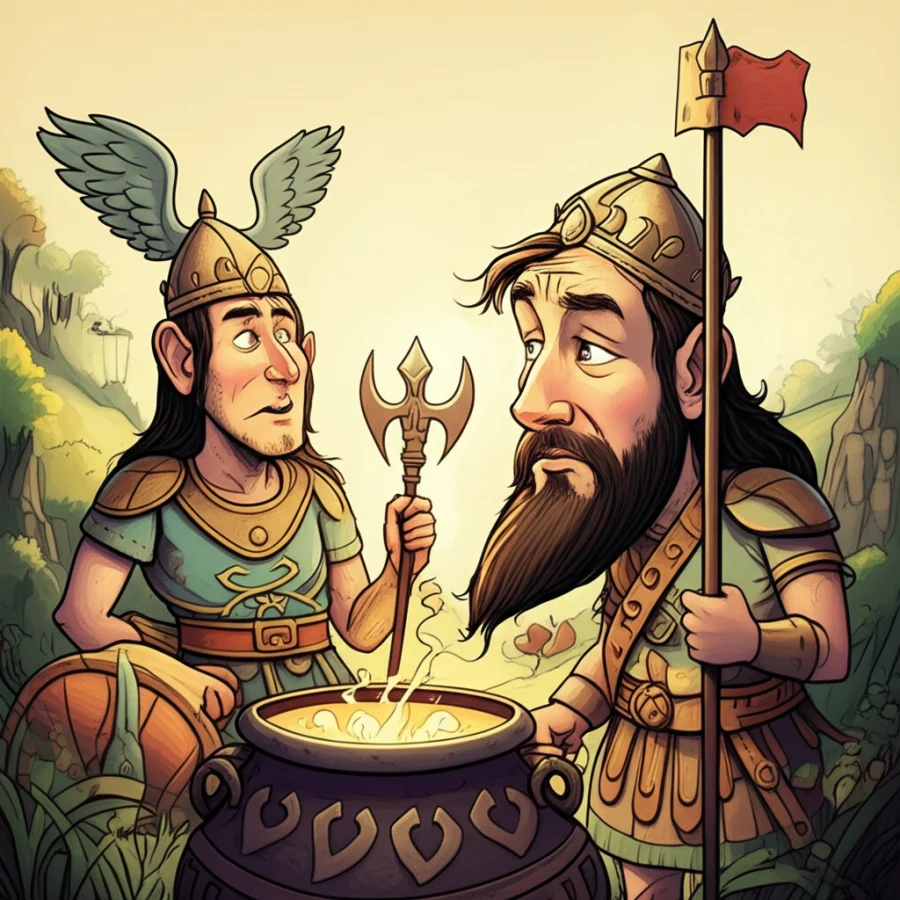
From the mist-shrouded landscapes and the deep, resonant sagas of ancient Ireland, we encounter tales of gods and heroes, beings woven into the very fabric of a world perceived through the lens of myth and folklore. Among these narratives, the Cauldron of the Dagda holds a prominent, if enigmatic, place. This is not a tale of historical fact, nor a decree of divine will, but rather a traditional story passed down through generations by the ancient Celts, a vibrant tapestry of their worldview, their hopes, and their fears.
Origins and Cultural Background: A World Alive with Spirit
The stories surrounding the Cauldron of the Dagda emerge from the Iron Age Celtic societies of Ireland, a time when the natural world was not merely a backdrop but a vibrant, animate entity. Life was intimately tied to the cycles of nature: the planting and harvesting of crops, the waxing and waning of the moon, the ferocity of storms, and the bounty of the land. Their understanding of the world was animistic; spirits were believed to inhabit trees, rivers, mountains, and the very air they breathed. The Tuatha Dé Danann, the mythical race of gods who were said to have ruled Ireland before the arrival of humanity, were central to their cosmology. These beings were not distant, abstract deities, but rather powerful figures who walked among mortals, influencing their lives with both benevolent gifts and formidable might. The Celts, living in close proximity to the wild and untamed forces of nature, often personified these forces and their potential impact on human life through their myths. Their stories served as a way to explain the inexplicable, to offer guidance, and to preserve their cultural identity through shared narratives of heroism, magic, and the divine.
Character Description: The Dagda and the Shadow of Arawn
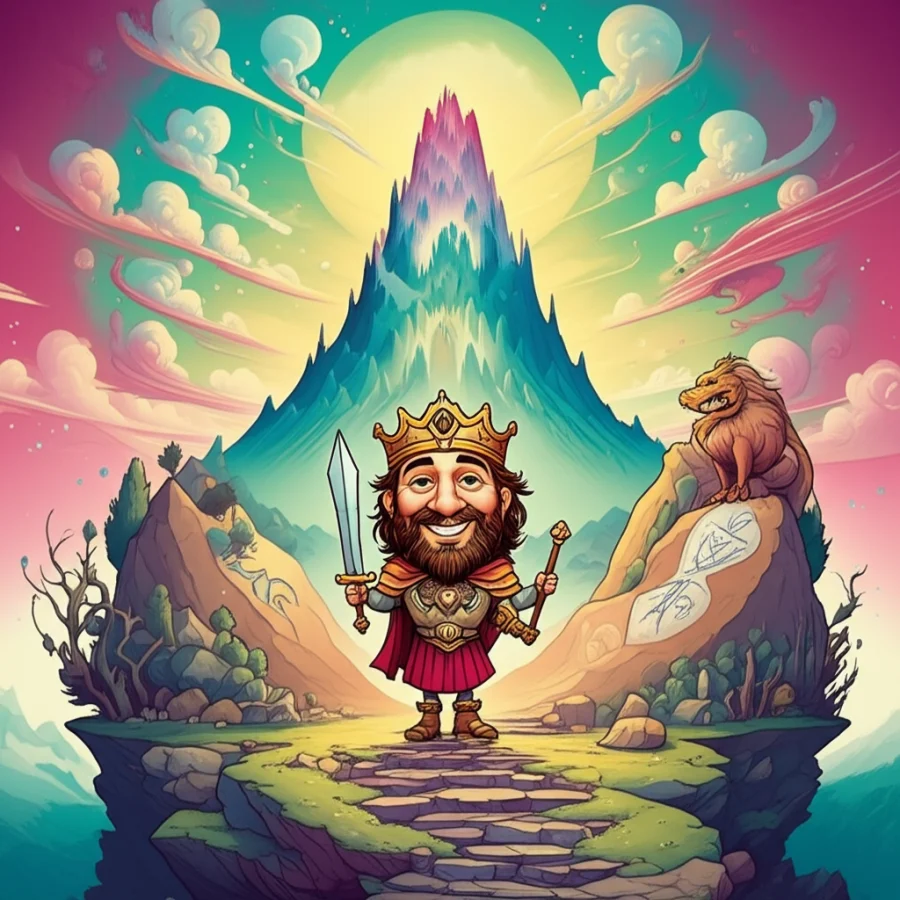
The Dagda, often translated as "the Good God," is a figure of immense power and multifaceted attributes within Irish mythology. He is depicted as a jovial giant, a wise counselor, and a formidable warrior, typically carrying a great, enchanted club that could both destroy and resurrect, and a harp that could summon music to charm the senses or lull armies to sleep. His defining characteristic, however, in the context of this particular legend, is his association with a magnificent cauldron. This cauldron, often described as inexhaustible, was said to be able to feed any number of people and even restore the dead to life. It symbolized abundance, sustenance, and the very essence of life-giving power.
In contrast to the benevolent Dagda, the name Arawn evokes a different realm of influence. Arawn is primarily known as the king of Annwn, the Welsh Otherworld, a realm often associated with the underworld, the land of the dead, and a place of both supernatural power and potential danger. While not always depicted as purely malevolent, Arawn represents the potent forces that lie beyond the veil of mortal understanding, the mysteries of death, and the untamed, sometimes chilling, aspects of existence. The "power of Arawn" in this context does not imply a direct ownership or control over the Dagda’s cauldron, but rather a symbolic association with the inherent duality of existence – life and death, creation and dissolution – that such potent artifacts represent.
Main Story / Narrative Retelling: The Feast of the Undying
Imagine, if you will, a time when the veil between the worlds was thin, and the Tuatha Dé Danann walked the green hills of Ireland. Among them was the great Dagda, a god whose laughter rumbled like thunder and whose wisdom flowed like a clear spring. He possessed a treasure beyond compare: a cauldron, vast and gleaming, crafted from an unknown metal that seemed to absorb the very light of the stars. This was no ordinary pot; it was the Cauldron of Plenty, a vessel that could, with a whispered word or a gentle touch, provide an endless bounty of food and drink for any gathering, no matter how immense. Hungry warriors, weary travelers, and entire villages would gather around its warmth, finding sustenance that never diminished.
But the cauldron held a deeper, more profound magic. It was whispered that this vessel, when stirred with a particular intention, could even draw forth the spark of life from the embrace of death. It was said that the dead, once placed within its depths, could be made to rise again, whole and renewed. This was the power that echoed with the mysteries of Annwn, the shadowed realm ruled by Arawn, the king who held dominion over the spectral and the departed.
The legend tells of a time when the Dagda, in his boundless generosity, would host feasts that stretched for days, the air thick with the aroma of roasted meats and the sweet scent of mead. His cauldron would bubble merrily, providing for all who came. Yet, the stories also hint at the inherent danger of such power. The ability to cheat death, to defy the natural order, carried a weight. Some tales suggest that the Dagda himself, while benevolent, understood the delicate balance of existence. He wielded this power with care, a testament to the life-giving force of his being, but always with an implicit awareness of the forces that governed the end of all things, forces that Arawn, in his own domain, embodied. The power of the cauldron was a reflection of life’s abundance, but also a potent reminder of the ever-present shadow of mortality, a shadow that Arawn’s realm represented.
Symbolism and Meaning: The Duality of Existence
To the ancient Celts, the Cauldron of the Dagda likely represented a profound understanding of the cyclical nature of existence. The inexhaustible supply of food symbolized the fertility of the land, the bounty of the harvest, and the ability of the community to thrive. It spoke to their dependence on the earth and their reverence for its life-giving properties.
The regenerative aspect of the cauldron, its ability to restore the dead, is a more complex symbol. It could represent the hope for continuity, the desire to overcome loss, and the belief in an afterlife or a form of spiritual rebirth. However, by linking this power to the realm of Arawn, the myth also acknowledges the inherent mystery and potential peril associated with tampering with the boundaries of life and death. Arawn’s association suggests that such power is not without its cost or its darker implications, a reminder that life and death are inextricably intertwined. The cauldron, therefore, becomes a potent symbol of the fundamental duality of existence: the vibrant pulse of life and the silent inevitability of death, both essential parts of a larger cosmic dance.
Modern Perspective: Echoes in Story and Song
In the modern era, the myths and legends of Ireland continue to resonate, finding new life in literature, film, and popular culture. The Cauldron of the Dagda, as a symbol of immense power and sustenance, has been reimagined in various forms. It appears in fantasy novels as magical artifacts, in video games as quest objectives or powerful relics, and in academic studies as a lens through which to understand ancient Celtic beliefs. The evocative imagery of an inexhaustible source of life, capable of defying death, continues to capture the human imagination. While the direct association with Arawn might be less explicitly explored in every modern interpretation, the underlying theme of potent, otherworldly power with a potential for both creation and consequence remains a compelling narrative element. These retellings, while entertaining, serve to keep these ancient stories alive, sparking curiosity about the cultures that conceived them.
Conclusion: A Legacy of Imagination
The story of the Cauldron of the Dagda, with its whispers of Arawn’s power, is a testament to the rich imaginative landscape of ancient Celtic culture. It is a narrative woven from the threads of their understanding of the world – a world brimming with spirits, governed by cycles, and shaped by forces both seen and unseen. As Muslims, we recognize that only Allah (God) is the true Creator and Sustainer of all existence, the ultimate source of all power and life. These ancient stories, however, offer us a unique window into the cultural heritage and storytelling traditions of peoples long past. They remind us of the enduring human need to make sense of the world, to explore the mysteries of life and death, and to imbue their experiences with meaning through the power of imagination and shared narratives. The legacy of these tales lies not in their literal truth, but in their ability to transport us to different times, to connect us with the ancestral voices that shaped our understanding of the world, and to celebrate the enduring human tradition of storytelling.