fufufafa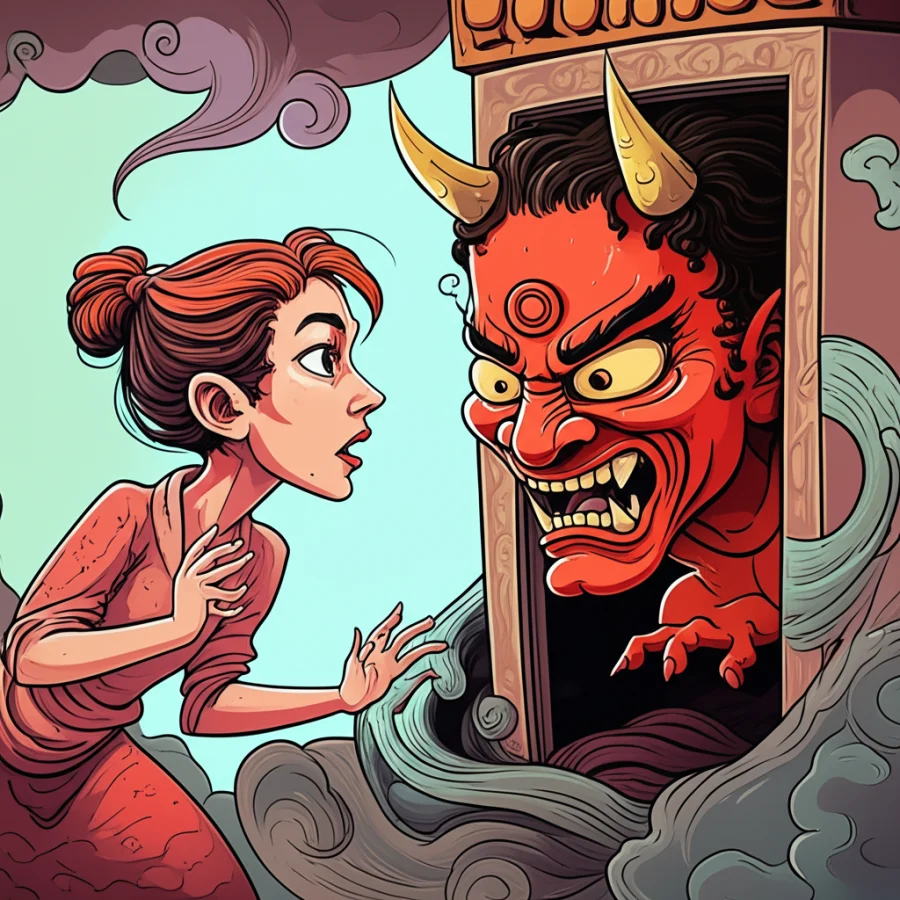
Introduction:
The chilling tale of the Oni of Yomi originates from the rich tapestry of Japanese mythology. These monstrous figures, often depicted as terrifying demons, are deeply embedded in the cultural consciousness of Japan. This is a traditional story, passed down through generations by ancient people, serving as both entertainment and a cautionary reminder of the unseen world. The story of encountering an Oni in Yomi, the land of the dead, speaks to primal fears and the human struggle against the inevitable.
Origins and Cultural Background:
To understand the Oni of Yomi, we must delve into the worldview of ancient Japan. The cultural era during which these myths flourished was deeply rooted in Shinto and early Buddhist beliefs. People of this time lived in close proximity to nature, their lives dictated by its rhythms and often threatened by its unpredictable forces. They believed in a world populated by spirits (kami) that resided in natural features like mountains, trees, and rivers. This animistic worldview extended to the realm of the dead, Yomi, a shadowy and unpleasant place ruled over by the goddess Izanami.
Life was often harsh, and the concepts of purity and impurity were central to their beliefs. Death was considered a source of impurity, a transgression against the natural order. Yomi, therefore, was not a desirable afterlife, but rather a place of stagnation and decay. The Oni, as denizens of this realm, represented the forces of corruption, disease, and the terrors associated with death itself. Their existence served as a stark warning against moral transgressions and the importance of maintaining ritual purity.
Character / Creature Description:
The Oni of Yomi are typically portrayed as fearsome creatures with grotesque features. They possess a humanoid form but are often larger and more muscular than humans. Their skin is typically red, blue, or green, and they often have horns protruding from their foreheads. Sharp claws, wild hair, and piercing eyes further contribute to their terrifying appearance. Some Oni are depicted with multiple eyes or mouths, adding to their monstrous nature.
Symbolically, the Oni represent untamed and destructive forces. Their horns signify their animalistic nature and lack of restraint. Their sharp claws and teeth symbolize their predatory instincts and capacity for violence. The vibrant colors of their skin may represent the chaotic and unpredictable nature of the underworld. Unlike the benevolent kami, the Oni embody the darker aspects of existence: pain, suffering, and the relentless march towards death. They are not necessarily evil in a moral sense, but rather represent the raw, untamed power of the natural world, especially the darker aspects associated with decay and death.
Main Story / Narrative Retelling:
The air hung heavy with the stench of decay as Hiroki stumbled through the desolate landscape. He had foolishly ventured too close to the sacred grove, drawn by whispers of forbidden knowledge. Now, lost and disoriented, he found himself in Yomi, the land of the dead. The sky above was a perpetual twilight, casting long, distorted shadows that danced around him like mocking spirits.
Each step crunched on the ashen ground, a sound that echoed unnervingly in the oppressive silence. He pressed onward, driven by a desperate hope of finding a way back to the world of the living. Suddenly, a guttural roar shattered the silence. Hiroki froze, his heart pounding against his ribs.
From the depths of the gloom emerged a hulking figure. It was an Oni, its skin a sickly green, its eyes burning with malevolent fire. Two gnarled horns twisted from its forehead, and its mouth was filled with rows of razor-sharp teeth. The Oni carried a massive iron club studded with spikes, which it slammed against the ground, sending tremors through the ashen earth.
Fear threatened to paralyze Hiroki, but the primal instinct for survival kicked in. He turned and fled, the Oni’s thunderous footsteps echoing behind him. He scrambled over jagged rocks and through thorny bushes, the Oni’s roars growing ever closer.
The Oni was relentless, its movements surprisingly swift despite its immense size. It lunged, its clawed hand tearing at Hiroki’s sleeve. He cried out in pain and terror, stumbling and falling to the ground.
The Oni loomed over him, its fetid breath washing over his face. Hiroki closed his eyes, bracing for the final blow. But then, a faint sound reached his ears – the distant chanting of a Shinto priest. The Oni hesitated, its eyes flickering with uncertainty. The chanting grew louder, and the Oni recoiled, hissing in frustration.
With a final, enraged roar, the Oni turned and disappeared back into the shadows. Hiroki lay trembling on the ground, his body aching, his mind reeling from the encounter. He slowly rose, his legs shaky, and followed the sound of the chanting, his heart filled with a mixture of relief and lingering terror. He had glimpsed the horrors of Yomi and lived to tell the tale, a stark reminder of the dangers that lurked beyond the veil of the living world.
Symbolism and Meaning:
To the ancient Japanese, the story of encountering an Oni in Yomi likely represented several things. It served as a cautionary tale about the dangers of transgressing boundaries, both physical and spiritual. Venturing into forbidden places, like the sacred grove, symbolized a disrespect for the natural order and a willingness to court danger.
The Oni itself represented the fear of death and the unknown. Its grotesque appearance and violent nature embodied the anxieties surrounding mortality and the decay of the physical body. The story also highlighted the importance of ritual purity and the protection offered by religious practices. The chanting of the Shinto priest, which drove the Oni away, symbolized the power of faith and the ability of spiritual forces to ward off evil. The story served as a reminder to stay within the bounds of proper behavior and to respect the spiritual realm, lest one face the wrath of its denizens.
Modern Perspective:
The Oni of Yomi, and Oni in general, continue to fascinate and inspire in modern culture. They appear in countless works of literature, manga, anime, and video games. Often, they are portrayed as powerful adversaries, representing challenges that must be overcome. In some interpretations, they are even depicted as sympathetic figures, highlighting the complexities of good and evil.
In cultural studies, the Oni serve as a valuable lens through which to examine Japanese cultural values and beliefs. They represent the darker aspects of human nature, the fears and anxieties that have haunted humanity for centuries. Their enduring presence in popular culture speaks to the enduring power of mythology and its ability to resonate with audiences across generations.
Conclusion:
The encounter with the Oni of Yomi is a chilling tale from Japanese mythology, a story passed down through generations, not as a declaration of divine truth, but as a cultural artifact. It is a testament to the power of storytelling and the human imagination. As Muslims, we understand that only Allah is the true Creator and Sustainer of the universe. This story, like countless others from different cultures, offers a glimpse into the diverse tapestry of human experience and the ways in which people have sought to understand the world around them. It is through these stories that we can appreciate the richness of our cultural heritage and the enduring power of the human imagination. We respect and learn from these cultural stories while remaining firm in our belief in the Oneness of Allah.