fufufafa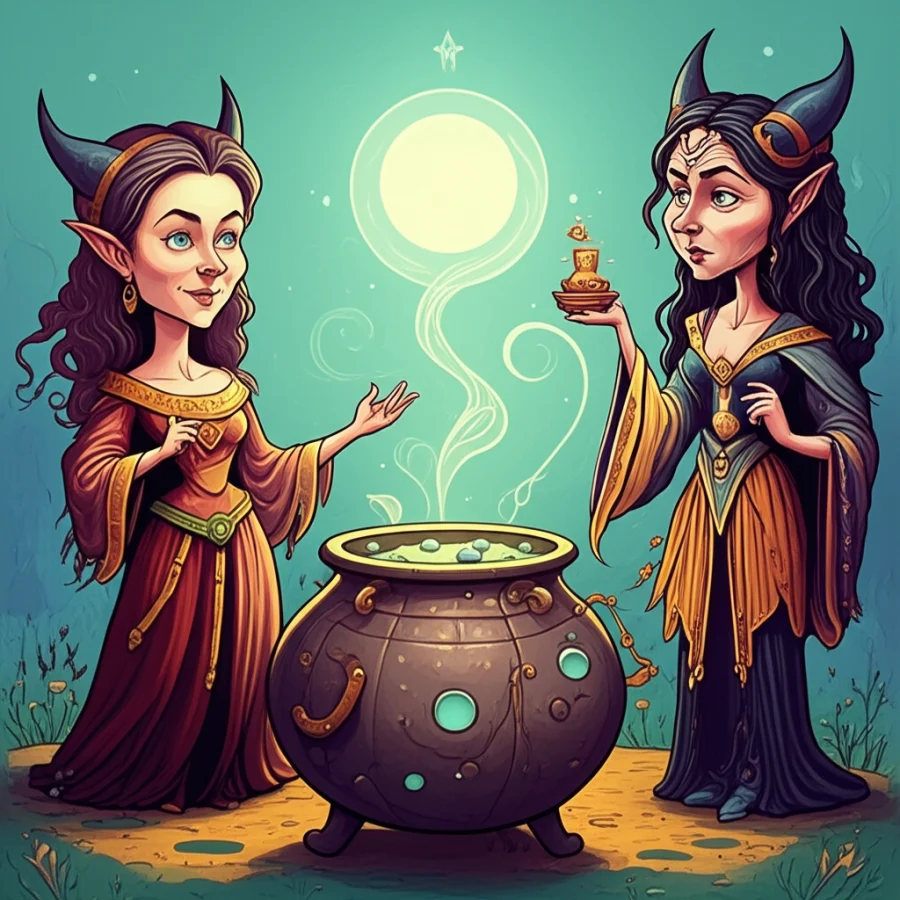
The mists that cling to the emerald hills of Ireland have long cradled tales of ancient gods, fierce battles, and enigmatic figures whose presence shaped the very fabric of the world as the ancients knew it. Among these rich tapestries of lore, few figures loom as large and as mysterious as the Dagda, the "Good God," and the Morrígan, the "Phantom Queen." Their stories, particularly when intertwined, delve into the fundamental mysteries of life, death, and sovereignty. This is a traditional story, a legend passed down through generations by ancient people, offering a glimpse into their understanding of the cosmos, not a historical event or a call to belief.
Origins and Cultural Background
This myth originates from ancient Irish mythology, primarily recorded in early medieval texts like the Lebor Gabála Érenn (The Book of Invasions) and the Cath Maige Tuired (The Second Battle of Mag Tuired). It emerged from a pre-Christian, tribal society, likely during Ireland’s Iron Age and early medieval periods, a time when life was intimately connected to the land, the changing seasons, and the cycles of growth and decay. Agriculture formed the bedrock of their existence, but warfare was also a constant reality, shaping their worldview and social structures.
For these ancient people, the world was alive, imbued with powerful, often capricious forces. They viewed their deities not as distant, abstract entities, but as immanent beings who walked the land, influenced harvests, brought victory or defeat in battle, and even intermingled with humanity. Their worldview was polytheistic and animistic, where nature itself held spiritual significance, and the boundaries between the mundane and the magical were fluid. Oral tradition was paramount, with stories serving as historical records, moral lessons, and explanations for the inexplicable, binding communities together through shared cultural heritage.
Character Descriptions: The Cauldron and the Queen
At the heart of this particular myth stand two monumental figures, each embodying powerful, yet contrasting, forces.
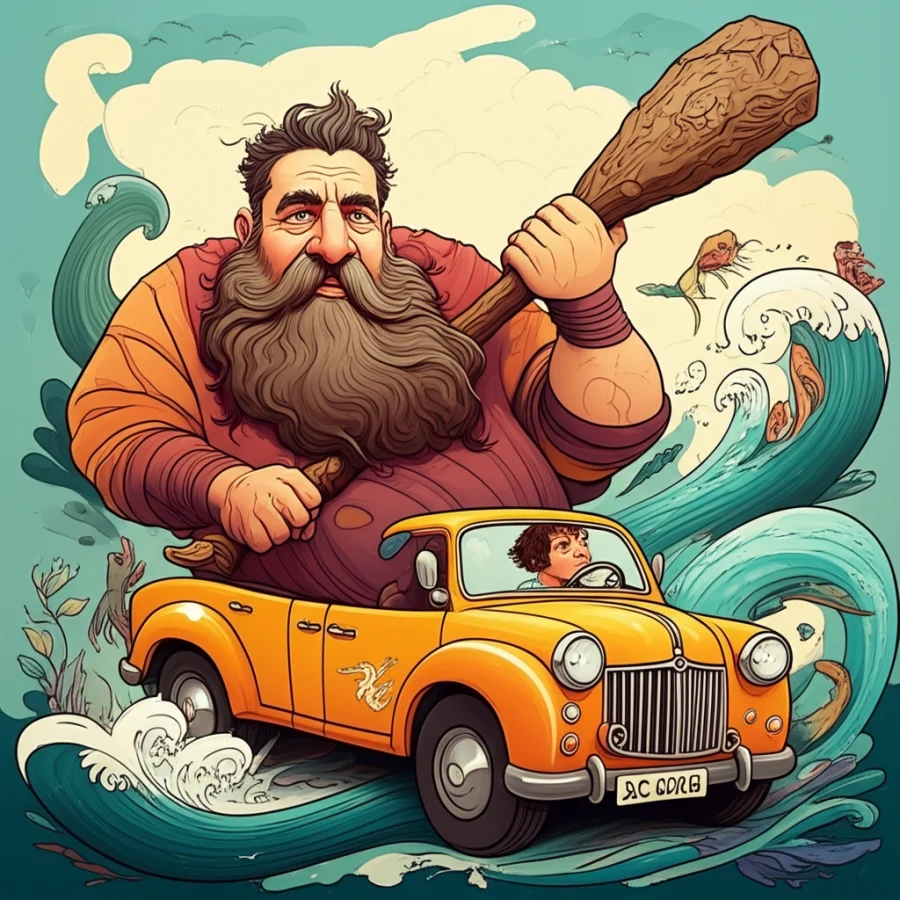
First is The Dagda, often called "the Good God" or "the All-Father." He was the powerful chief of the Tuatha Dé Danann, the divine race who ruled Ireland before the coming of the Milesians. The Dagda is typically depicted as a robust, sometimes even crude, figure, yet possessing immense wisdom, magical prowess, and a benevolent nature towards his people. His attributes include a mighty club that could kill nine men with one end and restore them to life with the other, and a magical harp that could command the emotions and seasons. But perhaps his most famous possession, and central to his identity, was the Coire Ansic, the Cauldron of Plenty. This cauldron was said to be inexhaustible; no one ever left it hungry, symbolizing abundance, hospitality, community, and the life-giving essence of the land itself. It was a promise of sustenance, a core requirement for any thriving society.
In stark contrast, yet intimately connected to the fate of the Dagda and his people, is The Morrígan. Her name is often translated as "Great Queen" or "Phantom Queen," and she is a formidable, complex figure associated with war, fate, sovereignty, and death. She is often seen as a triple goddess, a collective of three sisters: Badb (the raven/crow), Macha (the battlefield fury), and Nemain (the panic-inducer). The Morrígan frequently appears as a shapeshifter, most notably as a raven or crow flying over battlefields, inspiring terror or courage. Unlike many deities, her motivations are rarely straightforward. She is not evil in the traditional sense, but she is a primal force, embodying the brutal reality of conflict, the wildness of nature, and the ultimate cycle of life and death. Her ‘mystery’ lies in her unpredictable nature, her often ominous prophecies, and her profound influence on the outcome of battles and the legitimacy of kingship. She is the shadow that dances at the edge of life, demanding respect and wielding immense, untamed power.
The Main Story: A Prophecy at the River Unna
The story that most vividly intertwines the Dagda and the Morrígan, and highlights her enigmatic power, takes place on the eve of the Second Battle of Mag Tuired (Moytura). This was a cataclysmic war between the Tuatha Dé Danann and the monstrous Fomorians, a battle that would decide the fate of Ireland.
As the Tuatha Dé Danann prepared for this epic confrontation, the Dagda, as their venerable leader, was ensuring his people were ready. His Cauldron of Plenty was a constant source of comfort and strength, guaranteeing that no warrior would face battle on an empty stomach, a symbol of the sustenance and life he provided.
However, the fate of the battle would not rest solely on provisions and weaponry. On Samhain (the ancient Celtic festival marking the end of summer and the harvest, and the beginning of the darker half of the year), a pivotal encounter occurred. The Dagda sought out the Morrígan. He found her bathing in the River Unna in Connacht, standing with one foot on either bank, a powerful, almost primordial image. She was described as having red hair and a dark mantle, a figure of awe and dread.
In this powerful meeting, which some texts describe as a ritualistic sexual encounter symbolizing the king’s union with the sovereignty of the land, the Morrígan imparted crucial knowledge to the Dagda. She revealed the battle strategies of the Fomorians, instructing him on how to defeat them. More than just tactics, she promised to "destroy the Fomorians’ hosts, and to rout them from the battlefield," by sapping the blood and courage of their champion, Indech mac Dé Domnann. In exchange, or perhaps as part of the ritual, the Dagda gave her a pledge or a tribute, solidifying her involvement in the coming conflict.
When the great battle finally erupted, the Morrígan was a terrifying presence. She did not fight with sword and shield like a mortal warrior, but rather flew above the fray, often in the guise of a screaming raven or crow, her terrifying cries and incantations sowing confusion and despair among the Fomorians, while bolstering the spirits of the Tuatha Dé Danann. She was the embodiment of the battle itself, the chilling wind that swept across the field, the shadow of death that touched every warrior. Her actions were decisive, weakening the enemy and ensuring the Tuatha Dé Danann’s eventual victory.
The mystery of the Morrígan, therefore, is not just in her shifting forms or her dark prophecies, but in her role as a force that facilitates destiny. She is not inherently good or evil; she simply is the wild, untamed power that governs the cycle of creation and destruction, the brutal truth that even abundance (symbolized by the Dagda’s Cauldron) must contend with scarcity, and that life itself is forever shadowed by death. Her interaction with the Dagda highlights that even the benevolent "Good God" must acknowledge and engage with the more primal, formidable aspects of existence to ensure the survival and sovereignty of his people.
Symbolism and Meaning
To the ancient Celts, this myth held profound layers of meaning. The Dagda’s Cauldron represented not just physical sustenance, but the spiritual well-being of the community, the generosity of the land, and the vital importance of hospitality and leadership that provides for its people. It symbolized the unending cycle of life and renewal, the promise that despite hardship, life would continue.
The Morrígan, conversely, embodied the grim realities of war, the transformative power of death and destruction, and the primal forces of nature that are beyond human control. Her ability to choose kings and influence battles underscored the concept of sovereignty – the legitimate right to rule – which was often seen as a sacred bond between the king and the land itself. She was the wild, untamed aspect of Ireland, a force that demanded respect and could not be fully controlled. Her ‘mystery’ spoke to the unknowable aspects of fate, the sudden turns of fortune in battle, and the wisdom that comes from confronting the darker, more challenging truths of existence.
Together, the Dagda’s Cauldron and the Morrígan presented a complete picture of existence: the need for sustenance and community, balanced by the unavoidable presence of conflict, death, and the untamed forces of the natural world. They represented the duality of creation and destruction, life and death, both essential components of the cosmic order as understood by the ancient Irish.
Modern Perspective
Today, the figures of the Dagda and the Morrígan continue to captivate imaginations across various mediums. In modern literature, particularly fantasy novels, the Morrígan is a popular archetype, often depicted as a powerful, enigmatic female figure, a sorceress, or a harbinger of doom, inspiring countless characters in stories drawing on Celtic mythology. The Dagda, though less frequently a central character, often appears as a wise, powerful elder or a source of ancient magic.
In movies, television, and video games, these deities are frequently adapted, serving as inspirations for characters, plot lines, and magical artifacts. Their imagery – the raven, the cauldron, the powerful chieftain – has become iconic. Beyond popular culture, these myths are subjects of intense study in cultural anthropology, folklore, and gender studies, offering insights into ancient societal structures, religious beliefs, and the roles of powerful male and female figures in mythological narratives. They continue to be explored for their psychological archetypes, representing universal human experiences of power, fear, sustenance, and destiny.
Conclusion
The tale of the Cauldron of the Dagda and the Mystery of the Morrígan is a powerful testament to the rich cultural heritage of ancient Ireland. It is a story woven from the threads of imagination, a narrative through which ancient people sought to understand their world, their fears, and their hopes. We recognize that this is a cultural story, a product of human creativity and ancient belief systems, not a representation of truth or divine power. As Muslims, we affirm that only Allah (God) is the true Creator and Sustainer of the universe, and all power and knowledge ultimately reside with Him. Nevertheless, we can appreciate these ancient myths for their enduring power as storytelling traditions, their imaginative depth, and their ability to connect us with the rich tapestry of human cultural heritage across the ages.