
 fufufafa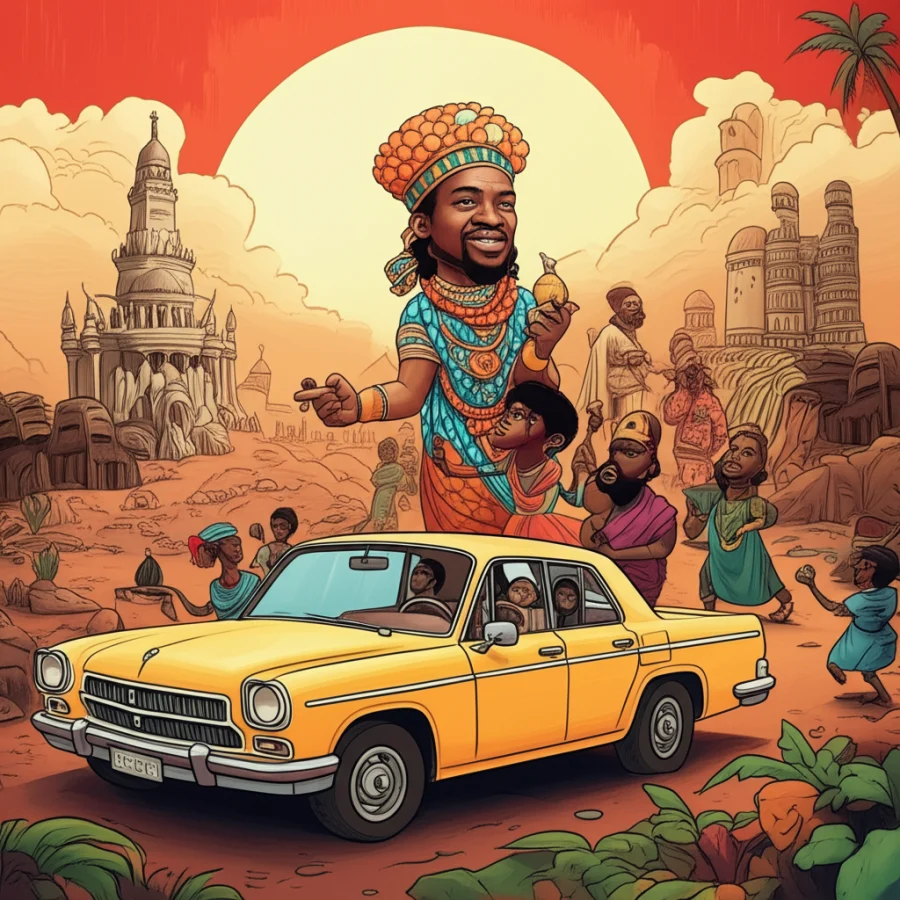
1. Introduction
From the vibrant heart of West Africa, specifically among the Yoruba people, springs a rich tapestry of myths and legends that have been passed down through generations. Among these profound narratives is the chronicle of Ogun, a powerful figure whose story intertwines with the very genesis of civilization and the establishment of the ‘Sacred City.’ This is not a historical account in the conventional sense, nor is it meant to be embraced as divine truth. Rather, it is a traditional story, a product of the ancient Yoruba imagination, told by a people who sought to understand their world, their origins, and the forces that shaped their existence through compelling narratives and symbolic figures.
2. Origins and Cultural Background
The cultural era in which the myth of Ogun and the Sacred City flourished was one deeply rooted in an agrarian lifestyle, where the rhythms of nature dictated daily life. Ancient Yoruba society was organized around strong communal bonds, intricate social structures, and a profound reverence for the unseen forces that animated the world. For these people, the cosmos was not merely a physical space but a vibrant, living entity where the divine (Orishas), ancestors, and humans coexisted and interacted. They viewed the world as a complex interplay of energies and destinies, with every natural phenomenon, every human endeavor, and every societal challenge having a spiritual counterpart or explanation. Their myths served as a framework for understanding creation, morality, social order, and the delicate balance required to maintain harmony between the visible and invisible realms. Life was seen as a journey guided by fate (Ori), yet influenced by human action and the benevolent or challenging interventions of the Orishas.
3. Character Description: Ogun
At the heart of this narrative stands Ogun, a formidable figure within the Yoruba pantheon of Orishas. In the traditional stories, Ogun is envisioned not as a god to be worshipped in the monotheistic sense, but as an archetypal force, a primordial energy that embodies iron, war, hunting, and the very spirit of creative destruction. He is often depicted as a solitary, unyielding entity, a master of metalworking, whose tools—the machete, the anvil, the spear—are central to his identity. Symbolically, Ogun represents innovation, the pioneering spirit, and the necessary, often brutal, force required to break new ground and establish order from chaos. His attributes include immense strength, unwavering determination, and a fierce sense of justice, though his temperament is also portrayed as fiery and sometimes unpredictable. He is the Orisha of technology and progress, but also of the conflicts and sacrifices inherent in their pursuit.
4. Main Story / Narrative Retelling
In the beginning of time, as the ancient Yoruba stories tell, the Supreme Being, Olodumare, created the vast expanse of the cosmos. Yet, the nascent Earth, Aye, lay shrouded in an impenetrable thicket of primordial forest, an unbroken wilderness that separated it from Orun, the celestial realm of the Orishas. Olodumare sought to establish a connection, a path that would allow the divine beings and, eventually, humanity, to descend and populate this new world.
Many Orishas, eager to undertake this monumental task, attempted to clear a way. Some tried with gentle persuasion, others with immense spiritual power, but the dense, resilient foliage of the primeval forest proved unyielding. Their efforts were in vain; the path remained impassable, and Earth remained isolated, a realm of potential yet unfulfilled.
It was then that Ogun, with his raw power and mastery over iron, stepped forward. Unlike the others, Ogun possessed a unique understanding of the material world and the tools necessary to reshape it. He forged for himself a magnificent machete, sharp and gleaming, imbued with his own fierce determination. With this formidable weapon in hand, he began his arduous journey.
The task was monumental. The forest resisted with all its might, its tangled vines and colossal trees forming an almost sentient barrier. Day after day, Ogun toiled, his powerful blows echoing through the silent wilderness. He cleaved through roots as thick as pythons, felling trees that scraped the sky. The work was relentless, solitary, and often brutal. He faced not only the physical obstacles of the forest but also the profound loneliness of being the sole pioneer, forging a path where none had existed before.
Through sheer will and the strength of his iron tools, Ogun persevered. Sweat mingled with the sap of severed trees, and the earth trembled with each swing of his machete. Slowly, painstakingly, a narrow channel began to emerge from the dense undergrowth—the very first pathway, a sacred conduit linking the heavens to the earth. It was a testament to his unwavering resolve and the transformative power of his craft.
Once the path was forged, the other Orishas, and subsequently humanity, were able to descend to Aye. But the work of Ogun was not yet complete. The newly accessible Earth was still a wilderness, untamed and unstructured. It was Ogun, with his tools and his vision, who set about establishing the foundations of the first human settlement, the genesis of what would come to be known as the ‘Sacred City.’ He taught humanity how to clear land, how to forge tools from iron, how to hunt, and how to protect themselves. He laid the groundwork for agriculture, for defense, and for the basic structures of communal living.
The Sacred City, often conceptually linked to the ancient city of Ife, became a beacon of order in a world that had previously known only chaos. It was a place where laws were established, where the art of metalworking flourished, and where society began to take shape under Ogun’s pioneering influence. Though his temperament could be fierce, his contributions were undeniably vital. He was the force that enabled creation and progress, the one who transformed the raw potential of the Earth into a habitable, organized realm for humanity. His narrative culminates not in a claim of divine worship, but in his enduring symbolic presence, leaving his indelible mark on the landscape and the very fabric of human ingenuity and civilization.
5. Symbolism and Meaning
To the ancient Yoruba people, the chronicle of Ogun and the Sacred City was far more than an entertaining tale; it was a profound allegory for fundamental aspects of their existence. Ogun himself symbolized the indomitable spirit of human ingenuity and the capacity to overcome immense obstacles. His mastery of iron represented the birth of technology and the transformative power of tools in shaping the environment. He embodied the pioneering spirit—the courage to venture into the unknown, to clear a path where none exists, and to build civilization from scratch.
The narrative also explored the dual nature of power: Ogun’s strength could be destructive in clearing the forest, but it was also creative, leading to the establishment of the Sacred City. This reflected the Yoruba understanding of balance and the necessity of struggle for progress. The ‘Sacred City’ itself symbolized the birth of organized society, the triumph of order over chaos, and the establishment of community, laws, and culture. It represented humanity’s journey from a wild, untamed existence to one of structured living and collective endeavor. The myth explained not just the origin of cities, but the very essence of human struggle, the need for innovation, and the societal norms that bind people together.
6. Modern Perspective
In contemporary times, the myth of Ogun and the Sacred City continues to resonate, albeit through a different lens. It is studied extensively in cultural anthropology, folklore, and African studies as a rich source of understanding ancient Yoruba worldview, social structures, and technological development. Its themes of resilience, innovation, and the complex relationship between humanity and its environment are explored in literature, art, and even some contemporary popular culture, reflecting universal human experiences.
While the figures of Yoruba mythology are revered in some diaspora religions like Santería in Cuba or Candomblé in Brazil, within academic and cultural discourse, Ogun’s story is valued for its narrative power and its deep cultural significance, rather than as a literal belief system. It provides a lens through which to appreciate the richness of African intellectual heritage and the enduring human quest to explain origins and purpose through storytelling.
7. Conclusion
The Chronicle of Ogun and the Sacred City stands as a powerful testament to the imaginative and intellectual depth of the ancient Yoruba people. It is a cultural narrative, a product of human creativity designed to impart wisdom, explain phenomena, and reflect societal values, rather than a factual account or a system of belief to be adopted. As Muslims, we recognize that only Allah (God) is the true Creator and Sustainer of all existence, the One without peer or partner, whose power and wisdom are absolute and encompass all things.
This myth, like countless others from diverse cultures, enriches our understanding of global heritage, demonstrating the universal human impulse to make sense of the world through narrative. It reminds us of the enduring power of storytelling to preserve cultural identity, inspire imagination, and provide valuable insights into the human condition across millennia, celebrating the profound legacy of our shared human narrative tradition.


 admin
admin
 rifanmuazin



