fufufafa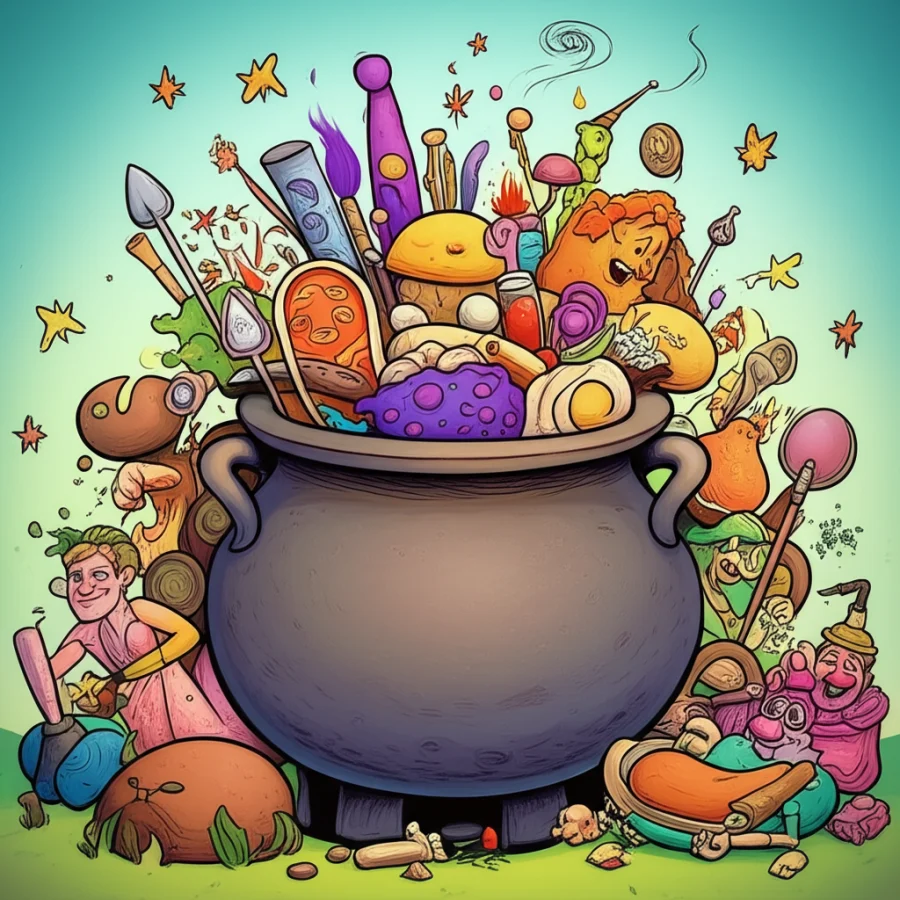
Origins and Cultural Background
The myths surrounding the Dagda and the Tuatha Dé Danann — the ‘People of the Goddess Danu’ — emerged from a pre-Christian, Iron Age society in Ireland, likely flourishing during a period when oral tradition was paramount. This was a world steeped in nature, where the rhythms of the seasons dictated life, and the land itself was imbued with sacred meaning. The ancient Irish people, particularly during the early medieval period when these tales were eventually transcribed into manuscripts like the Lebor Gabála Érenn (The Book of Invasions), viewed the cosmos through a polytheistic lens. They believed in a pantheon of gods and goddesses who embodied natural forces, societal roles, and human virtues and vices.
Their worldview was cyclical, marked by the turning of the year, the growth and decay of crops, and the ebb and flow of human life. Heroes and gods were not just powerful figures but also archetypes reflecting the ideals and fears of the community. Bards and druids held significant social standing, serving as keepers of knowledge, history, and spiritual understanding. Through their elaborate poetry and sagas, they connected their people to their ancestors, their land, and the unseen realms, fostering a deep cultural identity.
Character Description: The Dagda
Central to many of these Irish myths is the figure of the Dagda, often translated as "the Good God," though ‘good’ in this context implies skill and capability in many areas, rather than moral rectitude. The ancient people imagined him as the chieftain and father-figure of the Tuatha Dé Danann, a formidable, almost gargantuan being of immense strength and power. He was often depicted carrying a magical club, capable of both killing warriors and then restoring them to life, symbolizing his dominion over life and death. Another of his famous possessions was his enchanted harp, the Uaithne, which could command the emotions of men, playing tunes that induced laughter, tears, or sleep.
Symbolically, the Dagda represented the fertility of the earth, abundance, knowledge, and sovereignty. He was the protector and provider, a figure of paternal authority who ensured the well-being of his people. He embodied the ideal of a benevolent ruler who could feed his subjects, defend his territory, and inspire his followers. His attributes were not meant to promote belief in a literal deity, but rather to personify the qualities deemed essential for a thriving community and a bountiful land.
The Cauldron of the Dagda: A Narrative Retelling
The story of the Dagda’s Cauldron, known as the Coire Ansic or "the Undry," begins with the arrival of the Tuatha Dé Danann in Ireland. These mythical beings, possessed of great magical abilities and knowledge, were said to have come from four legendary cities to the north of the world: Falias, Gorias, Murias, and Finias. From these cities, they brought four mighty treasures, each imbued with unique power. From Murias, the Dagda brought his Cauldron.
The lore describes the Coire Ansic as a vessel of inexhaustible bounty. Its most famed property was that "no company ever went from it unsatisfied." Imagine the weary warriors, returning from a fierce skirmish against the Fomorians, the monstrous indigenous inhabitants of Ireland. Their stomachs growled with hunger, their spirits flagging. Yet, as they gathered around the Dagda’s great Cauldron, they found it miraculously filled with rich, nourishing stew. Each man, no matter how many, received his fill, his hunger completely sated, his strength renewed. The Cauldron never emptied, never failed to provide.
During the momentous Second Battle of Moytura (Mag Tuired), where the Tuatha Dé Danann fought to establish their dominion over Ireland against the oppressive Fomorians, the Cauldron played a vital, if understated, role. While the Dagda himself wielded his formidable club in battle and inspired his forces with his harp, the Cauldron worked its magic behind the lines. It was the constant source of sustenance for the Tuatha Dé Danann army, ensuring their resilience and morale. A hungry army is a defeated army, but with the Coire Ansic perpetually overflowing, the Dagda’s people never knew want. Their bellies full, their bodies strong, they could face any foe, knowing their leader could always provide.
This was not merely a vessel for food; it was a symbol of leadership and providence. The Dagda, as the possessor and wielder of such a treasure, demonstrated his fitness to rule. His ability to feed his entire host without effort underscored his role as the Great Father, the provider for his people. The Cauldron represented the very essence of communal well-being, a promise that under the Dagda’s rule, his people would never suffer from scarcity.
Symbolism and Meaning
To the ancient people who shared these stories, the Cauldron of the Dagda held profound symbolic weight. Firstly, it represented abundance and sustenance. In an agrarian society where harvests could fail and famine was a constant threat, a vessel that guaranteed endless food was the ultimate dream. It spoke to the deep human desire for security and freedom from hunger.
Secondly, it symbolized hospitality and generosity, virtues highly prized in Celtic culture. A chieftain’s ability to provide for his guests and his people was a measure of his status and honor. The Cauldron, ensuring that "no company ever went from it unsatisfied," epitomized this ideal.
Furthermore, the Cauldron was intricately linked to sovereignty and the welfare of the land. A king’s prosperity was believed to be directly connected to the fertility of his kingdom. If the land was barren or its people suffered want, it reflected poorly on the ruler. The Dagda’s Cauldron was a tangible manifestation of his ability to maintain the prosperity and well-being of his realm, ensuring that the land itself would remain fruitful under his care. It also carried echoes of a life-giving force, much like a womb or a wellspring, constantly regenerating and sustaining life. It was a metaphor for the nurturing power of nature itself, a continuous cycle of provision.
Modern Perspective
Today, the Cauldron of the Dagda, along with other elements of Celtic mythology, continues to inspire and resonate, albeit through a different lens. It is no longer a belief system but a rich source of cultural heritage. In literature, fantasy novels, and role-playing games, the concept of a magical, inexhaustible vessel or an item that grants endless sustenance is a recurring trope, often directly or indirectly influenced by such ancient myths. Modern interpretations of Celtic mythology, both academic and popular, explore the Cauldron as a symbol of the subconscious, a creative wellspring, or even the ultimate goal of a spiritual quest.
The story of the Dagda’s Cauldron also offers valuable insight into the values and anxieties of ancient Irish society. It helps us understand their relationship with food, community, leadership, and the natural world. It is studied in cultural anthropology, folklore, and literary analysis to understand how different societies construct meaning and articulate their worldviews through storytelling.
Conclusion
The tale of the Cauldron of the Dagda is a powerful testament to human imagination and the enduring art of storytelling. It is a cultural narrative from ancient Ireland, crafted by people who sought to understand their world and their place within it. As Muslims, we hold firm to the belief in Allah, the One and Only Creator and Sustainer of all existence. These ancient narratives, while rich in human imagination and cultural insight, stand as testaments to humanity’s early attempts to comprehend the mysteries of life and the cosmos, before the final revelation of divine truth. They are not to be believed as fact or worshipped as divine power. Instead, they serve as a window into the past, offering a glimpse into the minds of those who came before us, preserving a vibrant cultural heritage through the timeless tradition of myth-making.