fufufafa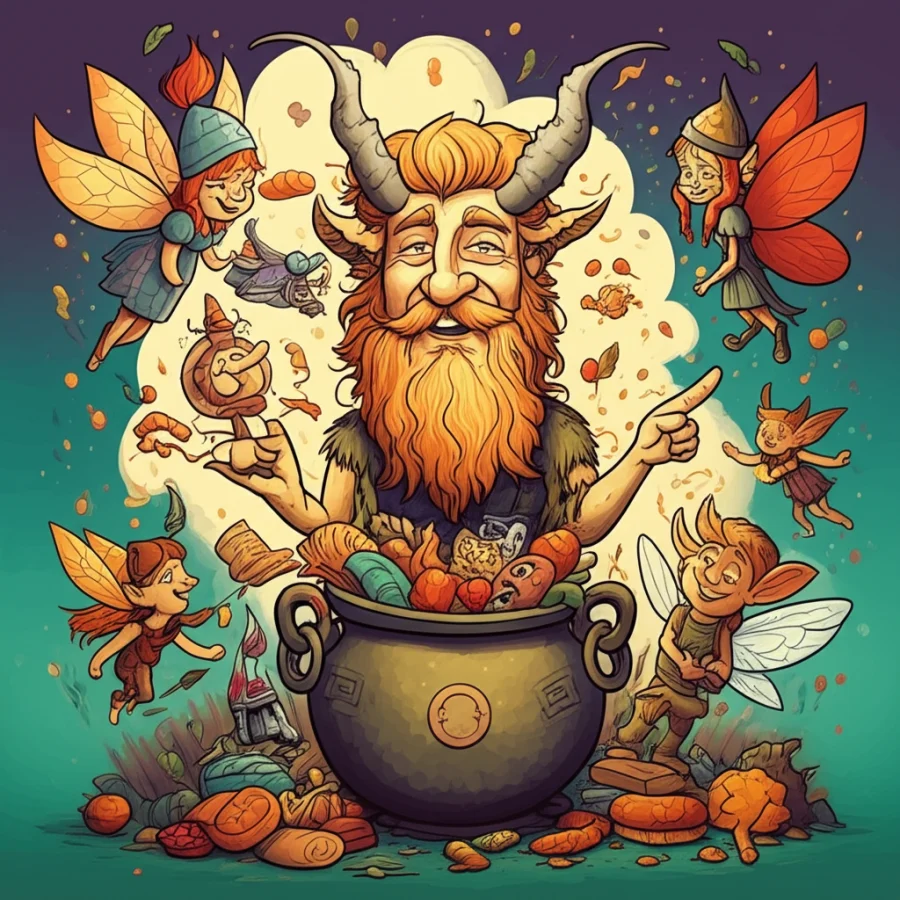
The Cauldron of Plenty and the Lord of the Wild
An exploration into the Celtic myth of the Dagda’s Cauldron and the enigmatic figure of Cernunnos.
Introduction
From the rain-swept hills of Ireland to the dense, ancient forests of Gaul, the Celtic peoples of Iron Age Europe wove a rich tapestry of myth and legend. These were not mere fables, but a way of understanding the world—a world alive with mystery, where the veil between the natural and the supernatural was thin. The stories they told, passed down through generations by skilled bards and druids, spoke of mighty heroes, powerful gods, and the primal forces of nature. This article delves into one such narrative, a tale that combines two powerful symbols from Celtic folklore: the life-giving Cauldron of the Dagda and the mysterious, antlered guardian of the wild, known to us as Cernunnos. It is important to remember that this is a traditional story from a specific cultural heritage, shared for educational understanding of history and imagination, not as a matter of faith or practice.
Origins and Cultural Background
This legend emerges from the cultural world of the Celts, a collection of tribes that flourished across Europe roughly from 800 BCE to 400 CE. Their society was deeply intertwined with the natural environment. The changing seasons, the rustling of leaves in an ancient oak forest, the migration of deer, and the bubbling of a hidden spring were not just physical events; they were seen as expressions of a living, spiritual world. The Celts did not build grand temples of stone like the Romans or Greeks. Their sacred spaces were natural groves, clearings, and bodies of water. Their worldview was animistic, meaning they perceived spirits and consciousness in all things. Storytelling was a vital part of their culture, preserving their history, laws, and understanding of the cosmos in a time before widespread literacy. These myths were a way to explain the unpredictable forces of nature and to teach the values of community, respect, and balance.
Character Descriptions
At the heart of our story are two distinct but related figures. The first is the Dagda, a prominent figure from Irish mythology. His name translates to "the Good God," not in the sense of moral goodness, but of being good at everything—a master of all skills. He was often depicted as a powerful, fatherly figure, sometimes rustic and comical, but always possessing immense power. He carried three great treasures: a club that could take a life with one end and restore it with the other, a harp that could command the seasons and the emotions of men, and his most famous possession, the Coire Anseasc, or the "un-dry cauldron." It was said that no company ever went hungry from it, for it was a vessel of endless abundance. Symbolically, the Dagda represented order, society, and prosperity, while his cauldron was a powerful emblem of hospitality, community, and life itself.
The second figure is far more enigmatic: Cernunnos. This name, meaning "the Horned One," comes from a single inscription found in Paris, but his image is far more widespread. The most famous depiction is on the Gundestrup Cauldron, a silver vessel discovered in a Danish bog. There, he is shown as a man with the antlers of a stag, seated in a cross-legged, meditative posture. He holds a torc (a symbol of nobility) in one hand and a ram-horned serpent in the other, surrounded by wild animals like deer, wolves, and boars. Cernunnos is not a character with a defined story like the Dagda. Instead, he is an archetype, a silent and ancient lord of the wilderness. His antlers connect him to the cycle of seasons—shedding and regrowing each year—and thus to themes of rebirth and fertility. He represents the untamed, primal world that exists beyond the borders of human settlement, a symbol of nature’s power, its wildness, and its deep, unknowable mysteries.
Main Story: The Quest for the Un-Dry Cauldron
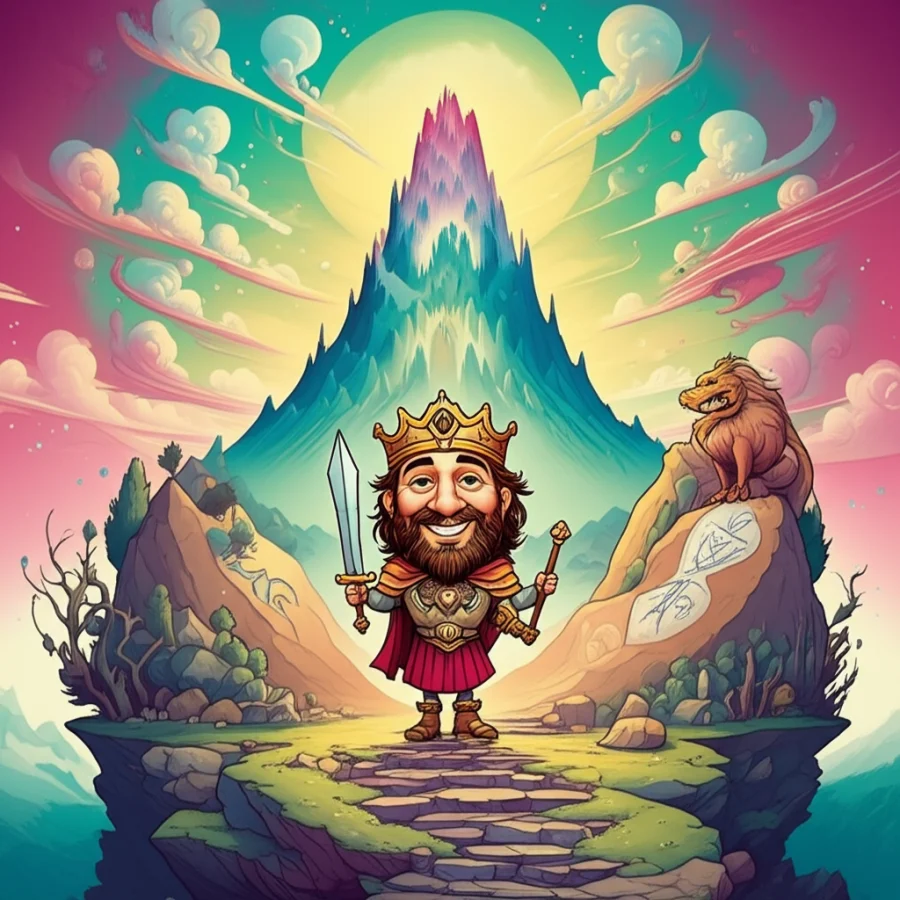
In an age when the world was younger, a great blight fell upon the lands of a certain tribe. The rains ceased, the fields turned to dust, and the game in the forests grew scarce. Famine stalked the villages, and the laughter of children was replaced by the hollow cough of hunger. The chieftains and elders gathered, their faces etched with worry. They spoke of the old tales, of the Dagda’s Cauldron that could feed an entire army and never be emptied. But the cauldron, they whispered, was no longer in the world of men. It had been withdrawn to the heart of the Otherworld, a realm that mirrored our own, hidden deep within the most ancient and untouched forest.
One brave youth, named Caelan, whose heart ached to see his people suffer, stood before the elders. "I will seek this cauldron," he declared. "I will journey into the deep wood and not return until our people are saved."
He was warned that the path was not one of strength, but of spirit. The forest was the domain of a silent guardian, the Horned Lord who watched over all wild things. To enter his realm with arrogance or violence was to be lost forever. Caelan understood. He took with him no sword or spear, only a small pouch of oats and a deep respect for the world he was about to enter.
For days, Caelan walked. The tidy woods near his village gave way to a tangled, primordial wilderness. Ancient trees, draped in moss, blotted out the sun, and the air grew thick with the scent of damp earth and decay. The sounds of civilization faded, replaced by the snapping of twigs in the undergrowth, the hoot of an unseen owl, and a profound, watchful silence. He felt eyes upon him from every shadow, but he showed no fear, only reverence. He shared his meager oats with the birds and squirrels, and when he drank from a stream, he gave thanks to its spirit.
Finally, he reached a clearing bathed in an eerie, green light. In the center, seated upon a mossy mound with his legs crossed, was the being he sought. Great antlers, like the branches of a winter oak, grew from his head. His face was weathered and ancient, his eyes holding the wisdom of millennia. A great stag stood to his right, and a wolf lay peacefully at his left. It was Cernunnos, the master of the wild.
Caelan’s heart hammered in his chest, but he did not speak. He knew that human words had little meaning here. Instead, he sat on the ground opposite the Horned Lord, bowed his head in respect, and waited. An hour passed, then a day, then another. Caelan sat in quiet meditation, observing the life of the forest around him. He watched a spider spin its web, a fox hunt a mouse, and a sapling push its way toward the light. He came to understand the forest’s great lesson: that life and death were two parts of the same cycle. For there to be abundance, there must also be loss. For the fields to grow, the seed must first be buried in the dark earth.
On the third morning, Cernunnos slowly raised his hand. He did not point the way, but simply held up the ram-horned serpent. Caelan looked at the serpent, which coiled and uncoiled, a symbol of cyclical energy, of death and rebirth. He understood. The Horned Lord was not testing his strength, but his understanding. Caelan rose, bowed once more, and turned not toward a hidden path, but back the way he came. The test was over.
As he re-entered the lands of his tribe, he saw that a gentle rain had begun to fall. In the center of the village, where there had been only dust, now sat a simple, unadorned iron cauldron, steam rising from its rim. It was filled with a warm, nourishing stew. The villagers ate, and the cauldron magically refilled. It was not the ornate, treasure-like vessel of legend, but its gift was the same. Caelan had not stolen the cauldron; by showing his understanding of nature’s balance, he had proven his people worthy of its blessing. The land began to heal, and the tribe learned to live in greater harmony with the wild, understanding that its gifts were not to be taken, but received with gratitude.
Symbolism and Meaning
This story, a blend of different Celtic motifs, would have carried deep meaning for its original audience. The Cauldron is a clear symbol of life, sustenance, and the responsibilities of a good leader to provide for their people. Its inexhaustible nature represents the endless bounty of a well-managed and respected environment. Cernunnos symbolizes the untamable aspect of nature. He is neither good nor evil; he is a force of balance. He cannot be defeated with weapons or commanded with words. He represents a truth that ancient people knew well: humanity is part of nature, not its master. The quest itself is a metaphor for a spiritual journey. Caelan’s success comes not from heroic deeds, but from humility, patience, and a profound shift in perspective. The myth teaches that prosperity and survival are dependent on a respectful relationship with the natural world.
Modern Perspective
Today, these ancient figures live on in modern culture. The archetype of the Horned God or the Lord of the Forest can be seen in fantasy literature, such as in the character of Tom Bombadil in J.R.R. Tolkien’s The Lord of the Rings or as a recurring "Green Man" motif. Video games like The Witcher and Hellblade: Senua’s Sacrifice draw heavily from Celtic folklore, featuring creatures and themes rooted in this mythological landscape. Cernunnos, in particular, has become a subject of academic study in mythology and archaeology, seen as a key to understanding pre-Christian European views of nature and divinity. While some modern spiritual movements have adopted him as a deity, his original context remains that of a powerful but mysterious symbol from a long-lost cultural past.
Conclusion
The tale of Caelan’s quest for the Dagda’s Cauldron under the watchful eye of Cernunnos is a powerful piece of cultural heritage. It is a story born from the imagination of a people who lived in close partnership with the earth, a narrative that sought to explain the world and impart wisdom. These myths should not be viewed as literal accounts, but as enduring cultural artifacts that reveal how ancient peoples grappled with the fundamental questions of life, death, and survival.
As Muslims, we recognize that only Allah is the true Creator and Sustainer, the sole source of all life and abundance. These stories are the product of human culture and imagination, not divine revelation. Yet, by studying them, we can appreciate the rich diversity of human storytelling and the timeless quest to find our place within the natural world. They remind us of the power of narrative to shape a culture’s values and to carry its wisdom across the centuries.