fufufafa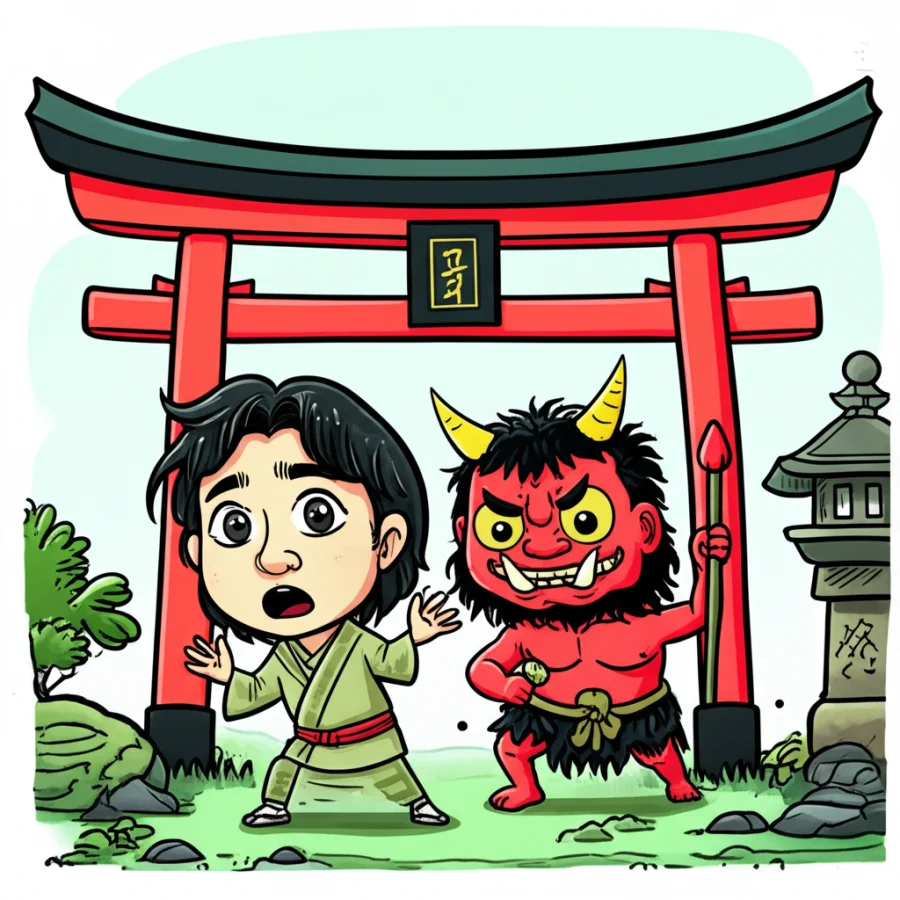
In the hushed reverence of Japan’s ancient past, where the natural world and the spiritual realm were perceived as intimately intertwined, stories of mythical beings permeated the landscape. Among these tales, the legends surrounding Ise Grand Shrine, a place of profound spiritual significance, often feature encounters with entities that embodied the untamed forces of nature and the complexities of the human psyche. This narrative delves into one such imagined encounter, exploring the folklore of the oni as they were understood in the context of this sacred site, for the educational and cultural understanding of ancient Japanese beliefs.
Echoes from an Age of Gods and Spirits
The myths and legends of Japan, particularly those connected to Ise Grand Shrine, emerged from a cultural milieu deeply rooted in Shintoism, the indigenous religion of Japan. This era, often characterized by the presence of powerful kami (deities or spirits) and a profound respect for the natural world, saw people living in close proximity to forests, mountains, and the sea. Their worldview was animistic; spirits were believed to inhabit everything – trees, rocks, rivers, and even abstract concepts like growth and decay. The Shinto pantheon was vast and complex, encompassing deities of fertility, harvest, storms, and the very land itself.
Ise Grand Shrine, dedicated to Amaterasu-ōmikami, the sun goddess, has been a central pillar of Shinto for over two millennia. Its sacred forests, the ancient trees that have stood sentinel for centuries, were not merely scenery but were considered living entities, imbued with spiritual energy. In such an environment, the distinction between the physical and the supernatural was fluid. The natural world was a place of both wonder and trepidation, and it was from this fertile ground of belief that tales of beings like the oni took root.
The Oni: Embodiments of Untamed Power
The oni, as depicted in Japanese folklore, are not singular entities but rather a diverse group of supernatural beings. They are often portrayed as monstrous figures, physically imposing and fearsome. Common descriptions include horned heads, sharp claws, and a muscular build, often clad in animal skins or rudimentary armor. Their primary weapons are typically fearsome clubs, such as the kanabō, a spiked metal-studded bludgeon.
Symbolically, the oni represent a spectrum of primal forces. They can embody raw, untamed power, the destructive aspects of nature like storms and earthquakes, or the darker, more chaotic elements within human nature: greed, anger, and primal fear. However, their symbolism is not entirely negative. In some contexts, they can also represent powerful protectors, wardens of the wild, or even figures who, through their very fearsomeness, can drive away lesser evils. Their presence in tales, especially those connected to sacred spaces like Ise, suggests a complex understanding of the forces that govern the world – forces that were both revered and feared, and which needed to be acknowledged, if not appeased.
The Guardian of the Sacred Grove
Imagine a time, long ago, when the air around Ise Grand Shrine was thick with the scent of cedar and the murmur of ancient trees. A lone pilgrim, perhaps a scholar seeking deeper understanding or a devotee testing the limits of their faith, found themselves venturing deeper into the sacred forest than custom strictly allowed. The path, barely discernible, wound through moss-covered stones and beneath canopies that filtered the sunlight into ethereal shafts. The silence was profound, broken only by the rustling of unseen creatures and the distant call of a bird.
As the pilgrim pressed on, the atmosphere shifted. The air grew cooler, the shadows deepened, and a sense of immense presence began to weigh upon them. It was then, amidst a clearing where ancient, gnarled trees stood like silent sentinels, that the figure emerged. It was an oni, not the cartoonish depiction of modern times, but a creature of raw, elemental power. Its form was colossal, its skin the color of storm-laden earth, and from its brow, two jagged horns twisted towards the sky. Its eyes, like burning embers, surveyed the intruder with an intensity that seemed to pierce the very soul. In one massive hand, it clutched a formidable club, its surface scarred and stained as if from countless ancient battles.
The pilgrim froze, their heart a frantic drum against their ribs. There was no immediate aggression, only a profound, ancient watchfulness. The oni did not speak in human tongues, but its gaze conveyed a potent message: this was a sacred space, a place of immense power and delicate balance, and unauthorized intrusion was not to be tolerated. It was a guardian, a manifestation of the wild, untamed spirit of the forest itself, ensuring that the sanctity of the shrine was maintained.
The pilgrim, understanding dawning through their fear, bowed their head in deep respect. They offered no challenge, no plea, but simply acknowledged the oni‘s authority and the sacredness of its domain. Slowly, deliberately, they began to retrace their steps, the formidable figure of the oni watching their retreat, its presence a silent testament to the potent forces that resided within the hallowed grounds of Ise. As the pilgrim emerged back onto the familiar, albeit still awe-inspiring, paths, the oppressive weight of the oni‘s presence lifted, leaving behind a profound sense of wonder and a renewed respect for the hidden guardians of sacred places.
The Wild and the Sacred: Understanding the Symbolism
For the ancient peoples who shared these stories, the oni of Ise’s sacred forest likely represented a multitude of symbolic meanings. Primarily, it served as a personification of the untamed and potentially dangerous aspects of nature. The vast, ancient forests surrounding Ise were awe-inspiring, a source of resources, but also a place where one could easily become lost or encounter unforeseen perils. The oni embodied this primal, wild energy, a reminder that even in places of profound spiritual significance, the raw forces of the world held sway.
Furthermore, the oni could symbolize the sacredness and inviolability of the shrine itself. By presenting a fearsome guardian, the legend reinforced the idea that Ise was a place set apart, protected by powers far beyond human comprehension. It served as a deterrent against disrespect or desecration, ensuring that only those who approached with genuine reverence and understanding would be welcome.
In a broader sense, the oni also touched upon the human experience of confronting the unknown and the primal. Fear of the unknown, of what lurks beyond the edges of civilization and understanding, is a universal human emotion. The oni provided a tangible form for these anxieties, allowing them to be acknowledged and, in some narratives, even overcome or appeased. It was a way of understanding and interacting with the darker, more chaotic elements of existence, both internal and external.
Echoes in the Modern World
Today, the oni continues to resonate in Japanese culture and beyond, albeit often in transformed guises. In literature, manga, and anime, oni are frequently depicted as powerful antagonists or, conversely, as complex characters with their own motivations and struggles. Their visual imagery, with horns and formidable physiques, has become iconic and is instantly recognizable.
Video games often leverage the oni‘s fearsome reputation, casting them as formidable bosses or recurring enemies, adding an element of mythological dread to the gameplay. In film and television, they can be depicted as monstrous creatures of destruction or as more nuanced figures, exploring themes of duality and the blurred lines between good and evil.
Beyond popular media, the oni remains a subject of academic interest in cultural studies, folklore research, and religious studies. Scholars analyze their evolution, their symbolic significance across different historical periods, and their enduring presence in the collective Japanese imagination. The oni serves as a window into the ancient worldview, offering insights into how people grappled with the mysteries of life, death, and the forces that shaped their existence.
A Tapestry of Belief and Imagination
It is crucial to reiterate that the tale of an encounter with the oni of Ise Grand Shrine is a product of ancient storytelling and folklore. It is not presented as a factual account or a belief to be adopted. As Muslims, we understand that the only true Creator and Sustainer of the universe is Allah (God). Our faith centers on the absolute oneness of God and rejects any form of polytheism or the attribution of divine power to created beings.
However, the study of such myths offers invaluable insights into the rich tapestry of human culture, imagination, and the enduring tradition of storytelling. These narratives, born from specific historical and environmental contexts, reveal how ancient peoples sought to understand their world, to explain the inexplicable, and to imbue their lives with meaning. The oni, like many figures from global mythologies, stands as a testament to humanity’s capacity for creative expression, our deep-seated need to make sense of the unknown, and our enduring fascination with the stories that shape our collective heritage. By exploring these tales with an educational and respectful lens, we can gain a deeper appreciation for the diverse ways in which humanity has navigated its existence across the ages.