fufufafa
The Hawaiian Islands, born from the fiery heart of the Pacific Ocean, are more than just geological marvels. For centuries, they have been the cradle of rich oral traditions, a tapestry woven with tales of ancient gods, spirits, and the very forces that shaped their dramatic landscapes. Among these narratives, stories of the mo’o – ancient lizard-like beings deeply intertwined with the land and its powerful volcanoes – resonate as echoes of a time when the natural world was imbued with profound spiritual significance. This is not a tale of divine power to be worshipped, but a traditional story passed down by the ancient people of Hawaiʻi, offering a glimpse into their worldview and their relationship with the formidable power of their island home.
To understand the stories of the mo’o, we must journey back to a time when the Hawaiian Islands were a nascent world, shaped by the relentless forces of creation and destruction. The society was deeply connected to the rhythms of nature. The vast ocean, the fertile land, and the volatile volcanoes were not merely environmental features but sentient entities, governed by powerful forces that demanded respect and understanding. In this ancestral era, the world was often perceived through a lens of animism, where spirits and primal beings inhabited every aspect of existence. The raw power of a volcanic eruption, the sheer force that could both create new land and obliterate existing life, was a constant reminder of forces far beyond human control. It was within this context, where the tangible and the intangible were seamlessly interwoven, that the legends of the mo’o took root.
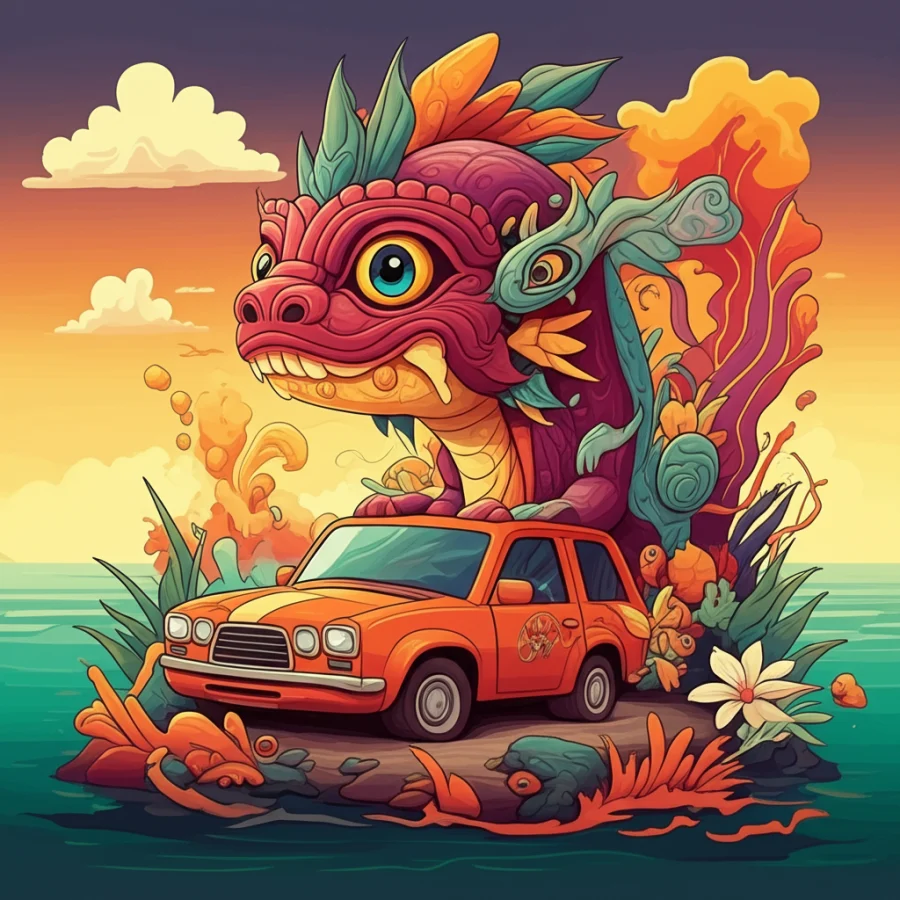
The mo’o, in these traditional accounts, are depicted as formidable, serpentine beings, often described as giant lizards or dragons. They are not simply animals but ancient entities possessing immense power and a deep connection to the earth and its volcanic energies. Their scales are said to shimmer with the heat of the molten rock, and their eyes are sometimes described as glowing embers. These beings are not benevolent guardians nor malevolent demons in the Western sense; rather, they embody the primal forces of the earth – creation, destruction, and transformation. Their symbolic attributes lie in their association with the volatile, unpredictable nature of volcanoes. They represent the raw, untamed power that lies beneath the surface, capable of both immense creation and devastating destruction. The mo’o are not to be believed in as living entities, but understood as potent symbols of the awe-inspiring and often terrifying forces that shaped the Hawaiian archipelago.
The narrative of the mo’o and their connection to Hawaiian volcanoes often unfolds in tales of struggle and balance. Imagine ancient Hawaiʻi, where the earth frequently trembled and the sky sometimes rained ash. In these stories, the mo’o are often depicted as guardians of the volcanic fires, or sometimes as embodiments of the volcanic spirit itself. One recurring theme involves the immense power of Pele, the goddess of volcanoes. In some narratives, the mo’o are said to be her kin, her servants, or even her adversaries. They might be tasked with managing the flow of lava, or their very presence could be linked to the simmering unrest within the earth.
Consider a tale where a particularly restless mo’o, its body a mass of smoldering rock and molten fury, stirs deep within Kīlauea. The ground begins to rumble, a low growl that shakes the very foundations of the islands. The mo’o’s breath, hot and sulfurous, is said to be the precursor to an eruption. Its movements are the tremors that warn the people, a primal signal of the earth’s awakening. Sometimes, these mo’o are described as being in conflict with other powerful forces, perhaps other spirits or even the elements themselves, their battles manifesting as volcanic activity. A fierce roar from a mo’o could be the sound of an eruption, its enraged thrashing the cause of destructive lava flows. These stories, rich with imagery of fire, earth, and immense scale, painted a vivid picture of the dynamic relationship between the people and their volcanic environment. They served as a way to comprehend and articulate the awe-inspiring, and often dangerous, power that surrounded them.
The symbolism embedded within these mo’o narratives is profound. To the ancient Hawaiians, the mo’o likely represented the untamed, primordial forces of nature. Their association with volcanoes speaks to the duality of creation and destruction inherent in such geological power. The mo’o could embody the destructive potential of an eruption, a force that could wipe away villages and reshape coastlines. Yet, they could also symbolize the creative power of the earth, the very act of land formation that brought the islands into being. They might have represented the deep, hidden energies within the earth, a constant reminder of the planet’s immense, often incomprehensible, power. Furthermore, the mo’o could have served as a means of explaining natural phenomena that were otherwise beyond their direct control, offering a narrative framework for understanding the earth’s capricious moods. They could also represent a form of primal wisdom, ancient beings who understood the cycles of the earth in a way humans could only begin to grasp.
In the modern era, these ancient tales continue to echo, not as literal beliefs, but as valuable components of cultural heritage and imaginative storytelling. The mo’o and the myths surrounding Hawaiian volcanoes are frequently explored in literature, captivating readers with their unique blend of mythology and natural wonder. They find their way into visual media, inspiring the designs of mythical creatures in video games and films, bringing a touch of ancient Polynesian lore to contemporary audiences. Cultural studies departments and historians delve into these narratives to understand the worldview, values, and spiritual practices of past generations. These stories serve as a vital link to the past, offering insights into how ancient peoples perceived their place in the universe and their relationship with the powerful forces that governed their lives.
In conclusion, the legends of the mo’o and their connection to Hawaiian volcanoes are deeply rooted in the cultural and historical context of ancient Hawaiʻi. These are traditional stories, rich with imagery and symbolism, that offer a unique perspective on the natural world. It is important to reiterate that these are cultural narratives, passed down through generations for their historical and educational value, not as tenets of belief. As Muslims, we recognize that only Allah (God) is the true Creator and Sustainer of all that exists, the ultimate power behind the universe and all its wonders. The exploration of such cultural heritage, however, allows us to appreciate the diverse ways in which humanity has sought to understand its surroundings, fostering a deeper respect for the imagination, the power of storytelling, and the enduring legacy of human cultural expression.