
 fufufafa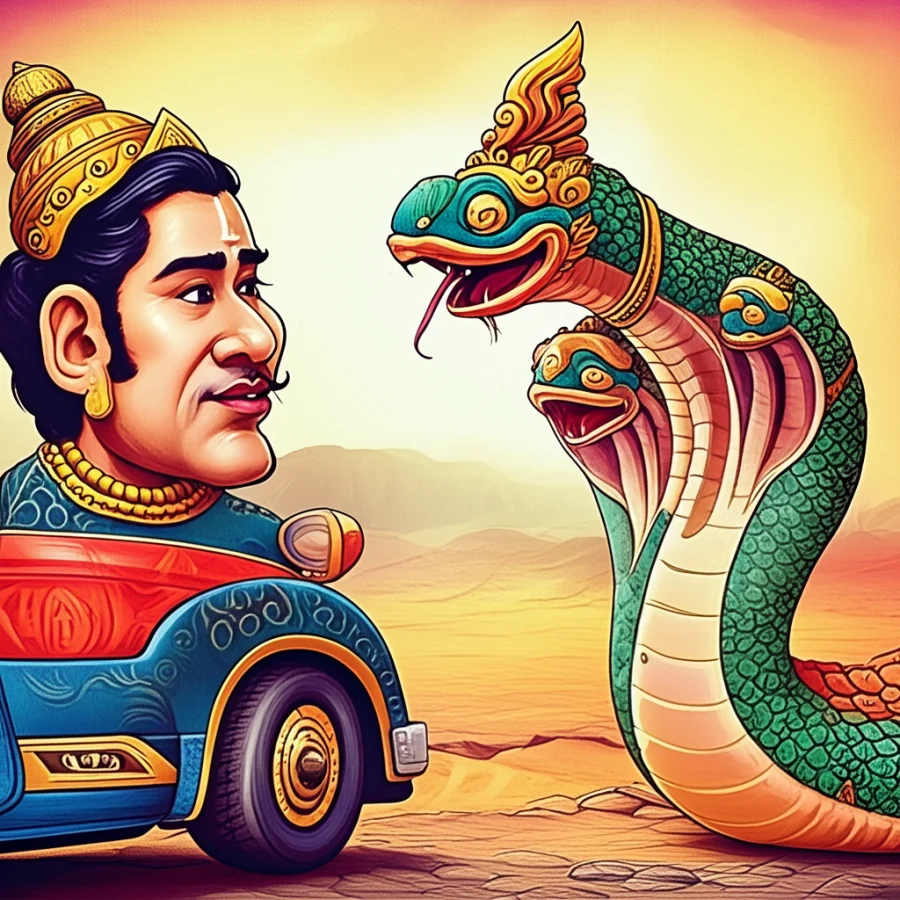
Introduction:
The story of the Naga of Vaikuntha emerges from the rich tapestry of Hindu mythology, a vast and complex collection of narratives originating in the Indian subcontinent. These tales, passed down through generations by word of mouth and later preserved in written texts such as the Puranas and the Vedas, offer a window into the ancient worldview and spiritual understanding of the people who created and cherished them. It is important to understand that this is a traditional story, a product of human imagination and cultural values, and should be approached as such.
Origins and Cultural Background:
The myth of the Naga, and its association with Vaikuntha, Vishnu’s celestial abode, likely solidified during the classical period of Indian history, spanning roughly from the Mauryan Empire (322-185 BCE) to the Gupta Empire (320-550 CE). This was a time of significant philosophical and religious ferment, witnessing the development of various schools of Hinduism, including Vaishnavism, which centers on the worship of Vishnu.
People of that era lived in a world intimately connected with nature. Their lives were governed by the rhythms of the seasons, the bounty of the land, and the perceived influence of unseen forces. The natural world, with its mountains, rivers, forests, and creatures, was imbued with sacredness and seen as a manifestation of the divine. Belief in karma and reincarnation was widespread, influencing their actions and shaping their understanding of life and death. The society was structured around the caste system, with rigid social hierarchies and prescribed roles. Religious rituals and ceremonies were integral to daily life, providing a framework for understanding their place in the cosmos. The concept of Dharma, righteous conduct and duty, guided their moral compass.
Character/Creature Description: Shesha Naga
The Naga of Vaikuntha is typically identified as Shesha, also known as Ananta-Shesha, a primordial serpent or Naga in Hindu mythology. He is depicted as a massive, multi-headed cobra, often said to have thousands of heads, each capable of chanting the glories of Vishnu eternally. He is described as being immense, his coils forming a comfortable bed for Vishnu to rest upon.
Shesha’s symbolic attributes are multifaceted. His countless heads represent the endless nature of time and the infinite potential of creation. His role as Vishnu’s bed signifies his support of the universe and his function as a foundation for all existence. The venomous nature of a serpent is often associated with power and protection, signifying Shesha’s ability to ward off negativity and maintain cosmic order. He is not to be seen as a literal creature, but rather a symbolic representation of cosmic energies and divine attributes. The serpent itself is a potent symbol throughout many cultures, often linked to primal energies, transformation, and the cycle of life and death.
Main Story/Narrative Retelling:
The sage Narada, a wandering devotee and celestial messenger, embarked on a journey to Vaikuntha, the supreme abode of Lord Vishnu. His heart yearned for a glimpse of the divine, and he traversed realms beyond human comprehension, guided by unwavering devotion.
Finally, he reached the gates of Vaikuntha, a realm bathed in ethereal light and filled with celestial beings. He was greeted by the gatekeepers, Jaya and Vijaya, who, after recognizing Narada’s profound spiritual merit, allowed him to enter.
As Narada proceeded deeper into Vaikuntha, a sight of unparalleled grandeur unfolded before him. Lord Vishnu, the preserver of the universe, reclined majestically upon a bed unlike any other. This bed was none other than Shesha Naga, the cosmic serpent, whose immense form coiled around Vishnu, his countless heads forming a protective canopy.
Narada approached with reverence, his eyes wide with awe. He observed the scene with deep concentration, noting that the lord was supremely comfortable and peaceful. He was also aware that Shesha was also a form of the lord himself, serving a particular purpose in the divine plan.
The sage prostrated before Vishnu, offering his heartfelt prayers and hymns. Vishnu, with a gentle smile, acknowledged Narada’s devotion and welcomed him to Vaikuntha. He spoke to Narada about the intricacies of Dharma, the importance of selfless service, and the path to liberation.
As Narada listened to Vishnu’s divine discourse, he couldn’t help but marvel at Shesha Naga. The serpent’s presence exuded a sense of immense power and serenity. Narada understood that Shesha was not merely a bed, but a fundamental aspect of Vishnu’s divine nature, representing the boundless energy and support that sustains the cosmos.
The encounter with Vishnu and Shesha Naga left an indelible mark on Narada. He returned to the mortal realm with a renewed sense of purpose, dedicating his life to spreading the message of devotion and righteousness. The tale of his visit to Vaikuntha became a cherished story, reminding people of the divine presence that permeates all of creation.
Symbolism and Meaning:
The story of the Naga of Vaikuntha, specifically Shesha Naga, carries profound symbolic weight. It represents the interconnectedness of all things in the universe, where even seemingly opposing forces like Vishnu (preservation) and a serpent (potentially destructive power) can coexist harmoniously. Shesha, as the foundation upon which Vishnu rests, symbolizes the underlying support and stability of the cosmos. The story may have been used to convey the importance of balance, harmony, and the recognition of the divine presence in all aspects of creation.
The image of Vishnu reclining on Shesha also reinforces the concept of cosmic rest and regeneration. After periods of creation and activity, the universe enters a state of quiescence, symbolized by Vishnu’s repose. Shesha’s coils represent the cyclical nature of time and the continuous process of creation, preservation, and destruction. The Naga, therefore, is not just a creature but a symbolic representation of cosmic processes.
For the people of that time, this story likely offered a sense of reassurance and order in a world that often felt chaotic and unpredictable. It suggested that even amidst the turmoil of life, there was a divine order and a supportive foundation underlying all existence.
Modern Perspective:
The myth of the Naga of Vaikuntha continues to resonate in modern culture, albeit often in reimagined forms. Nagas frequently appear in fantasy literature, movies, and video games, often depicted as powerful serpentine beings with mystical abilities. In cultural studies, the Naga is analyzed as a complex symbol representing various themes, including power, transformation, and the relationship between humanity and nature. The image of Vishnu reclining on Shesha remains a popular motif in Hindu art and iconography, serving as a visual reminder of the divine presence and the interconnectedness of all things.
Conclusion:
The story of the Naga of Vaikuntha is a fascinating example of the rich and imaginative storytelling traditions that have shaped human cultures for centuries. It is a cultural narrative, a product of human creativity and a reflection of the values and beliefs of a bygone era. It’s important to remember that this story originates from Hindu mythology and is not a belief or practice within Islam. We, as Muslims, recognize that only Allah is the true Creator and Sustainer of the universe. This story, however, offers a valuable opportunity to explore the diverse tapestry of human imagination and to appreciate the cultural heritage that has been passed down through generations. It serves as a reminder of the power of storytelling to convey complex ideas, explore profound themes, and shape our understanding of the world around us. The imaginative nature of the tale allows us to engage with different cultural perspectives and appreciate the richness of human expression.







