fufufafa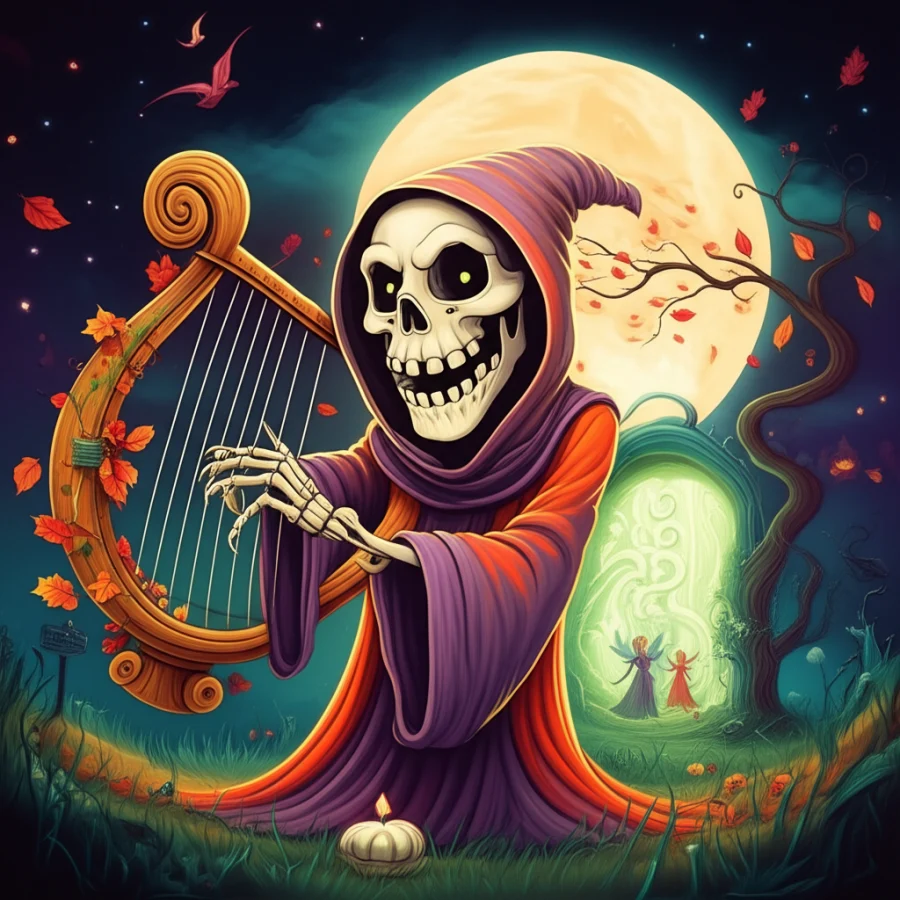
The mists of autumn often carry more than just the scent of fallen leaves; in the ancient lore of the Celtic peoples, they were believed to carry whispers from another realm. This detailed narrative explores a traditional story from early Irish mythology, centered around the festival of Samhain and the enchanting concept of Tír na nÓg, the Land of Youth. It is important to state clearly that this is a myth, a traditional story woven by ancient people, presented here for cultural, historical, and educational understanding, not as a reflection of reality or a call to belief or practice.
Origins and Cultural Background
This rich tapestry of myth emerged from the vibrant, pre-Christian Celtic societies that flourished across Ireland, Scotland, and parts of Western Europe. These were communities deeply intertwined with the land, their lives dictated by the rhythm of the seasons, the cycles of planting and harvest, and the omnipresent forces of nature. Their world was not merely a physical space but a vibrant, interconnected realm where the seen and unseen coexisted. They perceived the natural world as imbued with spirits, gods, and goddesses, and believed in a cyclical understanding of time, where death was merely a prelude to rebirth.
For these ancient Celts, Samhain (pronounced sow-in), marked around October 31st, was the most significant turning point of the year. It was not merely the end of the harvest and the onset of winter’s chill; it was a liminal threshold, a time when the veil between the mortal world and the Otherworld, the realm of spirits and deities, grew perilously thin. During Samhain, it was believed that the Aos Sí – the fairy folk or spirits of the mounds – could more easily cross into human lands, and the spirits of ancestors might return to visit their kin. It was a time of both reverence and apprehension, of communal feasting and protective rituals, where bonfires blazed to ward off malevolent entities and guide benevolent spirits home.
The Whispers of the Aos Sí
Central to the concept of Samhain’s liminality and the allure of the Otherworld are the Aos Sí, often translated as "people of the mounds" or simply "fairies." In these ancient tales, they are not the diminutive, winged sprites of later folklore, but rather powerful, often ethereal beings, remnants of ancient gods or spirits of the land. They dwell in hidden places, beneath hills, across the western seas, or in realms like Tír na nÓg. These beings possessed immense beauty, agelessness, and a deep connection to the magic of the land.
Symbolically, the Aos Sí represented the wild, untamed aspects of nature, the mystery beyond human comprehension, and the powerful, unseen forces that shaped the world. Their beauty could be captivating, their gifts enchanting, but their allure often came with a price. They embodied the temptation of the Otherworld – a world free from the hardships of mortal life, a world of eternal youth and boundless joy. Their music, in particular, was legendary: hauntingly beautiful, capable of lulling mortals into a trance, stealing their sense of time, or drawing them irrevocably into their enchanted domain. These symbolic attributes served to remind the ancient Celts of the profound respect and caution due to the unseen world, rather than promoting belief in their literal existence.
The Bard and the Thinning Veil
On a Samhain night, many centuries ago, in a small village nestled amidst the rolling green hills of Éire, lived a young bard named Fionn. He was known not only for his skill with the harp and his lyrical voice but also for a certain sensitivity, a quiet perceptiveness that allowed him to feel the subtle shifts in the air, the whispers of the wind, and the ancient echoes of the land more keenly than others. This particular Samhain was colder than most, the winds carrying a sharper bite, and the moon, a sliver of silver, seemed to hang lower, closer to the earth.
The village had gathered around the roaring bonfire, its flames leaping skyward, chasing away the encroaching darkness. Stories were shared, ancestors honored, and protective charms placed at doorways. Fionn played his harp, weaving melodies of harvest and hearth, of heroes and forgotten gods. But as the night deepened, and the revelry began to wane, a different kind of music began to drift on the wind – not from any human instrument, but from beyond the familiar world.
It began subtly, a faint, shimmering resonance beneath the roar of the bonfire and the distant howls of wolves. It was a sound like a thousand tiny bells woven with the sighs of the sea and the rustling of unseen leaves. Fionn, his fingers stilling on the strings of his harp, felt a shiver trace his spine that had nothing to do with the cold. This was the music of the Aos Sí, the enchanting, dangerous melody that spoke of Tír na nÓg, the Land of Youth.
He closed his eyes, and in his mind’s eye, he saw not the familiar village green but shimmering vistas of an eternal spring. Trees bore fruit and blossom simultaneously, rivers flowed with liquid light, and the air was perpetually warm, scented with unheard-of flowers. Figures moved through this landscape, eternally young, their laughter like silver chimes. This was Tír na nÓg, a realm untouched by age, sorrow, or decay, a place where time itself stood still. The "Songs of Tír na nÓg" were not mere tunes; they were sensory experiences, visions, emotions, all woven into a melody that beckoned with irresistible promise.
The music swelled, a symphony of otherworldliness, pulling at something deep within Fionn’s soul. He felt a profound yearning, a desire to shed the mortal coil, to step into that radiant, eternal world. The hardships of his life, the inevitable march of age, the sorrow of loss – all seemed insignificant compared to the promise held within those enchanting notes. He saw glimpses of Oisín, the legendary warrior-poet who had ventured to Tír na nÓg with Niamh of the Golden Hair, only to return centuries later to a world he no longer knew, aging instantly upon touching the soil of Éire.
Yet, as potent as the allure was, a counter-melody began to play within Fionn’s heart – the quiet hum of his own village, the warmth of the bonfire, the faces of his kin, the familiar weight of his harp. He remembered the stories of those who had chased the music of the Aos Sí and never returned, or who returned irrevocably changed, lost to the mortal world. He understood that the beauty of Tír na nÓg was intertwined with an ultimate separation from all he knew and loved.
With a profound effort, Fionn opened his eyes. The bonfire still crackled, the faces of his people were still illuminated by its glow, and the sharp scent of woodsmoke filled his nostrils. The otherworldly music still lingered, a fading echo, but the vivid visions of Tír na nÓg had receded. He had stood at the threshold, touched by the Songs of Tír na nÓg on this most liminal of nights, and had chosen to remain. He picked up his harp, and a new song, infused with both the wonder of the Otherworld and the deep love for his own, began to flow from his fingertips, a song that honored the mysteries of Samhain and the enduring spirit of his people.
Symbolism and Meaning
For the ancient Celts, this myth, and the broader concept of Samhain and Tír na nÓg, held profound symbolic meaning. Samhain represented the cycle of death and rebirth, the inevitable end of the harvest season, and the necessary transition into winter. It was a time for communion with ancestors, a recognition of the permeable boundary between life and death. The fear associated with the thinning veil underscored a deep respect for the unknown and the powerful forces beyond human control.
Tír na nÓg, with its promise of eternal youth and boundless joy, symbolized humanity’s universal desire for an escape from suffering, a yearning for an ideal existence beyond the transient nature of mortal life. It represented hope, the allure of the transcendent, and the spiritual haven that existed beyond the mundane. The "Songs of Tír na nÓg" were not just music but a metaphor for the profound, often dangerous, enchantment of the Otherworld – the seductive call of the divine or the supernatural, capable of offering profound experiences but also demanding immense sacrifice. The choice Fionn faced represented the human dilemma between embracing the ephemeral beauty of the present world, with all its joys and sorrows, and succumbing to the temptation of an idealized, yet ultimately isolating, eternity. It highlighted themes of wisdom, self-awareness, and the value of one’s own community and heritage.
Modern Perspective
Today, the myths of Samhain and Tír na nÓg continue to resonate, interpreted through a modern lens in various forms. Samhain’s themes of the thinning veil, ancestors, and supernatural encounters have been secularized into Halloween, a festival of costumes, frights, and community celebrations, though some modern Pagan traditions continue to observe it with reverence. Tír na nÓg, as a land of eternal youth and magic, has become a staple in fantasy literature, video games, and film. Authors draw inspiration from its ethereal beauty and the poignant dilemmas faced by mortals who visit it, exploring themes of time, immortality, and the nature of paradise. Games often feature hidden, magical realms that echo Tír na nÓg’s allure, and its imagery frequently appears in Celtic-inspired art and music. Cultural studies delve into these myths to understand the worldview of ancient peoples, their relationship with nature, and their philosophical approaches to life, death, and the afterlife, seeing them as rich narratives that explore universal human experiences and questions.
Conclusion
The story of Samhain and the Songs of Tír na nÓg stands as a powerful testament to the imaginative spirit of the ancient Celtic people. It is a cultural narrative, not a belief, that offers a window into their understanding of the world, their fears, and their aspirations. As Muslims, we recognize that only Allah (God) is the true Creator and Sustainer of all existence, the One who holds ultimate power and knowledge over all realms, seen and unseen. These mythological tales, however, serve as valuable reflections of human creativity, the innate desire to make sense of the universe, and the enduring power of storytelling to transmit cultural heritage across generations. They remind us of the beauty in diverse human imagination and the rich tapestry of traditions that have shaped our world.