fufufafa
In the verdant embrace of the Philippines, a nation woven from a tapestry of islands and rich cultural heritage, lie stories whispered through generations. Among these is the legend of Maria Makiling, a mystical figure deeply rooted in the folklore of Laguna province, particularly around the majestic Mount Makiling. This is not a tale of historical fact, but rather an enduring narrative passed down by ancient peoples, offering a window into their understanding of the world and the forces they perceived to be at play. These stories, like ancient trees, have stood the test of time, their branches reaching into the present, shaping our appreciation for the imaginative landscape of Filipino culture.
The genesis of such legends can be traced back to a time when the world was viewed through a lens of immanence, where the divine and the natural were inextricably linked. In the pre-colonial Philippines, societies were often agrarian, their lives intimately tied to the rhythms of the earth, the fertility of the soil, and the bounty of the forests. The natural world was not merely a backdrop but a living entity, imbued with spirits and powers. Mountains, rivers, and ancient trees were seen as sacred spaces, home to benevolent or malevolent entities. This worldview fostered a deep respect for nature, often personified in guardian spirits or deities who were believed to govern their domains. The stories of Maria Makiling emerged from this cultural milieu, a testament to how ancient Filipinos sought to explain the inexplicable, to find order in the wildness, and to imbue their surroundings with meaning and wonder.
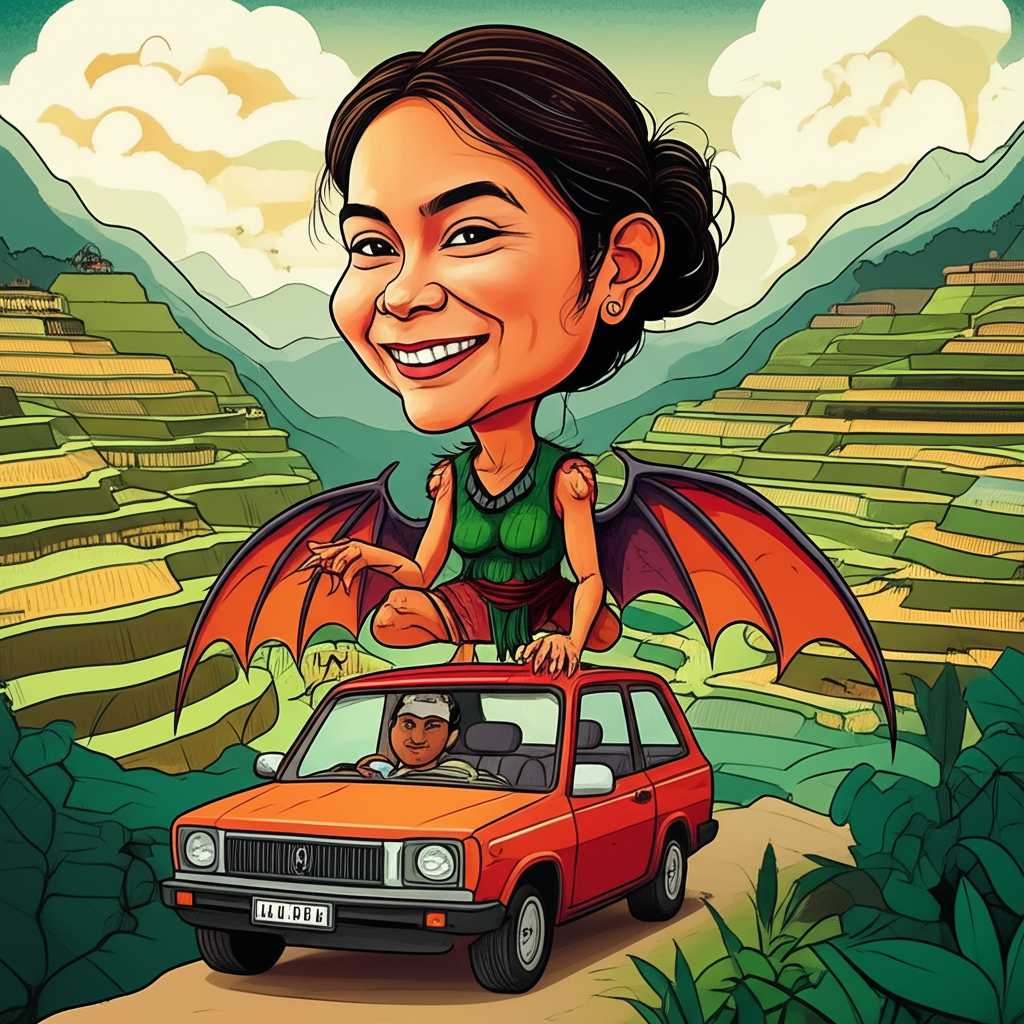
At the heart of this legend resides Maria Makiling, a figure described not as a deity to be worshipped, but as a powerful, ethereal guardian of the mountain. She is often depicted as a beautiful woman of striking allure, her presence intertwined with the very essence of Mount Makiling. Her symbolic attributes are deeply connected to the natural world she protects. Her beauty is said to mirror the pristine allure of the untouched forest, her tears the refreshing rains that nourish the land, and her anger the destructive storms that can sweep through the region. She is seen as a protector of the flora and fauna, a dispenser of blessings to those who respect her domain and a formidable force against those who seek to exploit or harm it. Her essence is the spirit of the mountain itself, a powerful, often unseen presence influencing the lives of those who live in its shadow.
The narrative of Maria Makiling often unfolds as a series of encounters and trials, reflecting the human desire to understand and appease the forces of nature. One prevalent iteration of the legend speaks of a trial orchestrated, in a sense, by the very fabric of existence, a cosmic test that Maria Makiling, as a significant entity within this mythical framework, would inevitably face. Imagine, then, a time when the balance of nature was threatened, perhaps by the encroaching desires of humankind for dominion over the land. The mountain, a silent sentinel, would feel this imbalance.
In this imagined scenario, a challenge might arise, not from a singular divine being like Bathala, the supreme creator in some pre-Hispanic Filipino cosmologies, but from a more elemental force, a grand test of her guardianship. Perhaps it was a test of her wisdom, her compassion, or her strength in the face of an encroaching darkness, a metaphor for ignorance or greed. Stories might tell of her having to nurture a rare, wilting plant back to life using her mystical tears, a symbol of her ability to heal and sustain. Or perhaps she was tested by a lost traveler, whom she had to guide through treacherous paths, demonstrating her knowledge of the mountain’s secrets and her inherent kindness. Another tale might involve her confronting those who sought to fell the ancient trees, her disapproval manifesting as sudden mists that disoriented them, or rockslides that warned them away. These trials were not necessarily acts of divine intervention in the strict sense, but rather manifestations of her role as the mountain’s embodiment, her power stemming from the natural order she represented. The whispers of her actions, carried by the wind through the trees, would serve as lessons to the nearby villagers.
The symbolism embedded within the legend of Maria Makiling is rich and multifaceted. She represents the untamed power and inherent beauty of nature, a force that can be both nurturing and destructive. Her trials can be interpreted as allegories for the challenges faced by communities living in close proximity to nature – the need for respect, the consequences of exploitation, and the importance of maintaining a delicate balance. She embodies the idea that the natural world possesses its own agency, its own spirit, and that human actions have repercussions. Her presence also speaks to the human need for protection and guidance, finding solace and meaning in the belief that benevolent forces watch over them. In essence, she was a narrative construct to understand the unpredictable yet vital forces of the environment.
In contemporary times, the legend of Maria Makiling continues to resonate, finding new life in various forms of artistic expression. She is a recurring character in Filipino literature, her story retold and reinterpreted by modern authors who explore themes of environmentalism, cultural identity, and the enduring power of myth. She has graced the silver screen in films and television series, her mystical aura captivating audiences. In the realm of digital entertainment, she appears in video games, her image a recognizable symbol of Filipino folklore. Cultural studies scholars also examine her legend as a vital artifact of Filipino cultural heritage, a lens through which to understand the historical relationship between people and their environment, and the evolution of storytelling traditions.
It is crucial to reiterate that the legend of Maria Makiling is a traditional story, a product of ancient imagination and cultural narratives. As Muslims, we recognize that only Allah (God) is the true Creator and Sustainer of all that exists. These tales, while culturally significant, do not hold divine authority. Instead, they serve as a testament to the rich tapestry of human creativity, the enduring power of storytelling, and the deep connection that ancient peoples felt with the world around them. The whispers of Maria Makiling, carried on the winds of Mount Makiling, remind us of the importance of preserving our cultural heritage, of appreciating the imaginative landscapes that have shaped our identities, and of continuing the tradition of storytelling that connects us to our past and enriches our present.