fufufafa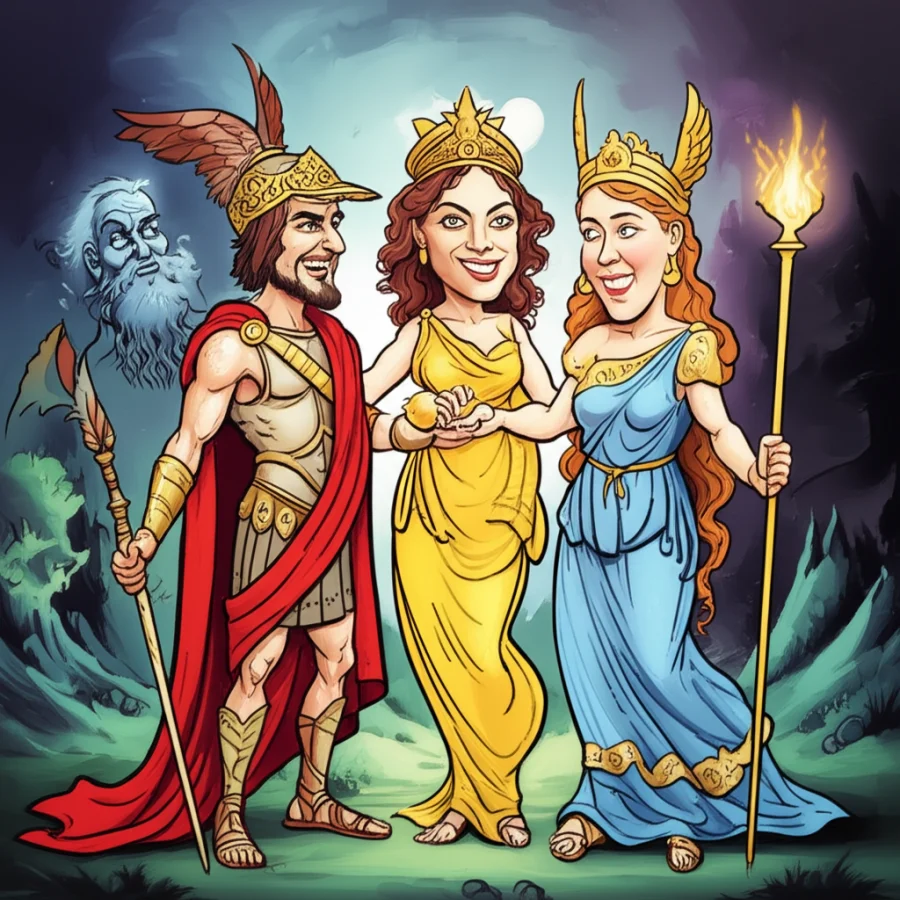
The ancient world, particularly the vibrant tapestry of Hellenic civilization, was a realm rich with stories that sought to explain the inexplicable, to chart the course of human destiny, and to define the very fabric of existence. These traditional tales, passed down through generations, form the bedrock of what we now understand as Greek mythology. They are not historical records or divine revelations, but rather imaginative narratives crafted by ancient people to articulate their perceptions of the cosmos, morality, and the powerful forces they believed governed their lives. Among these profound and interconnected myths are the tales surrounding the origins of Hades’ dominion over the Underworld and the pivotal event known as the Judgment of Paris, which, while distinct, both contribute to the intricate lore of ancient Greek belief systems.
Origins and Cultural Background: A World Shaped by Gods and Fates
The myths of ancient Greece flourished in a society deeply intertwined with nature, honor, and the omnipresent influence of divine beings. From roughly the Mycenaean period through the Classical age (circa 1600 BCE to 323 BCE), Greek city-states developed a complex polytheistic religion, where a pantheon of gods and goddesses, each with distinct domains and personalities, were believed to inhabit Mount Olympus and influence every aspect of human life. People of this era viewed the world not as a random collection of events, but as a stage upon which mortals and immortals alike played out their roles, often subject to the whims of fate and the intricate machinations of the gods.
Their understanding of the cosmos was layered. Above them was the sky, ruled by Zeus. Below the earth lay the vast, shadowy realm of the dead, known as the Underworld. This wasn’t necessarily a place of punishment for all, but rather the ultimate destination for every soul after death—a neutral, inevitable conclusion to life. This cultural worldview fostered a deep respect for the natural order, a cautious deference to divine power, and an acute awareness of the brevity and fragility of human existence.
Character Descriptions: Rulers of Realms and Agents of Destiny
Central to understanding the Underworld is Hades, the eldest son of the Titans Cronus and Rhea, and brother to Zeus and Poseidon. He is often depicted as a solemn, regal figure, less concerned with the affairs of the living than his Olympian siblings, but fiercely protective of his dominion. His symbolic attributes include the Helm of Darkness (which makes him invisible), a bident or scepter, and sometimes a key, representing his role as the keeper of the gates to the dead. He is also associated with the three-headed dog Cerberus, who guards the entrance to his realm. Hades is not inherently evil in the same way as some later demonic figures; rather, he is stern, just, and unwavering in his duties as the ruler of the dead, a necessary figure in the cosmic order.
The Judgment of Paris, on the other hand, introduces other key figures:
- Paris: A Trojan prince, abandoned at birth due to a prophecy and raised as a shepherd. He is depicted as handsome but somewhat vain and impulsive, chosen by Zeus to judge a divine beauty contest.
- Hera: Queen of the gods, goddess of marriage and childbirth. She is majestic and powerful, but also proud and vengeful, often associated with a peacock.
- Athena: Goddess of wisdom, warfare, and strategic battle. She is intelligent, disciplined, and associated with an owl and a shield (aegis).
- Aphrodite: Goddess of love, beauty, pleasure, and procreation. She is irresistibly charming and often associated with doves and roses.
These characters, both mortal and immortal, play crucial roles in stories that explore themes of cosmic order, moral choice, and the far-reaching consequences of actions.
Main Story: The Division of Realms and the Golden Apple
The true origins of Hades’ dominion over the Underworld predate the Judgment of Paris by a significant span, tracing back to the cataclysmic struggle known as the Titanomachy. Before the Olympian gods reigned, the universe was ruled by the Titans, led by Cronus, who had devoured his own children to prevent a prophecy of his overthrow. However, his youngest son, Zeus, was saved by his mother, Rhea, and eventually grew to challenge his father.
After a decade-long war of immense scale, the Olympian gods—Zeus, Poseidon, Hades, Hera, Demeter, and Hestia—emerged victorious, having imprisoned the Titans in Tartarus, the deepest abyss of the Underworld. With the Titans vanquished, the three powerful brothers, Zeus, Poseidon, and Hades, cast lots to divide the cosmos among themselves. Zeus, by divine chance, won the sky and became the king of the gods. Poseidon claimed the seas, wielding his trident to command the ocean’s depths. And to Hades fell the solemn, shadowy realm beneath the earth: the Underworld. This was not a punishment, but a division of power, establishing Hades as the rightful, if often feared, ruler of the dead and the vast chthonic domain. His kingdom encompassed not only the dreary fields of Asphodel where most souls wandered, but also the blessed Elysian Fields for heroes and the punitive Tartarus for the wicked.
Centuries later, within this established cosmic order, another pivotal event unfolded that would dramatically reshape the mortal world. The goddess Eris, personification of discord, was famously not invited to the wedding of Peleus and Thetis (the parents of Achilles). In her pique, she cast a golden apple inscribed "To the Fairest" among the guests. Immediately, a quarrel erupted between three of the most powerful goddesses: Hera, Athena, and Aphrodite, each claiming the apple for herself.
Unable to resolve the dispute, Zeus, ever keen to avoid divine strife, entrusted the judgment to a mortal: Paris, a prince of Troy, then living as a humble shepherd. The goddesses, descending upon Paris, each offered him an irresistible bribe. Hera promised him vast political power, making him king of all Asia. Athena offered him unparalleled wisdom and victory in all battles. Aphrodite, however, offered him the love of the most beautiful woman in the world, Helen of Sparta. Seduced by the promise of ultimate beauty and love, Paris, without hesitation, awarded the golden apple to Aphrodite. His choice, driven by mortal desire, would ultimately lead to the abduction of Helen, the wrath of the scorned goddesses, and ignite the devastating Trojan War, forever altering the course of heroic myth and human history.
Symbolism and Meaning: Cosmic Order and Moral Choices
To the ancient Greeks, the stories of Hades’ origins and the Judgment of Paris offered profound insights into their world. The division of the cosmos symbolized their understanding of natural order and the inevitability of fate. Hades’ realm represented the ultimate destination for all, a reminder of mortality and the balance between life and death. His rule underscored the idea that even death had its own order and a just, if grim, overseer. It was a realm of consequences, where one’s actions in life could determine their lot in the afterlife, reflecting ancient Greek moral codes.
The Judgment of Paris, on the other hand, served as a powerful allegory for human choice, temptation, and the far-reaching repercussions of even a seemingly small decision. It highlighted the dangers of pride, the allure of beauty over wisdom or power, and the destructive potential of divine intervention in mortal affairs. It also explored the themes of hospitality (or its violation), the sanctity of marriage, and the immense cost of personal desire. The story suggested that even the gods themselves could be swayed by vanity and that human choices, no matter how personal, could unleash forces beyond comprehension.
Modern Perspective: Echoes in Contemporary Culture
Today, these ancient myths continue to resonate, interpreted not as literal truths but as rich cultural artifacts. The figure of Hades has evolved significantly in modern literature, film, and video games. While still the ruler of the Underworld, he is often portrayed with more complexity, sometimes as an antagonist, sometimes as a misunderstood figure, or even a romantic lead, challenging the ancient perception of him as merely stern and detached. The concept of the Underworld itself has inspired countless fictional realms, from Dante’s Inferno to various fantastical underworlds in modern fantasy, exploring themes of death, judgment, and redemption.
The Judgment of Paris, too, finds its echo in contemporary culture. The phrase "apple of discord" has entered common parlance, referring to a small issue that ignites a larger conflict. The choice Paris faced—power, wisdom, or love—is a timeless dilemma, reflecting various facets of human ambition and desire that continue to be explored in narratives across media. It is a story that emphasizes the power of beauty, the complexity of moral decisions, and the sometimes-catastrophic consequences of prioritizing personal gain over collective well-being.
Conclusion: A Legacy of Storytelling
In conclusion, the myths surrounding the origins of Hades’ dominion and the Judgment of Paris are compelling examples of ancient Greek storytelling. They are not to be understood as factual accounts or objects of worship, but as profound cultural narratives that offered the ancient Greeks a framework for understanding their world, their gods, and themselves. They explored universal themes of creation, power, choice, and destiny.
As Muslims, we recognize that only Allah is the true Creator and Sustainer of the universe, and all power and dominion belong solely to Him. These mythological tales, however, stand as a testament to the human imagination, our innate desire to make sense of the unknown, and the enduring power of storytelling to transmit cultural heritage, moral lessons, and imaginative visions across generations. They remind us that while beliefs may differ, the human quest for meaning and narrative remains a universal and timeless endeavor.