fufufafa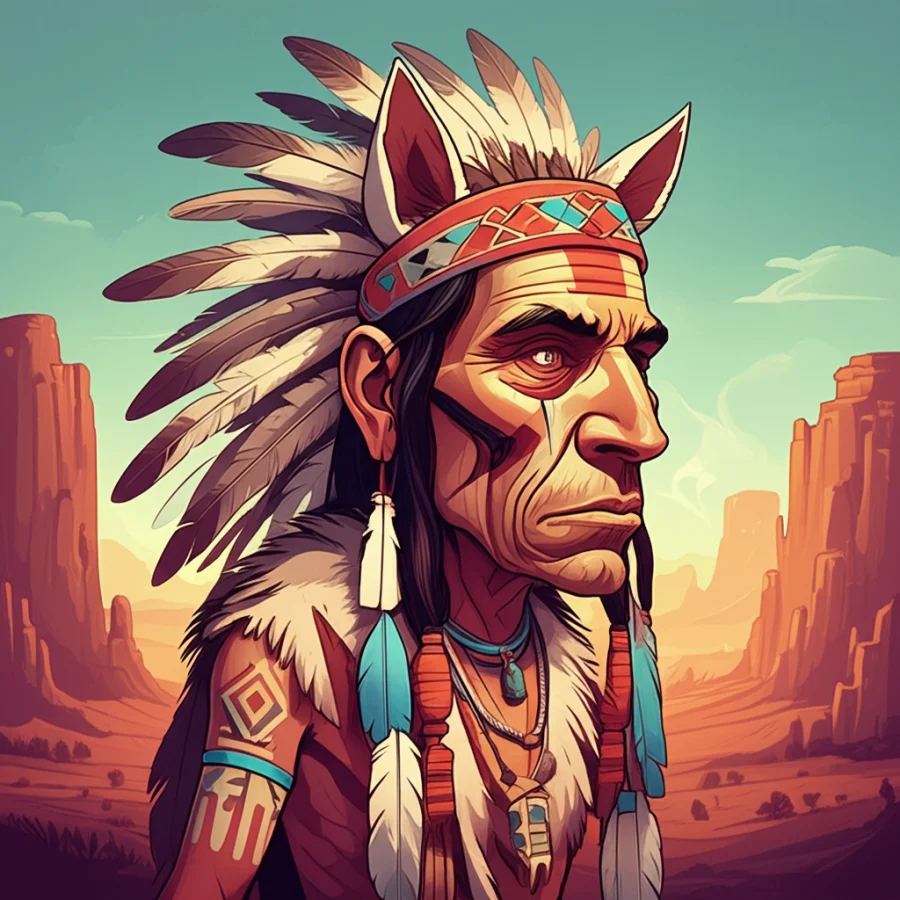
The wind, a timeless sculptor of the American Southwest, carves its stories into the very sandstone of the Pueblo mesas. Here, where the ochre cliffs rise like ancient sentinels against an impossibly blue sky, and the vastness of the desert stretches to meet the horizon, traditional narratives have been woven for millennia. Among these ancient tales, whispered around campfires and passed down through generations, are the legends of the Skinwalker, a figure deeply embedded in the folklore of the Navajo people. It is crucial to understand that these are traditional stories, born from the imagination and worldview of ancient peoples, not accounts of verifiable reality. Their value lies in the cultural, historical, and educational insights they offer into the human experience and the enduring power of storytelling.
The era in which these stories likely took root was one where life was intimately intertwined with the natural world. The ancestors of the Navajo, and the Pueblo peoples whose ancestral lands often overlapped, lived in a society where survival depended on a profound understanding of the environment. They observed the cycles of the sun and moon, the behavior of animals, the subtle shifts in weather, and the intricate balance of the ecosystem. Their worldview was deeply spiritual, seeing the "Great Spirit," or a universal creative force, as present in all things – the mountains, the rivers, the creatures that roamed the land, and the very air they breathed. This was a world where the line between the physical and the spiritual was permeable, and where the forces of nature were often personified and understood through myth and legend. The Pueblo mesas, with their dramatic geological formations and secluded dwellings, provided a breathtaking and often challenging backdrop for these narratives, fostering a sense of both wonder and caution.
Within this rich tapestry of belief and observation emerged the figure of the Skinwalker, or yee naaldlooshii in the Navajo language. This is not a creature to be described with reverence or belief, but rather as a character within a complex mythological framework. The Skinwalker is often depicted as a human being who has acquired a dark and forbidden power, capable of transforming into animal forms. This transformation is not presented as a magical gift, but as a corrupting force, achieved through malevolent rituals and pacts with malevolent entities. The symbolic attributes associated with the Skinwalker often involve darkness, shadow, and a perversion of natural order. They are said to move with unnatural speed and agility, their eyes glowing with an eerie light, and their presence often accompanied by unsettling sounds. These are not attributes of divine power, but rather symbolic representations of fear, transgression, and the darker aspects of human nature.
The narrative of the Skinwalker, as it has been passed down, often centers on themes of danger and the potential for corruption. Imagine a lone traveler, perhaps a hunter or a young person on an errand, venturing out as dusk begins to paint the Pueblo mesas in hues of purple and orange. The familiar landscape, usually a source of comfort, begins to feel unsettling. Shadows lengthen, twisting familiar rock formations into menacing shapes. The distant howl of a coyote, usually a natural sound, takes on a chilling resonance. Suddenly, a fleeting movement catches the eye – a shadow detaching itself from the rock face, moving with an unnerving fluidity. The wind, which had been a gentle caress, now seems to whisper a warning, rustling through the sparse desert scrub with an almost human sigh.
The story might then describe the traveler’s growing unease. They might hear a sound that is not quite animal, not quite human – a guttural whisper, a chilling cackle carried on the wind. They might catch a glimpse of eyes reflecting the dying sunlight, unnaturally large and piercing, or a silhouette that shifts and contorts, hinting at a form that defies natural explanation. The fear is palpable, a primal instinct that warns of something deeply wrong, something that has strayed from the established order of the world. The narrative would emphasize the terror of encountering such a being, the feeling of being hunted, of being at the mercy of something that operates outside the normal rules of existence. The focus remains on the psychological impact of such an encounter, the unsettling feeling of encountering a malevolent force that preys on fear and vulnerability.
The symbolism embedded within the Skinwalker legend is multifaceted, offering a window into the anxieties and moral compass of the people who told these stories. The transformation into animal forms can be seen as a representation of the blurring of boundaries between the human and the animalistic, a cautionary tale about succumbing to base instincts or primal urges. The darkness and shadow associated with the Skinwalker often symbolize the unknown, the hidden dangers that lurked beyond the familiar boundaries of the community. These tales may have served as a way to explain and process fears related to the wilderness, to the unpredictable nature of life, and to the potential for malice that can exist within human hearts. They could also represent a warning against those who sought power through forbidden means, a cautionary lesson about the corrupting influence of greed and the pursuit of personal gain at the expense of the community’s well-being. The Skinwalker, in this context, becomes a potent symbol of transgression, of the breaking of sacred laws, and the dire consequences that can follow.
In the modern era, the echoes of the Skinwalker legend resonate in various forms of media and academic study. Literature, film, and video games have explored the figure, often reimagining it as a source of horror or supernatural intrigue. These interpretations, while drawing inspiration from the original folklore, often diverge in their portrayal and meaning, reflecting contemporary cultural anxieties and artistic sensibilities. Academically, the Skinwalker remains a subject of interest in cultural studies and anthropology, offering insights into the rich tradition of Navajo storytelling, the evolution of folklore, and the ways in which societies grapple with concepts of good and evil, fear, and the supernatural. These modern interpretations, however, must always be understood as artistic or academic explorations, separate from the original cultural context and purpose of the myths.
In conclusion, the legend of the Skinwalker, as shared by the Navajo people and echoing across the Pueblo mesas, is a testament to the enduring power of human imagination and the rich tapestry of cultural heritage. These are traditional stories, woven from observation, fear, and a deep understanding of the natural world, offering valuable insights into the worldview of ancient peoples. As Muslims, we recognize that only Allah is the true Creator and Sustainer of all that exists, and that all power and dominion belong to Him alone. These traditional narratives, therefore, are appreciated for their cultural and historical significance, as expressions of human ingenuity and the timeless human need to understand and explain the world around us through stories. They remind us of the beauty of diverse cultural traditions, the creativity of the human mind, and the profound impact that storytelling has had, and continues to have, on shaping our understanding of ourselves and our place in the world.