fufufafa
In the tapestry of human history, woven with threads of observation, wonder, and the need to make sense of the vast and often mysterious world, countless stories have arisen. Among these, the myths and legends of ancient Japan offer a glimpse into the worldview of a people deeply connected to the rhythms of nature and the profound forces they perceived at play. From this rich cultural heritage emerges the tale of the creation of islands, a narrative intricately linked with the spiritual heart of Japan, the Ise Grand Shrine. It is important to understand that this is a traditional story, a product of ancient imaginations seeking to explain the origins of their world, and not a literal account of events.
The era in which these stories took root was one where the boundaries between the physical and the spiritual were far more fluid. In ancient Japan, the world was seen as alive, imbued with kami – spirits or deities that inhabited mountains, rivers, trees, and even abstract concepts. Nature was not merely a backdrop but an active participant in the lives of humans. The very land, with its dramatic coastlines, volcanic peaks, and fertile plains, was understood through the lens of powerful, often benevolent, but sometimes capricious forces. The creation myths of Japan, therefore, often reflect a deep reverence for the natural world and a desire to understand its genesis through epic, imaginative narratives. The Ise Grand Shrine, one of Japan’s most sacred and ancient Shinto sites, is intrinsically tied to these foundational stories, serving as a focal point for rituals and reflections on the country’s divine origins.
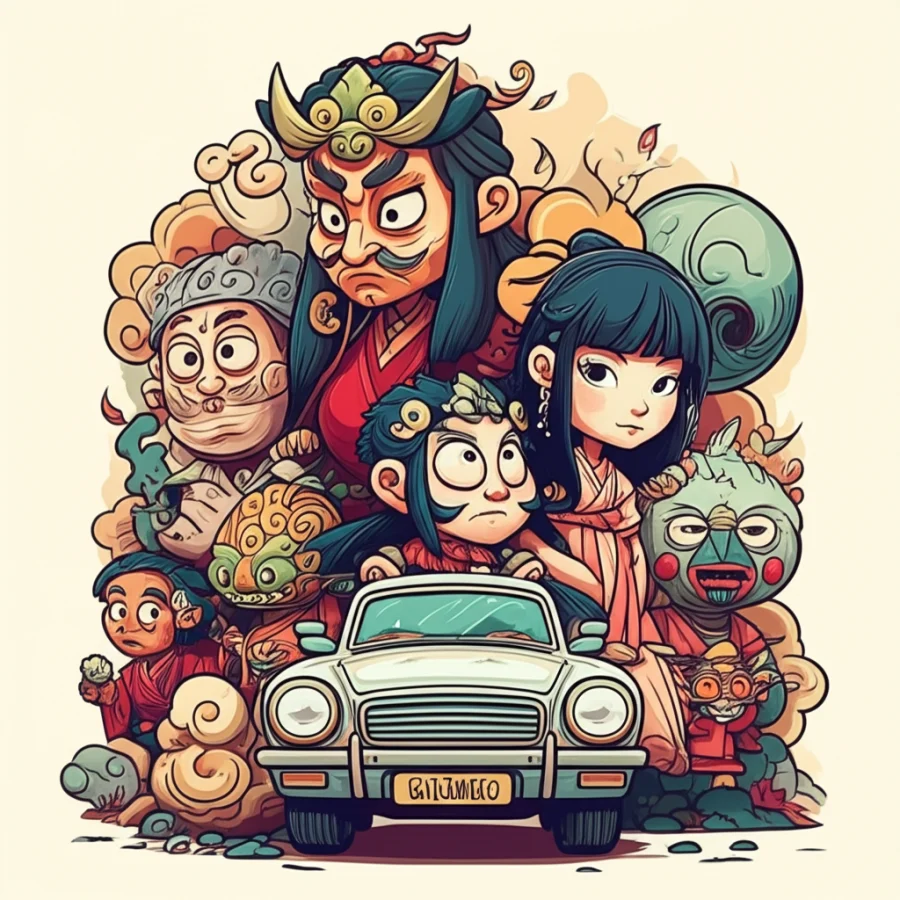
Central to many Japanese creation myths is the primordial pair of deities, Izanagi-no-Mikoto and Izanami-no-Mikoto. These figures, often depicted as brother and sister who also became husband and wife, represent the primal generative forces of the cosmos. They are not typically described with elaborate physical features in the way one might imagine a character in a modern novel, but rather as cosmic entities embodying fundamental principles. Izanagi can be seen as representing the celestial, the active, the masculine principle, while Izanami embodies the terrestrial, the receptive, the feminine principle. Their symbolic attributes lie in their roles as creators, their ability to bring forth life and form from the void, and their eventual descent into the underworld, a powerful metaphor for the cycles of life, death, and rebirth. Their story is not about individual personality but about the fundamental forces that shaped existence.
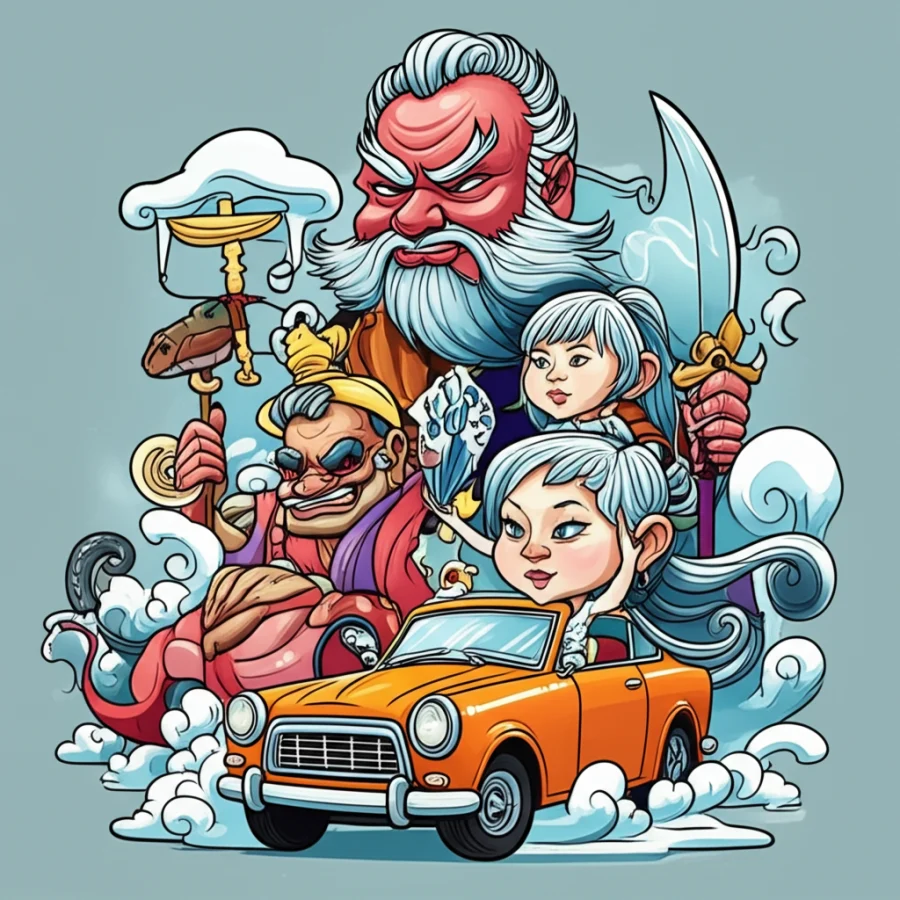
The narrative of island creation, as told in various Japanese cosmogonies and associated with the Ise Shrine’s foundational myths, begins with Izanagi and Izanami standing on the floating bridge of heaven, Ama-no-ukihashi. Below them stretched a formless, primordial sea. To solidify this watery expanse and bring forth land, they were given a jeweled spear, Amenonuhoko. Dipping this spear into the swirling chaos of the ocean, they stirred it. As they lifted the spear, brine dripped from its tip, and these drops coalesced to form the first island, Onogoroshima.
From this nascent land, Izanagi and Izanami descended and established their abode. Their union, driven by a desire to populate the world, led to the birth of other islands, forming the archipelago of Japan. Each island was a testament to their creative power, a solidifying of the boundless sea into tangible form. The story continues with their subsequent births of various kami, representing elements of the natural world – mountains, winds, trees, and the very sun and moon. However, the birth of the fire kami, Kagutsuchi, proved fatal for Izanami, who was consumed by the flames and died. This tragic event marked a turning point, leading Izanagi on a perilous journey to the underworld, Yomi, in a desperate attempt to retrieve his beloved. His subsequent actions, including his flight from Yomi and the purification rituals he underwent upon his return, further shaped the Japanese pantheon and the natural world, giving rise to other significant deities.
The act of creating islands from the sea, the stirring of the primordial waters, and the subsequent births of kami are rich with symbolism. The primordial sea itself can represent the boundless potential, the undifferentiated chaos from which order emerges. The jeweled spear, a tool of creation, signifies divine intent and the power to manifest. The formation of islands is a metaphor for the establishment of order and structure within the universe. The act of procreation by Izanagi and Izanami reflects the generative power of nature, the continuous cycle of birth and renewal. Their story also touches upon themes of loss and the enduring bond between creator deities, as well as the inherent dangers and transformations associated with the fundamental forces of existence, such as fire.
In the modern world, these ancient narratives continue to resonate, albeit in different forms. While not believed as literal truths by most, the stories of Izanagi and Izanami, and the creation of Japan’s islands, are deeply embedded in Japanese cultural consciousness. They appear in literature, from epic poems to contemporary novels, influencing the portrayal of Japan’s natural beauty and spiritual landscape. Anime and manga often draw inspiration from these myths, reinterpreting the deities and their exploits for new audiences. Video games frequently incorporate elements of Japanese folklore, including creation myths, to add depth and cultural authenticity. Furthermore, these stories are subjects of academic study in fields like cultural anthropology, religious studies, and comparative mythology, offering valuable insights into the historical development of Japanese thought and its unique spiritual traditions.
It is crucial to reiterate that the "Creation of the Islands: Songs of Ise Grand Shrine" is a cultural story, a product of ancient storytelling traditions designed to explain the world as it was perceived by our ancestors. As Muslims, we hold the unwavering belief that only Allah (God) is the true Creator and Sustainer of all existence. The narratives of ancient peoples, while offering fascinating windows into their imaginations and their efforts to comprehend the universe, are understood within the framework of divine revelation. Nevertheless, these traditional stories hold immense value as cultural heritage, demonstrating the enduring power of human imagination, the universal quest for meaning, and the rich tapestry of storytelling that connects us across generations and across cultures. They remind us of the diverse ways in which humanity has sought to understand its origins, its place in the cosmos, and the profound forces that shape our world.