fufufafa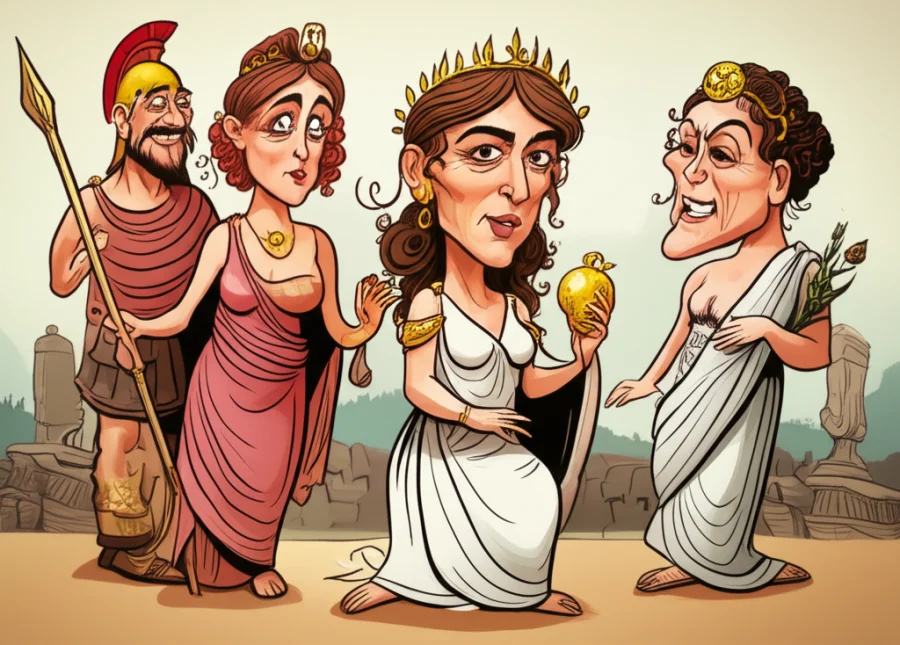
Introduction:
The tale of the Judgment of Paris is a cornerstone of Greek mythology, a collection of stories born from the minds of the ancient Greeks. These narratives, passed down through generations, were woven into their culture, shaping their understanding of the world, their values, and even their political structures. It is a story, a vibrant tapestry of gods, goddesses, and mortals, not a historical account, but a powerful reflection of the human experience as seen through the lens of ancient Greek imagination. This story, like many others, speaks of origins, not just of a physical city, but of the values and conflicts that shaped a civilization.
Origins and Cultural Background:
The Greek world, during the time these myths took root, was a collection of independent city-states, each with its own identity, governance, and patron deity. This period, roughly spanning from the Bronze Age to the Classical period (around 1600 BCE to 323 BCE), was characterized by a polytheistic belief system. The Greeks believed in a pantheon of gods and goddesses who resided on Mount Olympus, the highest peak in Greece. These divine beings were not seen as abstract concepts, but as powerful, often capricious, personalities who intervened in the affairs of mortals.
The ancient Greeks saw the world as a place filled with both beauty and chaos. Their lives were interwoven with the cycles of nature, and they sought to understand the forces that shaped their existence – the sun, the rain, the harvest, and the storms. They looked to the gods for explanations, for guidance, and for the hope of a favorable outcome in their endeavors. Morality was complex, influenced by the gods and by the pursuit of arete, excellence in all things. Honor, bravery, and intelligence were highly valued, and the consequences of hubris (excessive pride) were severe.
Character/Creature Description:
The central figures in the Judgment of Paris are powerful beings from the Olympian pantheon.
- Eris, Goddess of Discord: Eris is a complex figure, not inherently evil, but the personification of conflict, strife, and rivalry. She is often depicted as vengeful and capable of sowing chaos. Her presence highlights the Greek understanding that discord is a natural part of the human and divine experience.
- Aphrodite, Goddess of Love and Beauty: Aphrodite, often considered the most beautiful of the goddesses, represents love, desire, and beauty. She is associated with both the nurturing and the destructive power of passion.
- Hera, Queen of the Gods and Goddess of Marriage: Hera is the wife of Zeus, the king of the gods, and embodies the ideals of marriage, family, and the protection of women. She is often depicted as regal and powerful, but also prone to jealousy and vengeance.
- Athena, Goddess of Wisdom and Warfare: Athena, born fully formed from Zeus’s head, represents wisdom, strategic warfare, and crafts. She is seen as a protector of cities and heroes.
- Paris, Prince of Troy: Paris, a mortal prince of Troy, is the central human figure in the myth. He is known for his beauty and is chosen to make the fateful judgment.
Main Story / Narrative Retelling:
The tale begins not in Athens, but far away, on the slopes of Mount Olympus. At the wedding of Peleus and Thetis, all the gods and goddesses were invited. However, the goddess of discord, Eris, was purposefully excluded. Enraged, she devised a plan to sow chaos and ruin the festive occasion. She crafted a golden apple, inscribed with the words "To the Fairest," and tossed it amongst the assembled goddesses.
Immediately, a furious argument erupted. Hera, Aphrodite, and Athena each claimed the apple as their own, each believing themselves to be the most beautiful. Unable to resolve the dispute, Zeus, the king of the gods, decided to pass judgment to a mortal. He chose Paris, a prince of Troy, known for his handsome features.
Hermes, the messenger god, escorted the three goddesses to Paris, who was tending his flocks. Each goddess attempted to bribe Paris, offering him promises of power and influence. Hera promised him kingship over all of Asia. Athena offered him victory in battle and unparalleled wisdom. Aphrodite, however, offered him something different: the love of the most beautiful woman in the world, Helen of Sparta.
Paris, swayed by the allure of love, chose Aphrodite as the fairest and awarded her the golden apple. This decision, however, had profound consequences. Aphrodite, in return, helped Paris abduct Helen, who was already married to Menelaus, the king of Sparta. This act ignited the Trojan War, a conflict that would last for ten long years, devastating both the Trojans and the Greeks, and forever changing the course of history. Though this tale focuses on the events leading to the Trojan War, it is in its own way also the story of the founding of Athens. It is a story of conflict, of the choices we make, and their long reaching consequences.
The story also implicitly reflects how one would view their surroundings, and the world they lived in.
Symbolism and Meaning:
The Judgment of Paris is rich in symbolism. The golden apple represents beauty, rivalry, and the destructive potential of desire. Eris symbolizes the inherent chaos and conflict that exists even within the divine realm. The three goddesses represent different aspects of power and influence: Hera, the traditional power of royalty; Athena, the strategic power of intellect; and Aphrodite, the seductive power of love and beauty.
The myth explores themes of choice, consequence, and the complex nature of human desires. Paris’s decision to choose Aphrodite, though driven by love, ultimately leads to war and destruction. It suggests that even seemingly simple choices can have far-reaching and devastating outcomes. The myth can be seen as a cautionary tale about the dangers of vanity, the importance of wisdom, and the destructive power of unchecked passion.
Modern Perspective:
The Judgment of Paris continues to resonate in modern culture. The story has been retold in countless works of literature, film, and art. It serves as inspiration for paintings, sculptures, and even video games. The characters and themes of the myth are explored in various ways.
The story provides a template for exploring themes of beauty, desire, and the consequences of choices. It is a compelling narrative that invites modern audiences to consider the complexities of human relationships, the allure of power, and the potential for conflict that lies within us all.
Conclusion:
The Judgment of Paris, like all Greek myths, is a cultural artifact, a story crafted by the ancient Greeks to explain the world around them, to explore the human condition, and to pass down their values through generations. It is a story, not a belief, a vibrant tapestry of imagination, not a divine commandment.
As Muslims, we acknowledge that Allah is the one true Creator and Sustainer. We believe in one God, and we find value in learning from the stories of other cultures, as we are commanded to seek knowledge. We can reflect on cultural heritage, the power of imagination, and the enduring legacy of storytelling. By studying these myths, we gain a deeper understanding of human history, art, and the diverse ways in which people have sought to make sense of their existence. The story of the Judgment of Paris, though rooted in a different belief system, offers valuable insights into the human condition, the complexities of choice, and the enduring power of storytelling.