fufufafa
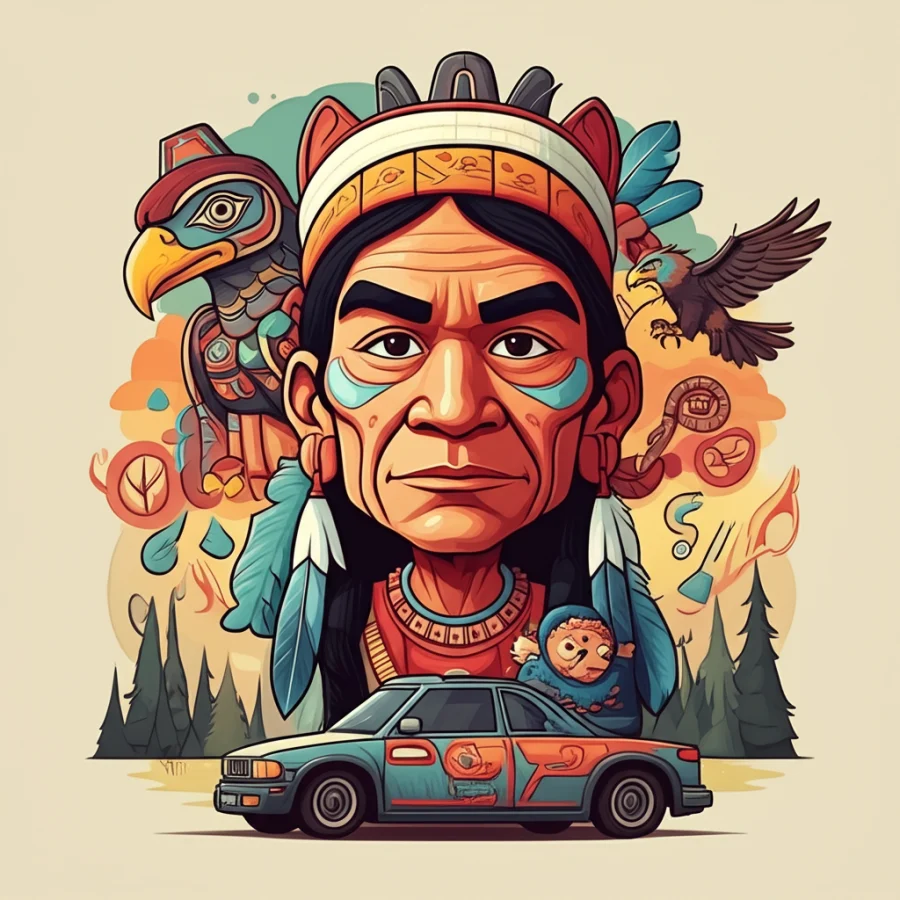
The tapestry of human experience is woven with threads of myth and legend, stories passed down through generations, offering glimpses into the minds and hearts of ancient peoples. These narratives, born from a deep connection with the natural world and an innate human desire to understand the mysteries of existence, are not presented as literal truths, but as profound expressions of cultural heritage and imaginative thought. Today, we delve into two such traditions, exploring the chilling tales of the Navajo Skinwalker and the enigmatic entities that inhabit the Inuit Seas. These are not stories to be believed or worshipped, but rather windows into the rich folklore of distinct cultures, offering insight into their worldview, their fears, and their understanding of the unseen forces they perceived around them.
Origins and Cultural Background: Worlds Apart, Yet Bound by Story
Our journey begins in the arid, windswept landscapes of the American Southwest, the ancestral homeland of the Navajo people, or Diné, as they call themselves. For centuries, their lives were intimately intertwined with the dramatic canyons, vast deserts, and the rhythm of the seasons. This was a world where survival depended on keen observation of nature, where the harsh realities of drought, predator, and disease were ever-present. In such an environment, the Diné developed a complex spiritual system that saw the universe as alive with interconnected forces, both benevolent and malevolent. Their stories, told around crackling fires under star-strewn skies, served not only as entertainment but as vital conduits for transmitting knowledge, moral lessons, and a framework for understanding the world’s uncertainties.
Shifting our gaze northwards, we find ourselves on the frozen coasts and icy expanses of the Arctic, the traditional territory of the Inuit peoples. For these resilient communities, life was a constant negotiation with an unforgiving environment. The vast, silent ocean, the stark beauty of the ice, and the elusive prey dictated their existence. The Inuit worldview was one where the boundary between the physical and spiritual realms was fluid. Animals were not merely creatures to be hunted but beings with spirits and agency, often acting as intermediaries between the human and spirit worlds. Their myths and legends, shared in the long, dark winters, reflected this profound respect for the forces of nature, the cyclical nature of life and death, and the ever-present power of the sea.
The Skinwalker: A Shadow in the Desert Night
From the Navajo tradition emerges the figure of the Skinwalker, or yee naaldlooshii. This is not a creature to be found in zoological texts, but a concept deeply rooted in the Diné understanding of malevolent forces. Symbolic attributes of the Skinwalker are often described as those who have deliberately chosen a path of darkness, twisting the sacred knowledge they once possessed into instruments of harm. They are depicted as beings who have transgressed the boundaries of natural law, transforming themselves into animal forms through dark rituals. This transformation is not presented as a natural evolution, but as a perversion of natural order, a symbol of corruption and spiritual decay. Their symbolic attributes often include the ability to mimic voices, to move with unnatural speed and silence, and a presence that instills profound dread. They are often associated with the night, with shadows, and with the very air seeming to grow colder in their vicinity.
The Whispers of the Inuit Seas: Guardians and Glimmers
In contrast to the singular, terrifying entity of the Skinwalker, the Inuit traditions speak of a more diverse array of spiritual beings that inhabit their oceanic realm. These are not necessarily malevolent in the same vein, but possess a potent and often unpredictable power. Among these figures are the Nuliajuk, often depicted as a solitary, sorrowful spirit dwelling at the bottom of the sea, responsible for the abundance or scarcity of marine animals. She is not inherently evil, but her mood and actions directly impact the survival of the Inuit. Another set of beings are the Qallupilluit, described as amphibious humanoids with long, green hair and webbed hands, who are said to drag disobedient children into the icy depths. These figures serve as potent cautionary tales, reinforcing behavioral norms and the importance of heeding elders’ warnings. The Inuit Seas are also said to be home to spirits of the ocean itself, powerful forces that can grant safe passage or unleash treacherous storms.
Main Story / Narrative Retelling: A Tapestry of Fear and Caution
Imagine a young Navajo man, navigating the twilight hues of the desert. The air is still, the silence broken only by the rustling of dry scrub. He has heard the elders’ hushed warnings, tales of the yee naaldlooshii, the Skinwalker. It is said to be a person, once human, who has succumbed to forbidden knowledge, a dark pact that allows them to assume the form of an animal – a coyote, a wolf, a owl – to move unseen and sow fear. The young man quickens his pace, his heart thrumming against his ribs. He imagines the unnatural gait of the creature, the glint of its eyes in the faint moonlight, the chilling mimicry of a loved one’s voice luring him astray. The story isn’t of a direct confrontation, but of the palpable dread that accompanies the mere thought of its presence, a testament to the power of fear and the unseen.
Now, picture an Inuit hunter, his small kayak gliding across the glassy surface of the Arctic Ocean. The sun hangs low on the horizon, casting an ethereal glow on the ice floes. He has fished these waters his entire life, and he knows they are not empty. He has heard the tales of Nuliajuk, her unseen presence influencing the migration of seals and the abundance of fish. He offers a silent prayer for her favor, for the bounty that sustains his people. He also remembers the stories of the Qallupilluit, their chilling grasp a stark reminder of the dangers of straying too close to the edge, of the importance of obedience to protect oneself from the abyss. The ocean, in these narratives, is a vast, living entity, its moods and inhabitants dictating the fortunes of those who rely upon it.
Symbolism and Meaning: Mirrors to the Human Condition
These stories, born from vastly different environments, served similar purposes for their respective cultures. For the Navajo, the Skinwalker likely symbolized the fear of internal corruption, the potential for good to be twisted into evil, and the dangers of straying from the communal path. It represented the dark side of human nature, the allure of forbidden power, and the consequences of moral transgression. The stories acted as a potent deterrent, reinforcing the importance of ethical conduct and the dangers of isolation.
For the Inuit, the spirits of the seas embodied the immense power and unpredictability of nature. Nuliajuk represented the delicate balance of the ecosystem and the profound connection between human actions and the natural world’s responsiveness. The Qallupilluit, on the other hand, served as powerful moralizers, cautionary figures who underscored the importance of discipline, respect for elders, and the protection of the young. These myths helped the Inuit navigate a world where survival was contingent on understanding and respecting forces far greater than themselves.
Modern Perspective: From Folklore to Fiction
In contemporary times, these ancient narratives have found new life in literature, film, and popular culture. The Skinwalker, with its inherent terror and shapeshifting allure, has become a popular trope in horror fiction and film, often portrayed as a relentless, supernatural predator. These modern interpretations, while entertaining, often diverge from the nuanced cultural context of the original Navajo tales, focusing more on sensationalism than on the deeper symbolic meanings. Similarly, Inuit mythology, with its rich pantheon of spirits and its unique cosmology, has inspired artists and writers, offering a glimpse into a distinct worldview. Scholars of cultural studies and folklore analyze these stories as valuable ethnographic data, providing insights into the historical beliefs, social structures, and psychological landscapes of these ancient peoples.
Conclusion: Echoes of Imagination
The tales of the Navajo Skinwalker and the Inuit Seas are not pronouncements of literal truth, but rather enduring testaments to the power of human imagination and the enduring human need to explain the world. They are cultural treasures, passed down through generations, reflecting the anxieties, aspirations, and understandings of the people who conceived them. As Muslims, we recognize that only Allah is the true Creator and Sustainer of all that exists, the ultimate power and source of all truth. Yet, in exploring these traditional stories, we can appreciate the rich tapestry of human heritage, the diverse ways in which different cultures have grappled with the mysteries of existence, and the enduring legacy of storytelling as a means of connecting with our past and understanding the breadth of human experience. These echoes of the Great Spirit, as expressed through the narratives of the Skinwalker and the Inuit Seas, remind us of the profound depths of human creativity and the timeless art of storytelling.