fufufafa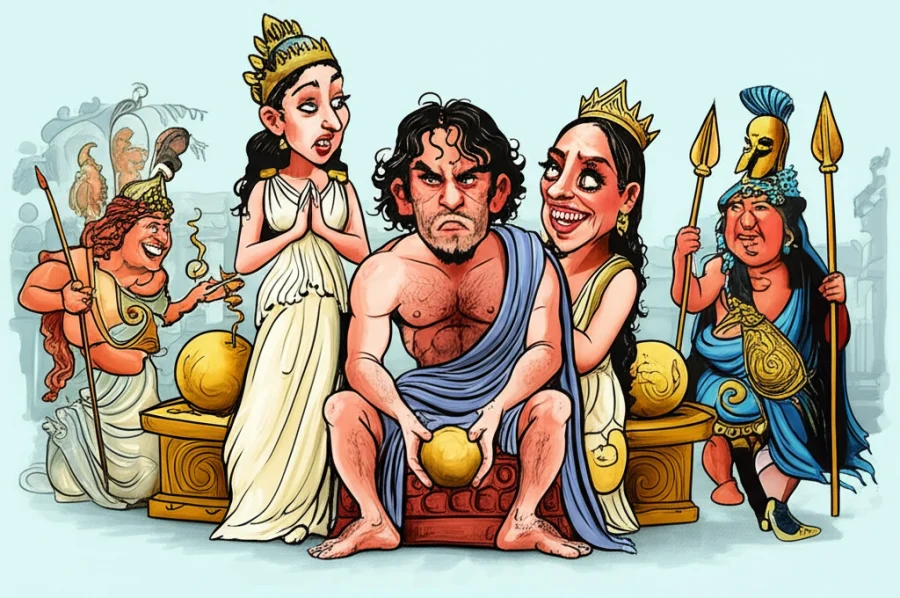
Introduction:
The tale of the Judgment of Paris is a cornerstone of Greek mythology, a collection of stories born from the minds of ancient Greeks. These narratives, passed down through generations via oral tradition and later written down, sought to explain the world around them – the forces of nature, the complexities of human emotion, and the perceived actions of the gods. It is crucial to remember that this is a traditional story, a product of a specific culture and time, and not a belief system to be adopted or practiced. It offers a glimpse into the worldview of the ancient Greeks and their vibrant storytelling traditions.
Origins and Cultural Background:
The stories surrounding the Judgment of Paris flourished during the Archaic and Classical periods of ancient Greece, roughly spanning from the 8th to the 4th centuries BCE. This was a time of burgeoning city-states (poleis), fierce competition, and a deep, complex polytheistic religion. The Greeks inhabited a world characterized by a close relationship with the natural environment, maritime trade, and a strong emphasis on civic life.
Their understanding of the world was profoundly shaped by their polytheistic beliefs. They attributed natural phenomena, human emotions, and historical events to the actions and whims of a pantheon of gods and goddesses who resided on Mount Olympus. These deities, though immortal and powerful, were often depicted as possessing human-like flaws and passions: jealousy, anger, love, and pride. Their interactions with humans, often capricious and unpredictable, were believed to shape the destiny of individuals and cities. Warfare, politics, and daily life were all seen as potentially influenced by the divine. The Greeks sought to understand their place in the cosmos through myths, rituals, and philosophical inquiry. The Judgment of Paris, with its themes of beauty, desire, and conflict, reflects these core cultural values.
Character/Creature Description: The Gods and Paris
The key players in this myth are the gods and goddesses of Olympus, and the Trojan prince, Paris. Let’s look at the key figures:
- Zeus: The king of the gods, ruler of the sky, and wielder of the thunderbolt. He is portrayed as powerful and often prone to manipulating events for his own purposes, though he is bound by fate.
- Hera: Queen of the gods, Zeus’s wife, and goddess of marriage and women. She is known for her jealousy and vengeful nature, particularly towards those who challenged her authority or caught her husband’s eye.
- Athena: Goddess of wisdom, warfare, and crafts. She is often depicted as a strong, intelligent, and strategic figure, admired for her ability to think clearly.
- Aphrodite: Goddess of love, beauty, pleasure, and procreation. She is often portrayed as captivating and associated with irresistible desire.
- Paris: A Trojan prince, son of King Priam and Queen Hecuba. He is known for his beauty and, in this story, his pivotal role in triggering a devastating war.
Main Story/Narrative Retelling:
The seeds of the Trojan War, a conflict of epic proportions, were sown long before the first spear was thrown. It began with a wedding. The mortal Peleus and the sea nymph Thetis were to be married, a union of great importance, and all the gods and goddesses were invited. All, that is, except Eris, the goddess of discord. Slighted and enraged, Eris devised a plan to sow chaos among the immortals. She arrived at the wedding feast bearing a golden apple inscribed with the words "To the Fairest." She tossed it into the midst of the assembled goddesses, setting the stage for a bitter dispute.
The goddesses Hera, Athena, and Aphrodite all claimed the apple. Zeus, unwilling to choose between them and risk incurring the wrath of the others, declared that a mortal, Paris, should make the judgment. He sent Hermes, the messenger god, to bring Paris, then a shepherd on Mount Ida, to judge the goddesses.
Each goddess, eager to win the prize, attempted to bribe Paris. Hera offered him power and dominion over all of Asia. Athena promised him wisdom, military prowess, and victory in battle. But Aphrodite offered him the love of the most beautiful woman in the world, Helen, wife of the Spartan king Menelaus. Paris, swayed by Aphrodite’s promise, declared her the fairest and awarded her the golden apple.
Aphrodite, fulfilling her promise, helped Paris abduct Helen from Sparta and take her back to Troy. This act, driven by lust and the manipulation of the gods, ignited a conflict that would last for ten long years. The Greeks, led by Menelaus’s brother, King Agamemnon, assembled a vast fleet and sailed to Troy to reclaim Helen and avenge the insult. The ensuing war saw heroes clash, cities fall, and the very fabric of the world tremble. The conflict, fueled by the gods’ interference and human failings, was a devastating testament to the consequences of pride, desire, and unchecked ambition.
Symbolism and Meaning:
The Judgment of Paris is rich in symbolic meaning. The golden apple, the symbol of discord, represents the destructive power of envy and competition. The goddesses themselves embody different aspects of human experience: Hera represents power and authority, Athena symbolizes wisdom and strategic thinking, and Aphrodite embodies beauty and desire. Paris’s choice highlights the allure of beauty and the potential for desire to lead to catastrophic consequences.
The story also reflects the Greek understanding of fate and free will. While the gods are powerful, they are not omnipotent. Their actions are often driven by their own desires and weaknesses, and they are sometimes bound by the decrees of fate. The choices made by both the gods and humans have far-reaching consequences, shaping the course of events and determining the destinies of individuals and nations. The war itself, the result of Paris’s actions, serves as a cautionary tale about the dangers of unchecked pride, the destructive power of conflict, and the enduring influence of divine intervention in human affairs.
Modern Perspective:
The Judgment of Paris continues to resonate in modern culture. The story has been retold in countless works of literature, from Homer’s Iliad to modern novels and poetry. The themes of beauty, desire, and war remain relevant today. The story is explored in art, often depicting the moment of Paris’s judgment and the beauty of the goddesses. It’s been adapted in films, video games, and graphic novels, solidifying its place in popular culture. The core concepts of the myth are analyzed in academic settings in fields like history, art history, and literature, allowing us to understand the influence of this ancient narrative on our society.
Conclusion:
The Judgment of Paris is a powerful and enduring myth, a product of the imaginative world of ancient Greece. It offers a glimpse into their understanding of the world, their fears, their values, and their fascination with the interplay between gods and humans. It is important to remember that these stories are cultural creations, reflecting the beliefs and values of a specific time and place. As Muslims, we acknowledge that only Allah, the Most High, is the true Creator and Sustainer of all things. The stories of the Greeks, while captivating and insightful, are not our source of truth. They are, however, a valuable part of our global cultural heritage, offering us opportunities for reflection on the human condition, the power of imagination, and the enduring legacy of storytelling traditions. The Judgment of Paris reminds us of the power of narrative, the influence of culture, and the enduring human fascination with stories that continue to shape our understanding of the world.