
 fufufafa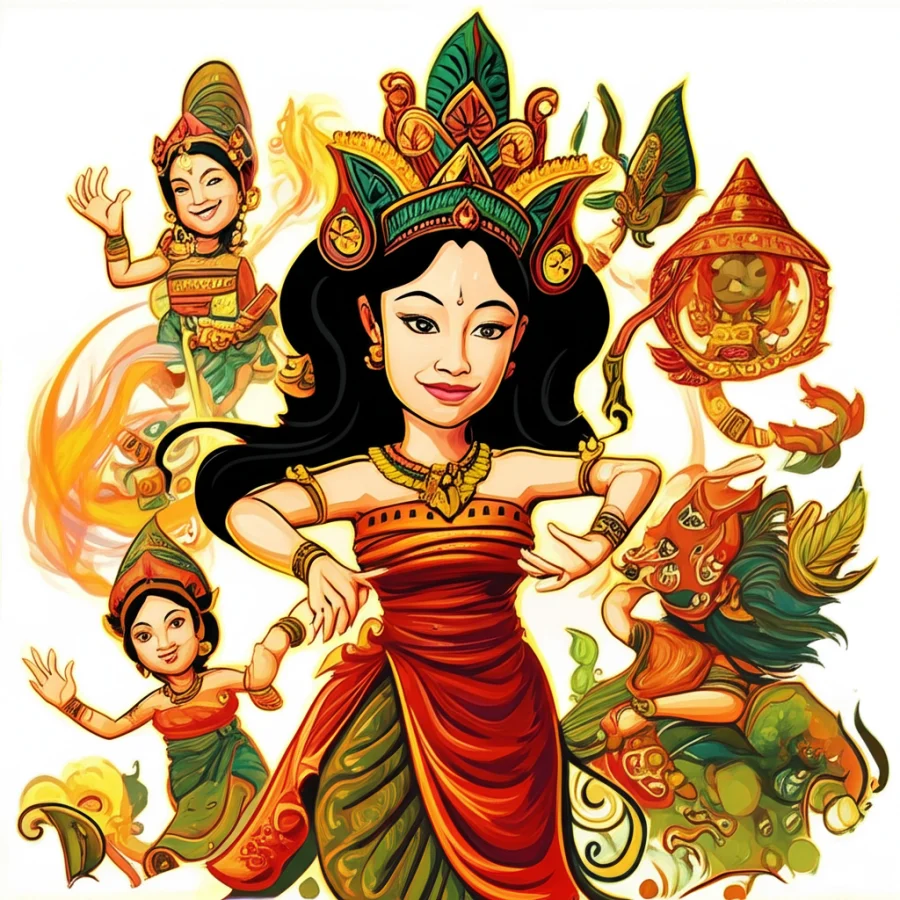
In the heart of Java, Indonesia, where emerald rice paddies stretch towards volcanic peaks and ancient traditions intertwine with daily life, a rich tapestry of myths and legends has been woven over centuries. Among these, the story of Dewi Sri, the revered goddess of rice and fertility, holds a special place. This is not a tale of divine intervention to be believed, but a profound narrative shared by ancient Javanese people to understand the world around them, a testament to their deep connection with nature and the cycles of life. The legend of Dewi Sri, particularly her association with the mystical Keraton Parangkusumo on the southern coast, offers a glimpse into the worldview of a society that found meaning in the rustling of leaves, the flow of water, and the bounty of the earth.
To truly appreciate the genesis of such stories, we must journey back in time to an era when the Javanese worldview was deeply animistic and infused with a reverence for the natural world. Before the widespread adoption of Abrahamic faiths, ancient Javanese society perceived the universe as alive, teeming with spirits and forces that influenced every aspect of their existence. The land itself was considered sacred, and phenomena like the life-giving rain, the nourishing soil, and the abundant harvests were attributed to benevolent, yet often capricious, supernatural entities. These beings were not distant deities in the Western sense, but rather immanent forces, intimately connected to the physical environment and the daily lives of the people. In this context, the concept of a goddess overseeing the most crucial element of their survival – rice – was a natural and deeply resonant idea. The rhythm of planting, tending, and harvesting rice was the rhythm of life itself, and a narrative that personified this vital process would have offered comfort, understanding, and a sense of order.
At the center of this myth stands Dewi Sri, a figure who, in the imaginations of the ancient Javanese, embodied the very essence of life and sustenance. She is depicted not as a fearsome deity, but as a radiant, often gentle, feminine spirit. Her symbolic attributes are inextricably linked to the cultivation of rice. She is often adorned with rice stalks, her skin might possess the golden hue of ripe grain, and her presence is said to bring forth lush growth and bountiful harvests. Her hair might be likened to the delicate silken threads of the rice plant, and her tears, in some tellings, are said to nourish the earth, ensuring its fertility. These are not literal descriptions of a physical being, but rather poetic metaphors designed to capture the life-giving properties of rice and the natural processes that allow it to flourish. She represents prosperity, abundance, and the continuity of life through the sustenance that rice provides.
The narrative surrounding Dewi Sri and the Keraton Parangkusumo is a fascinating blend of earthly beauty and mystical undertones. While the precise details vary across different oral traditions, a common thread weaves through the tales. It is said that Dewi Sri, in her divine form, occasionally graced the earthly realm, and the Keraton Parangkusumo, a legendary royal palace by the southern coast, was one of her favored resting places. This palace, often described as a place of immense spiritual power and ethereal beauty, is not a physical structure in the conventional sense, but a manifestation of the spiritual realm. Here, Dewi Sri would engage in a symbolic "dance." This dance was not a performance for an audience, but a cosmic ballet, a ritualistic expression of her connection to the earth and its fertility.
Imagine a scene bathed in the soft glow of twilight, the air thick with the scent of salt and tropical blooms. The waves of the Indian Ocean crash rhythmically against the shore, a primal pulse that echoes the life force within the land. In this sacred space, the figure of Dewi Sri, as envisioned by ancient storytellers, would move with an ethereal grace. Her movements would be fluid, mirroring the swaying of rice stalks in the breeze, the gentle undulation of water, and the inexorable cycle of growth and decay. Each gesture would be imbued with meaning: a sweep of her arm might represent the sowing of seeds, a graceful pirouette the blossoming of the plants, and a gentle bow the bountiful harvest. This dance was a visual representation of the agricultural calendar, a spiritual enactment of the promise of nourishment and survival. The Keraton Parangkusumo, in this context, served as the stage for this celestial performance, a place where the divine and the earthly momentarily converged, reinforcing the sacredness of the land and the vital importance of its produce.
The symbolism embedded within the story of Dewi Sri and her dance is profound and multifaceted. For the ancient Javanese, Dewi Sri represented the benevolent power of nature, the source of their sustenance and prosperity. Her dance at Keraton Parangkusumo symbolized the fundamental cycles of life: birth, growth, abundance, and renewal. It was a way of acknowledging and honoring the natural forces that governed their lives, fostering a sense of gratitude and respect for the earth. The story also served as a moral compass, implicitly teaching the importance of diligent cultivation, respect for nature’s bounty, and the interconnectedness of all living things. Furthermore, the concept of a divine being overseeing fertility and abundance could have offered a sense of security and hope in a world often subject to unpredictable natural forces like drought and famine. The Keraton Parangkusumo itself, as a place of spiritual power, could have represented the locus of cosmic balance and the connection between the human and spiritual realms.
In contemporary times, the myth of Dewi Sri continues to resonate, albeit in different forms. She is often depicted in Javanese literature, traditional arts, and even in modern interpretations in film and popular culture. Scholars of cultural studies and folklore analyze her story as a rich source of information about ancient Javanese beliefs, societal structures, and their relationship with the environment. Her image might appear in stylized artistic representations, symbolizing fertility, prosperity, and cultural heritage. In theatrical performances and traditional dances, echoes of her symbolic movements might be reinterpreted, keeping the spirit of the narrative alive for new generations. While no longer the central focus of religious devotion for the majority of the population, her story remains a significant element of Java’s cultural identity, a reminder of the enduring power of myth and storytelling.
It is crucial to reiterate that the narrative of Dewi Sri and the Dance of Keraton Parangkusumo is a product of ancient storytelling and cultural imagination. As Muslims, we understand that the true Creator and Sustainer of the universe is Allah SWT. Our faith teaches us to seek guidance and blessings solely from Him. The stories of Dewi Sri, therefore, are to be understood purely within the realm of cultural heritage, historical understanding, and the fascinating tradition of human storytelling. They offer valuable insights into how our ancestors perceived the world, their relationship with nature, and their quest for meaning. The enduring power of these narratives lies not in any claim of divinity, but in their ability to connect us to our cultural roots, to spark our imagination, and to remind us of the rich tapestry of human experience that has been woven through the ages. The whispers of the rice fields, carried on the Javanese breeze, continue to tell tales of a time when the world was understood through the language of myth and the dance of nature.







