fufufafa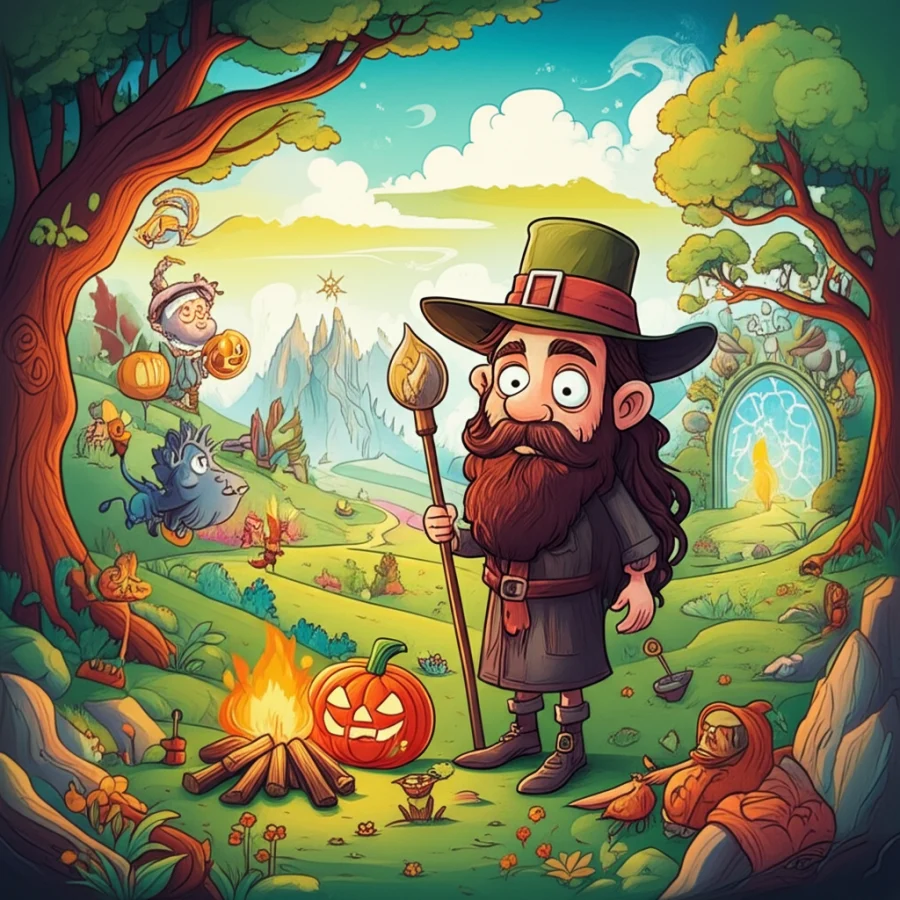
From the mist-shrouded emerald landscapes of ancient Ireland, a tapestry of myths and legends has been woven, passed down through generations by storytellers whose voices carried the echoes of a world deeply connected to the rhythms of nature. Among these tales, the period of Samhain stands out, not as a historical event, but as a potent symbol of transition, a time when the veil between worlds was believed to thin. It is within this context of ancient Irish folklore that we encounter the concept of Tír na nÓg, the Land of Eternal Youth, a mythical realm that has captured imaginations for centuries.
The cultural era in which these stories took root was one where the natural world held immense power. For the ancient Celts, life was inextricably linked to the cycles of the sun, moon, and seasons. The harsh realities of survival – the unpredictable bounty of the harvest, the biting chill of winter, the ever-present threat of disease – fostered a profound respect for the forces beyond human control. Their worldview was not one of strict scientific causality as we understand it today, but rather a vibrant, animistic perspective where spirits and unseen forces were believed to inhabit every aspect of the landscape. They saw the world as a place where the divine and the earthly intertwined, where the boundaries between life and death, and between this realm and others, were fluid and permeable.
It is in this liminal space, particularly around Samhain, the festival marking the end of the harvest and the beginning of winter, that the notion of Tír na nÓg found its resonance. This was a time of gathering, of storing provisions, and of preparing for the long, dark months ahead. It was also a time when the spirits of the departed were thought to roam freely, and when encounters with the otherworldly were more probable. The ancient Celts, faced with the stark realities of mortality and the inevitable decay of the physical world, found solace and wonder in the concept of a place where such limitations did not exist.
While Tír na nÓg itself is not personified by a single, distinct creature in the way a dragon or a god might be, its very essence is imbued with the qualities of the beings said to inhabit it. These are often described as the Tuatha Dé Danann, a race of semi-divine beings who preceded humanity in Ireland. They are depicted as possessing immense beauty, grace, and power, capable of great feats of magic and artistry. Their attributes are not those of earthly rulers or mortals, but rather embody an idealized existence – eternal youth, perfect health, unparalleled wisdom, and an existence free from suffering, decay, or the passage of time. These are not characteristics to be emulated in a literal sense, but rather symbolic representations of humanity’s deepest desires for permanence and perfection.
The narrative of Tír na nÓg is not a single, codified epic, but rather a recurring motif found in various tales. One prominent example, though not exclusively tied to Samhain itself, is the story of Oisín and Niamh. As the Samhain fires crackled and the winds howled, casting long shadows that seemed to stretch into other dimensions, the imaginative mind of the storyteller might conjure a vision of this ethereal realm. Imagine a young, mortal warrior, perhaps weary from the struggles of the earthly world, his heart yearning for something more. He might hear a whisper on the wind, or see a vision at the edge of his sight – a creature of radiant beauty, perhaps a woman with hair like spun moonlight and eyes that held the wisdom of ages. This would be Niamh, a princess from Tír na nÓg, who, drawn by the warrior’s spirit or by a fate yet unwritten, appears to him.
She would beckon him, promising an existence beyond his wildest dreams. He would cross a shimmering sea, a passage that separates the mortal from the immortal, and arrive in Tír na nÓg. There, he would find a land of perpetual springtime, where flowers never fade, where music eternally fills the air, and where feasting and revelry are unending. He would live in blissful ignorance of aging, of sickness, of sorrow, for centuries. Yet, the tale often carries a cautionary element. The warrior, Oisín in this telling, eventually yearns for his own people, for the familiar, even if flawed, world he left behind. Upon his return, he discovers that while he has aged not a day, centuries have passed on Earth, and his loved ones are long gone. This return often leads to his eventual demise, a poignant reminder of the fundamental differences between the mortal and the immortal.
The symbolism embedded within these stories is rich and multifaceted. Tír na nÓg can be seen as representing humanity’s yearning for an escape from the harsh realities of mortality and the inevitable suffering of life. It embodies the desire for eternal happiness, for a world where youth and beauty are preserved forever, a stark contrast to the transient nature of human existence. The connection to Samhain further amplifies this symbolism, as the thinning of the veil between worlds during this time may have encouraged thoughts of transcending earthly limitations. The land also represents an ideal state of being, a place of perfection and abundance that, while unattainable, served as a potent source of inspiration and a reflection of deep-seated human aspirations. It could also be interpreted as a representation of the natural world at its most vibrant and untamed, a place where the forces of nature operate in perfect harmony, a stark contrast to the often unpredictable and challenging environment faced by ancient peoples.
In the modern world, the myth of Tír na nÓg continues to resonate. It has been reinterpreted and woven into countless literary works, from epic poems to contemporary fantasy novels. It finds expression in films and television shows, often serving as a source of wonder and a backdrop for tales of adventure and romance. Video games frequently draw inspiration from such mythical realms, allowing players to explore fantastical landscapes and interact with legendary beings. In cultural studies, these myths are examined for the insights they provide into the beliefs, values, and fears of the societies that created them. Tír na nÓg, therefore, endures not as a literal place to be found, but as a potent metaphor, a testament to the enduring power of human imagination.
It is important to reiterate that these narratives are products of ancient storytelling traditions, woven from the threads of cultural beliefs and the human desire to understand the world and our place within it. As Muslims, we recognize that the true Creator and Sustainer of all existence is Allah (SWT), who is beyond human comprehension and in no way comparable to the figures of myth or folklore. The stories of Tír na nÓg, therefore, are understood not as divine truths, but as fascinating windows into the cultural heritage and imaginative spirit of the ancient Irish people. They remind us of the richness of human storytelling, the ways in which our ancestors sought meaning and wonder in the world around them, and the enduring power of imagination to shape our understanding of ourselves and the universe.