fufufafa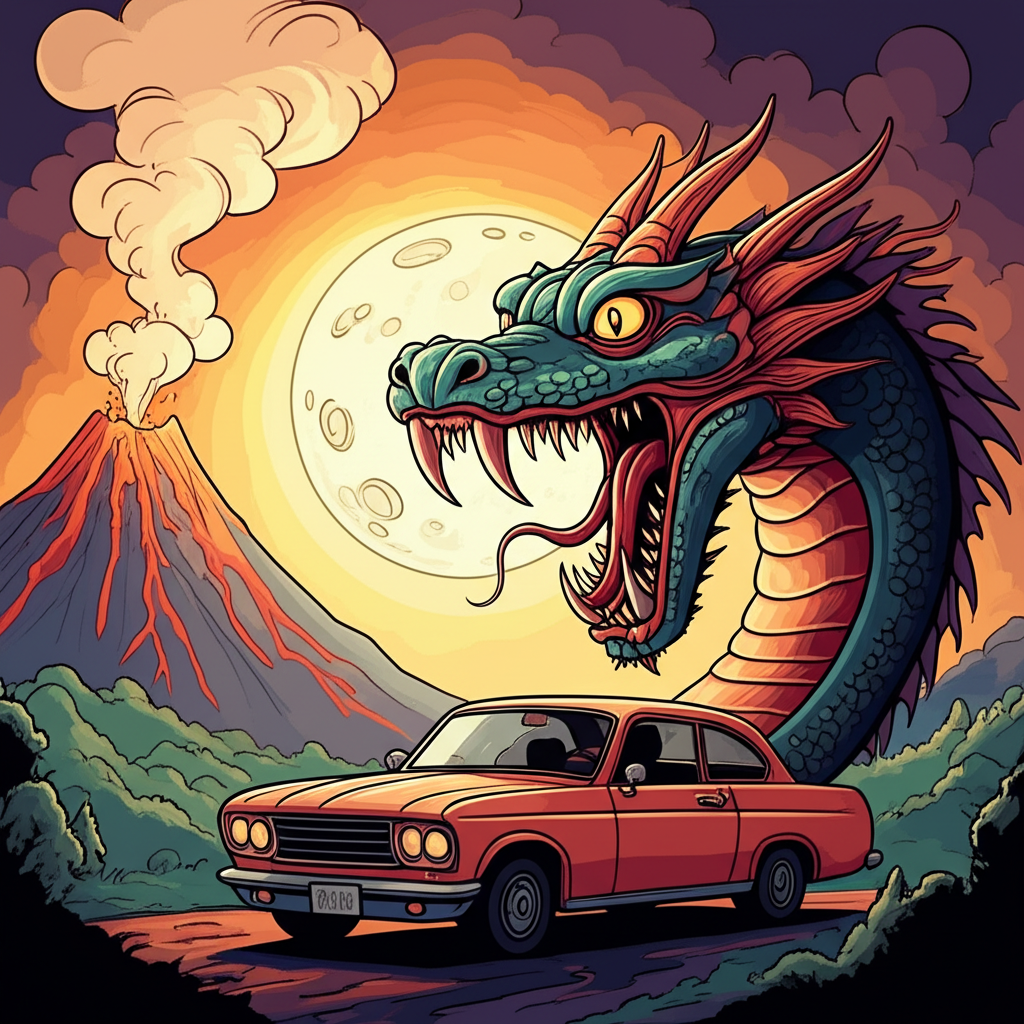
The emerald islands of the Philippines, a tapestry of volcanic peaks and azure seas, are steeped in a rich heritage of folklore. Among these ancient tales, whispered from generation to generation under the starlit sky, are those that seek to explain the grand spectacles of nature. One such captivating narrative, originating from the Bicol region of Luzon, speaks of the colossal serpent Bakunawa and its celestial dance with the moon, a story intrinsically linked to the fiery majesty of Mayon Volcano. This is not a doctrine to be believed, but a traditional story, a vibrant thread woven into the cultural fabric by ancient imaginations attempting to comprehend the world around them.
To understand these ancient narratives, we must journey back to a time when the world was perceived as a realm of potent spirits and awe-inspiring forces. In the pre-colonial Philippines, particularly in communities like those near Mayon Volcano, life was deeply intertwined with the natural world. The earth, with its fertile soil and unpredictable eruptions, the sky, with its ever-changing patterns of stars and weather, and the sea, with its boundless depths, were not merely physical landscapes but sentient entities, governed by powerful beings. Animistic beliefs often prevailed, where everything possessed a spirit, and the cosmos was a dynamic interplay of these spiritual forces. The Bicolano people, living in the shadow of the perpetually smoking Mayon, understood the raw power of nature intimately. They witnessed the volcano’s fury, its ability to both nurture with fertile ash and destroy with molten lava. It is within this worldview, a blend of reverence, fear, and a profound need for explanation, that the tale of Bakunawa and the moon took root.
At the heart of this myth resides Bakunawa, a creature of immense size and formidable presence. It is depicted as a colossal serpent, often described as having a gleaming, scaly body, a gaping maw, and sometimes, multiple heads or serpentine tails. This creature is not born of flesh and blood in the way we understand it today, but rather as an embodiment of primal forces. Its symbolic attributes are numerous. Bakunawa can be seen as representing the untamed and chaotic aspects of the universe, the deep, dark abyss of the ocean, or the insatiable hunger that can consume all. Its scales, shimmering like moonlight on water, suggest a connection to the celestial, but a connection born of envy and a primal desire to possess. It is a creature that embodies the awe-inspiring, and at times, terrifying, power that ancient peoples attributed to the unseen forces of the cosmos.
The narrative unfolds as a grand cosmic drama. The ancient storytellers would paint a vivid picture of the night sky, a canvas upon which the celestial bodies played out their destinies. The moon, a beacon of light and a silent guardian of the night, was a particularly enchanting sight. The myth posits that Bakunawa, dwelling in the depths of the ocean, would gaze upon the moon with an insatiable longing. Its luminous glow, its serene presence, captivated the serpent. Driven by a desire to possess this celestial beauty, Bakunawa would rise from its watery abode and ascend into the heavens. The journey was not a gentle flight, but a powerful surge, a disturbance of the natural order. As Bakunawa approached the moon, its immense form would blot out the stars, creating an eerie twilight. The people on earth would witness this spectacle with bated breath, understanding that something extraordinary, and potentially dangerous, was occurring.
The myth often describes a struggle, a celestial chase. Bakunawa, with its gaping maw, would attempt to swallow the moon whole. The moon, in its ethereal radiance, would either evade the serpent’s grasp or, in some versions, the intervention of other deities or the collective will of the people would repel Bakunawa. The sight of the moon partially obscured, or seemingly disappearing, was explained by Bakunawa’s attempts to devour it. The return of the full moon, its light once again unblemished, was a testament to its resilience and the natural order being restored. And then there is the connection to Mayon Volcano. The fiery eruptions of Mayon were sometimes interpreted as the earth’s reaction to Bakunawa’s celestial raids, or as a celestial counter-force, a fiery breath from the earth itself, pushing back against the encroaching darkness of the serpent. The volcano’s rhythmic smoking, its fiery heart, was seen as a constant, watchful presence, a guardian that echoed the struggle in the heavens.
The symbolism embedded within this myth is rich and multifaceted. Bakunawa, as the serpent, could represent the primal fears of humanity – the fear of the unknown, of darkness, of consumption, and of the destructive power inherent in nature. Its desire for the moon might symbolize the yearning for beauty, for light, for something unattainable. The moon itself, in this context, embodies purity, enlightenment, and the cyclical nature of life and death. The struggle between Bakunawa and the moon could also represent the constant battle between chaos and order, between darkness and light, a theme that resonates across many cultures. The association with Mayon Volcano further solidifies this interpretation, linking the cosmic struggle to the very earth upon which people lived, highlighting the interconnectedness of all things in their worldview. The myth served as a way to make sense of celestial phenomena like eclipses, attributing them to powerful, mythical beings and their actions, thereby providing a narrative framework for understanding these often frightening events.
In contemporary times, the myth of Bakunawa and the moon, and its connection to Mayon Volcano, continues to capture the imagination. It finds expression in various forms of modern media and cultural studies. In literature, it serves as inspiration for fantasy novels and poetry, exploring themes of cosmic battles, mythical creatures, and the enduring power of ancient legends. Filipino animators and game developers have brought Bakunawa to life in video games and animated series, reimagining the serpent as a formidable antagonist or a mystical entity. Cultural historians and anthropologists delve into these stories to understand the worldview of ancient Filipinos, their relationship with nature, and their attempts to explain the universe. These interpretations, while celebrating the narrative, do so with an understanding of its mythological origins, appreciating its artistic and cultural significance.
In conclusion, the tale of Bakunawa and the moon, intertwined with the songs of Mayon Volcano, is a profound example of how ancient peoples sought to understand the world around them. It is a story born from observation, imagination, and a deep respect for the powerful forces of nature. As Muslims, we recognize that only Allah (God) is the true Creator and Sustainer of all that exists, and that such narratives, while culturally significant, are products of human storytelling and not divine revelation. Nevertheless, these traditional stories offer an invaluable window into the past, showcasing the rich tapestry of human imagination, the enduring tradition of storytelling, and the profound cultural heritage that continues to shape our understanding of our world and its diverse narratives. They remind us of the human impulse to find meaning in the grand cosmic ballet, to weave tales that explain the inexplicable, and to celebrate the enduring power of imagination.