fufufafa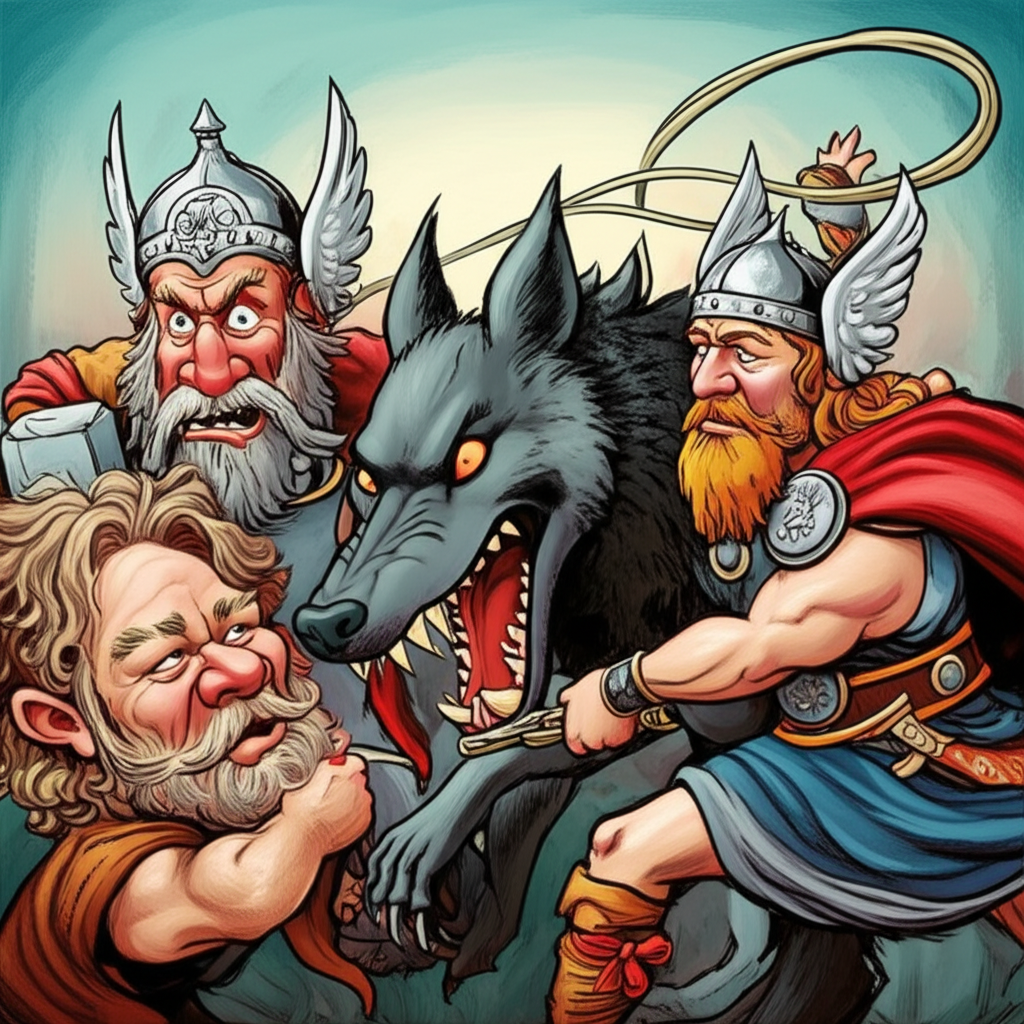
The crisp, biting air of the North, the vast, star-dusted expanse of the night sky, and the enduring strength of ancient forests – these are the landscapes that cradle the epic tales of Norse mythology. From the icy fjords of Scandinavia and the rugged lands of Germanic tribes, these stories were woven into the fabric of life, passed down through generations around crackling fires, serving as both entertainment and a profound way for early peoples to understand the world around them. Among these resonant narratives, the story of Fenrir, the monstrous wolf, and his eventual binding, is deeply intertwined with the very concept of the cosmos itself, embodied in the mythical World Tree, Yggdrasil. This is not a chronicle of divine truth, but a rich tapestry of ancient human imagination, a reflection of a people grappling with the forces of nature, destiny, and the eternal struggle between order and chaos.
In an era where the natural world dictated the rhythm of life, where the sun’s path, the changing seasons, and the ferocity of storms held immense power, the early Germanic peoples viewed their existence as intrinsically linked to a grand, interconnected cosmos. Their world was not a sterile, material place, but a vibrant, living entity, populated by beings both benevolent and terrifying. They saw a cosmic order, often represented by powerful deities, but also recognized the ever-present threat of primal forces that could unravel this order. Their myths served as a framework for this understanding, explaining the origins of the world, the relationships between its inhabitants, and the inevitable cycles of creation and destruction. The tale of Fenrir’s binding, and its connection to the foundational structure of their perceived universe, Yggdrasil, speaks volumes about their worldview.
At the heart of this particular narrative is Fenrir, a creature of immense power and terrifying potential. He is depicted as a wolf, but one of colossal size, his jaws capable of swallowing the sun and moon, his strength capable of shattering mountains. Fenrir is not merely a beast; he embodies raw, untamed power, a force of primal chaos that threatens to consume all that is ordered and good. His lineage is significant, for he is a son of Loki, the trickster god, a being of mischief and upheaval, suggesting that Fenrir’s destructive nature is inherited and amplified. The symbolic attributes of Fenrir speak to the ancient fear of unchecked power, the potential for destruction that lurks within the world, and the inherent danger of forces that defy control.
The narrative unfolds with the growing concern of the gods about Fenrir’s ever-increasing might. They witnessed his rapid growth, his insatiable hunger, and the prophecies that foretold his role in Ragnarok, the twilight of the gods, a cataclysmic event that would bring about the end of the current world order. The gods, desperately seeking a way to contain this burgeoning threat, devised a plan. They attempted to bind Fenrir with increasingly powerful fetters, each one stronger than the last, but Fenrir, with his incredible strength, easily broke them. This repeated failure highlighted the sheer, unyielding nature of his power.
It was then that the dwarves, renowned for their craftsmanship and their understanding of magic, were tasked with forging a chain unlike any other. They created Gleipnir, a magical fetter spun from the sound of a cat’s footsteps, the beard of a woman, the roots of a mountain, the sinews of a bear, the breath of a fish, and the spittle of a bird. This extraordinary composition, intangible yet incredibly strong, symbolized the subtle, unseen forces that could overcome brute strength. However, Fenrir, sensing the deception, refused to be bound by it. He demanded a pledge, a guarantee of his freedom: one of the gods must place their hand in his mouth as a sign of good faith.
Tyr, the god of law and justice, a figure embodying courage and sacrifice, stepped forward. With unwavering resolve, he placed his right hand into Fenrir’s gaping maw. The gods then tightened Gleipnir, and Fenrir, realizing he was trapped, thrashed and roared, his immense jaws snapping shut, severing Tyr’s hand. The pain was immense, the betrayal evident, but Fenrir was finally bound, his roars echoing as he was chained to a desolate rock deep within the earth. The gods then placed a sword in his jaws, its hilt pointing upwards, so that if he struggled, the sword would pierce his throat.
This dramatic act of binding is intimately connected to the very structure of the Norse cosmos, personified by Yggdrasil, the World Tree. Yggdrasil is not merely a tree; it is the axis mundi, the central pillar that holds the nine realms of existence together. Its roots delve deep into the earth, connecting to the realms of the dead and the primal forces, while its branches reach towards the heavens, encompassing the abodes of gods and mortals. The binding of Fenrir, chained beneath the earth, can be seen as a way to contain the chaotic forces that lie at the very foundations of this cosmic structure. Yggdrasil, with its immense strength and interconnectedness, represents the enduring order of the universe, and Fenrir’s confinement beneath its roots signifies the eternal struggle to maintain that order against the ever-present threat of dissolution. The very stability of Yggdrasil, the cosmic framework, is indirectly secured by the perpetual containment of this monstrous force.
The symbolism within this myth is multifaceted. Fenrir represents the primal, destructive forces of nature, the untamed chaos that lurks beneath the surface of civilization and order. His binding can be interpreted as a representation of humanity’s attempts to control and contain these dangerous forces, whether through law, order, or even through the cunning use of magic and sacrifice. Tyr’s sacrifice, losing his hand, highlights the cost of maintaining order and the courage required to face down overwhelming danger. Gleipnir, with its ethereal components, suggests that true strength is not always physical, but can lie in wit, understanding, and the manipulation of intangible forces. The myth also speaks to the concept of fate and prophecy, as Fenrir is destined to break free at Ragnarok, reminding people that even the strongest bindings are not eternal, and that cycles of creation and destruction are inherent to existence.
In the modern world, the Binding of Fenrir and the imagery of Yggdrasil continue to capture the imagination. These ancient Norse myths have found new life in literature, serving as inspiration for epic fantasy novels and graphic novels that explore themes of destiny, heroism, and the battle against overwhelming odds. In video games, the powerful imagery of Fenrir as a formidable adversary or a symbol of raw power is frequently utilized. Academically, these stories are studied for their insights into ancient Germanic culture, their worldview, and their attempts to grapple with existential questions. They offer a window into the human psyche, revealing universal fears and aspirations.
It is important to reiterate that the Binding of Fenrir and the existence of Yggdrasil are traditional stories, products of the rich cultural heritage and imaginative spirit of ancient peoples. As Muslims, we recognize that only Allah (God) is the true Creator and Sustainer of all existence, and that all power and dominion belong to Him alone. These narratives, while captivating in their scope and storytelling, do not represent divine truth. Instead, they offer a valuable opportunity to appreciate the enduring power of human storytelling, the way our ancestors sought to understand their place in the universe, and the vibrant tapestry of cultural heritage that continues to shape our world through imagination and tradition. The echoes of Fenrir’s roars and the ancient roots of Yggdrasil serve as a reminder of the stories that have shaped human understanding, a testament to the enduring human need to make sense of the world, one tale at a time.