fufufafa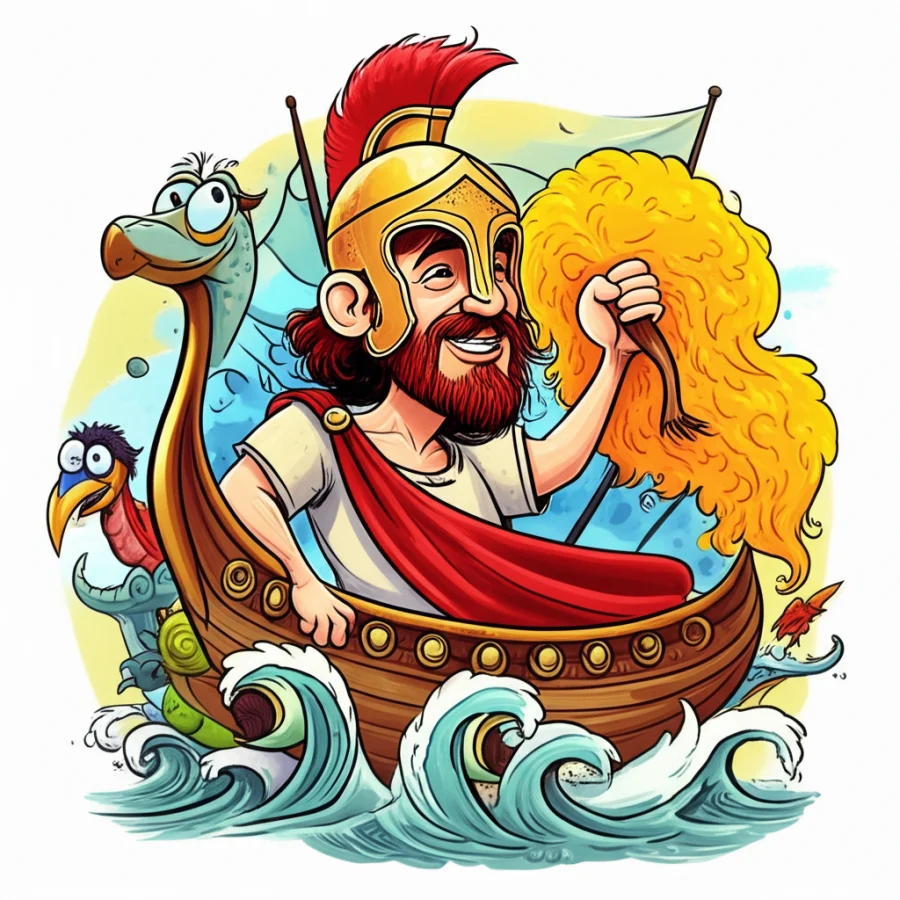
In the tapestry of ancient Greek mythology, woven with threads of gods, heroes, and extraordinary quests, lies the enduring tale of Jason and his daring voyage aboard the ship Argo. This narrative, originating from the Hellenic world of antiquity, is a testament to the enduring power of human ambition, the challenges of leadership, and the allure of the unattainable. It is a story passed down through generations, a reflection of how ancient peoples sought to understand their world, their place within it, and the forces they believed shaped their destinies.
The era in which this myth likely solidified into its familiar form was the Archaic and Classical periods of ancient Greece, a time characterized by burgeoning city-states, seafaring exploration, and a rich oral tradition. The Greeks of this time viewed the world as a place where the divine and the mortal realms were intimately intertwined. Gods and goddesses, possessing immense power and often capricious temperaments, actively intervened in human affairs. Natural phenomena were often attributed to their will, and the heroes of myth served as intermediaries, embodying human aspirations and grappling with the challenges that lay beyond mortal control. The vast, unpredictable Mediterranean Sea, a vital artery for trade and communication, also represented a potent symbol of the unknown, a place where both peril and promise resided. Within this worldview, tales like Jason’s provided a framework for understanding courage, the consequences of ambition, and the complex relationships between humanity and the supernatural.
Central to this epic is Jason, a prince of Iolcus, a city in Thessaly. In the mythology, he is often depicted as a figure of youthful vigor and charisma, destined for greatness but facing immense obstacles. He is not a god, but a mortal endowed with exceptional courage and a compelling destiny. The quest itself is propelled by the ambition to reclaim his rightful throne from his usurping uncle, Pelias. The ultimate prize, the Golden Fleece, is not merely a material object; it is a potent symbol of kingship, divine favor, and the potential for immense prosperity and power. The fleece is said to be the wool of a winged ram, a creature of myth, and its acquisition is guarded by formidable challenges.
The narrative of Jason and his voyage begins with Pelias’s treachery. Fearing a prophecy that foretold his downfall at the hands of a one-sandaled man, Pelias recognized Jason, who had indeed lost a sandal while crossing a river on his way to the city. To rid himself of the potential threat, Pelias devised a seemingly impossible task: Jason was to sail to the distant land of Colchis, located on the Black Sea, and retrieve the Golden Fleece. This was a journey fraught with peril, a deliberate attempt to send Jason to his doom.
Undeterred, Jason accepted the challenge. His call to adventure resonated with a band of heroes, each renowned for their prowess and daring. These included the swift-footed Atalanta, the wise Nestor, the mighty Hercules, and the musically gifted Orpheus. Together, they comprised the Argonauts, a fellowship bound by loyalty and the shared pursuit of glory. Their vessel, the Argo, was no ordinary ship. Built under the guidance of Athena, the goddess of wisdom and warfare, it was imbued with a special piece of timber from a sacred oak at Dodona, allowing it to speak and offer counsel.
The voyage of the Argo was a series of trials and tribulations. They navigated treacherous straits, where they encountered the monstrous Sirens, whose enchanting songs lured sailors to their destruction. The Argonauts, guided by Orpheus’s lyre, managed to resist their fatal allure. They braved the Symplegades, the clashing rocks that threatened to crush any ship that dared to pass between them. Through a combination of cunning and divine intervention, they succeeded in their passage. Along the way, they encountered various peoples and faced formidable beasts, each encounter testing their courage, resourcefulness, and the strength of their bonds.
Upon reaching Colchis, Jason faced his greatest challenge: King Aeëtes, the ruler of the land, was reluctant to part with the Golden Fleece. He subjected Jason to a series of seemingly insurmountable tasks. Jason was required to yoke fire-breathing bulls, plow a field with them, and sow dragon’s teeth from which sprang an army of warriors. It was with the aid of Medea, the sorceress daughter of Aeëtes, that Jason ultimately succeeded. Medea, captivated by Jason, fell deeply in love with him and, through her potent magic, provided him with the means to overcome the obstacles. She gave him a potion to make him invulnerable to the bulls’ fire and a strategy to defeat the warriors.
With the fleece secured, Jason and Medea, along with the Argonauts, fled Colchis. Aeëtes, enraged, pursued them, but Medea’s cunning and ruthless actions, including the dismemberment of her own brother to delay her father’s pursuit, allowed them to escape. The return journey was no less perilous, further solidifying the legend of their extraordinary feat.
The myth of Jason and the Golden Fleece can be interpreted as a complex allegory for ancient Greek thought. The Golden Fleece itself often symbolizes kingship, divine legitimacy, and the promise of a prosperous reign. Jason’s quest represents the arduous journey of leadership, requiring not only courage and strength but also the ability to inspire loyalty and forge alliances. The Argonauts embody the ideal of a heroic fellowship, where diverse talents and individual strengths contribute to a collective success. The numerous trials they face can be seen as metaphors for the challenges inherent in navigating the unknown, both in the physical world of exploration and the metaphorical landscape of life’s difficulties. The intervention of deities like Athena highlights the Greek belief in the influence of the divine on human endeavors, while the role of Medea, a powerful female sorceress, introduces themes of cunning, ambition, and the often-unforeseen consequences of desire.
In modern times, the story of Jason and the Argonauts continues to resonate across various cultural mediums. It has been retold in literature, inspiring countless retellings and adaptations. Films and television series have brought the epic to life, visually depicting the grandeur of the Argo and the ferocity of the mythical beasts. Video games often draw upon the heroic archetypes and adventurous spirit of the myth, allowing players to embark on their own quests. In academic circles, the myth is studied within the realms of comparative mythology, folklore, and classical studies, offering insights into ancient Greek values, beliefs, and storytelling traditions.
It is crucial to reiterate that the story of Jason and the Voyage of Arcadia is a traditional narrative, a product of ancient human imagination and cultural expression. It is a powerful testament to the human spirit’s capacity for storytelling and the ways in which early civilizations sought to make sense of their world. As Muslims, we recognize that the true Creator and Sustainer of all existence is Allah (SWT). These ancient tales, while rich in cultural heritage and imaginative power, are not to be mistaken for divine truth. They serve as valuable windows into the past, allowing us to appreciate the enduring legacy of human creativity and the diverse ways in which cultures have sought to understand life’s grand narratives. The echoes of Jason’s quest remind us of the timeless allure of adventure, the enduring power of myth, and the rich tapestry of human cultural heritage that continues to captivate and inspire us.