fufufafa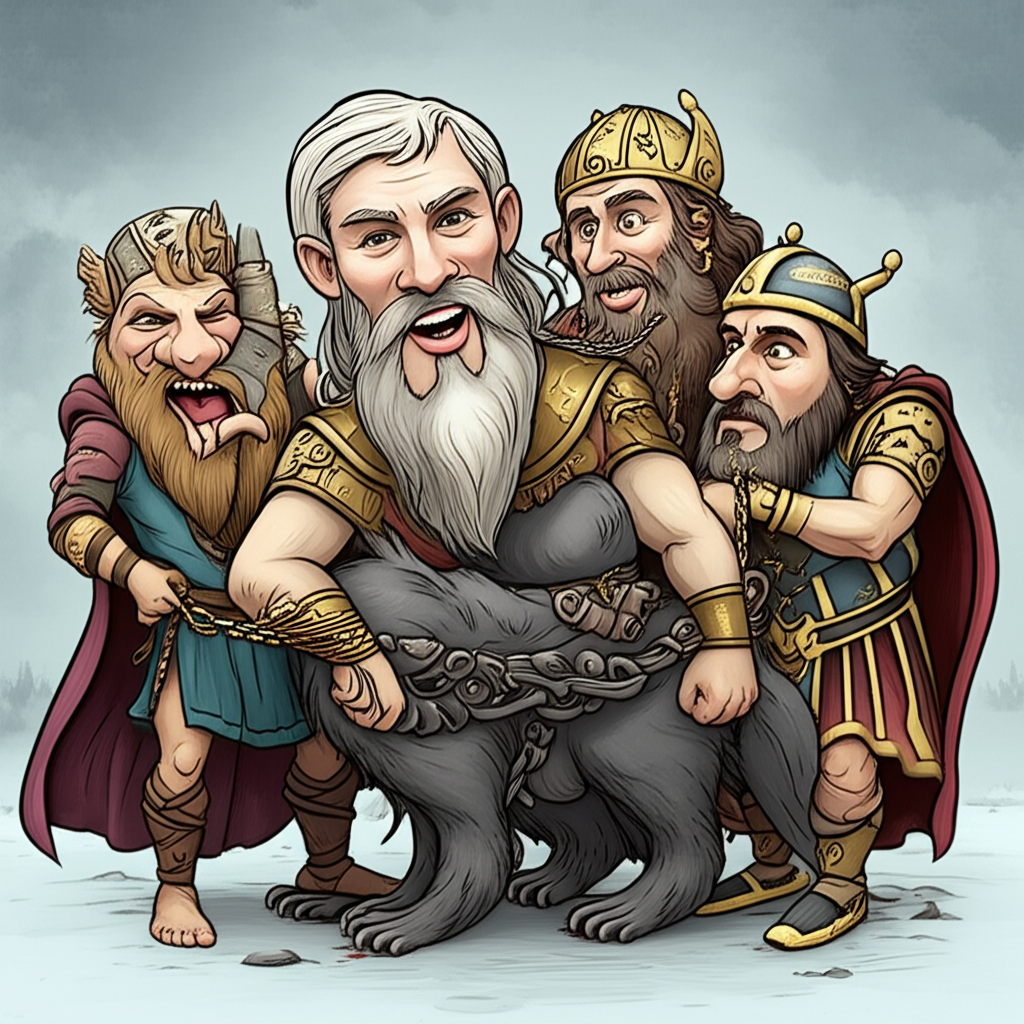
In the frigid northlands, where long nights painted the sky with ethereal aurora and the bite of the wind was a constant companion, ancient peoples spun tales to make sense of their world. Among these captivating narratives, the Norse myths stand as a testament to a worldview steeped in the raw power of nature, the inevitability of fate, and the ever-present struggle between order and chaos. It is from this rich tapestry of folklore, woven by the Norse civilizations of Scandinavia and their Germanic neighbors, that we encounter the chilling saga of Fenrir, the monstrous wolf, and the cosmic implications of his binding, which touches upon the very foundations of their imagined underworld, Niflheim.
These stories, passed down through generations via oral tradition and later meticulously transcribed by scholars, emerged from a society deeply connected to the land. The harsh climate, the unforgiving seas, and the constant threat of the unknown fostered a pragmatic yet imaginative outlook. The Norse people saw the world as a dynamic place, populated by gods, giants, and fearsome creatures, all locked in an eternal dance of creation and destruction. Their cosmology was not one of passive observation but of active engagement, where human actions and divine will intertwined. Niflheim, in this context, was not merely a place but a manifestation of primordial forces, a realm of ice, mist, and primordial darkness, from which much of their understanding of existence, and indeed their fears, originated.
At the heart of this particular tale lies Fenrir, a creature born not of gentle nurturing but of burgeoning, untamed ferocity. He is described as a wolf of colossal size, a beast whose very existence was a harbinger of dread. His lineage traces back to Loki, the trickster god known for his cunning and his disruptive influence, and the giantess Angrboda. This unholy union produced a brood of monstrous offspring, each embodying different aspects of primal power and chaos. Fenrir, the wolf, represented an insatiable hunger, a boundless capacity for destruction, and a threat to the very fabric of the cosmos. His symbolic attributes are those of primal instinct, unchecked power, and the inevitable unraveling of established order. His jaws were said to be so wide that they could encompass the sky, and his teeth were sharpened by the very essence of chaos.
The narrative of Fenrir’s binding begins with the growing unease among the gods in Asgard. They recognized the immense danger posed by the ever-increasing might of the wolf. Despite his young age, Fenrir’s strength was already prodigious, and his growth showed no signs of abating. The gods, seeking to contain this burgeoning threat, devised a plan to bind him. They presented him with progressively stronger magical fetters, each one designed to hold him fast. Fenrir, confident in his own power, allowed himself to be tested, breaking each chain with ease.
This led to the creation of Gleipnir, a seemingly delicate ribbon woven from the sound of a cat’s footsteps, the beards of women, the roots of a mountain, the sinews of a bear, the breath of a fish, and the spittle of a bird. It was a masterpiece of magical craftsmanship, imbued with the essence of things that are imperceptible or impossible to grasp. When this impossibly strong, yet outwardly fragile, binding was presented to Fenrir, he grew suspicious. He agreed to be bound by it only if one of the gods would place their hand in his mouth as a pledge of good faith. Tyr, the god of law and justice, a figure representing courage and sacrifice, stepped forward.
As the gods secured Gleipnir around Fenrir’s massive form, the ribbon tightened, proving unbreakable. The wolf, realizing he had been tricked, roared in fury and thrashed violently. In his struggle, he bit off Tyr’s hand, severing it at the wrist. The gods then bound Fenrir with the magical fetter and, as a further precaution, wedged a sword into his jaws, pointing upwards, to keep them open. Thus, Fenrir was chained in a desolate, underground cavern, his endless roars echoing into the darkness, awaiting the prophesied time of Ragnarok, the twilight of the gods, when he would break free and consume the sun.
The origins of Niflheim, the primordial realm of mist and ice, are intricately linked to this myth. In the Norse creation myths, Niflheim is one of the very first realms to exist, a place of perpetual cold and darkness, where the river Hvergelmir flows. It is often depicted as a place of primordial chaos, a stark contrast to the fiery realm of Muspelheim, another early creation. The binding of Fenrir and his subsequent imprisonment in a dark, cold place can be seen as a symbolic extension of this primordial darkness. Fenrir’s confinement in a subterranean cavern, far from the light of the gods, can be interpreted as a manifestation of Niflheim’s influence, a place where chaotic forces are contained, but never truly extinguished. The cold, desolate nature of his prison mirrors the icy grip of Niflheim itself.
To the ancient Norse people, this story likely held profound symbolic meaning. Fenrir’s unchecked growth and his eventual binding could represent the inherent dangers of untamed power, whether it be natural forces like storms and earthquakes, or the destructive potential within individuals or societies. His imprisonment symbolized the constant effort required to maintain order and prevent chaos from overwhelming the world. The sacrifice of Tyr’s hand highlighted the difficult choices and personal costs often associated with upholding justice and protecting the community. Furthermore, Fenrir’s role in Ragnarok, the final cataclysm, suggested a cyclical view of existence, where destruction is a necessary precursor to renewal. Niflheim, in this context, could have represented the deep, unconscious fears of their existence, the primordial void that preceded creation and the ultimate fate that awaited their world.
In modern times, the tale of Fenrir and his binding has transcended its mythological origins, finding new life in literature, films, video games, and academic studies. Fenrir is often portrayed as a formidable antagonist, a symbol of raw, destructive power. His story continues to be explored for its themes of fate, sacrifice, and the eternal struggle between good and evil. In fantasy literature and games, the concept of powerful, chained beasts awaiting release is a common trope, often drawing inspiration from this Norse legend. Cultural studies scholars delve into these myths to understand the values, anxieties, and worldview of the ancient Norse peoples, gaining insights into their social structures, religious beliefs, and their relationship with the natural world.
It is crucial to reiterate that the binding of Fenrir and the cosmology of Niflheim are traditional stories, born from the imagination and cultural understanding of ancient peoples. They are not to be interpreted as factual accounts or divine pronouncements. As Muslims, we recognize that only Allah (God) is the true Creator and Sustainer of all existence, and that all power and authority reside with Him alone. These ancient narratives, however, offer a valuable window into the human desire to explain the inexplicable, to grapple with the forces of nature and the human condition, and to weave tales that resonate across time. They stand as a testament to the enduring power of human storytelling, a rich heritage that continues to captivate and inform us about the diverse ways in which humanity has sought to understand its place in the universe.