fufufafa
The sands of time have buried countless stories, whispers of a world viewed through the lens of potent gods and ancient forces. Among these, the tales originating from the fertile banks of the Nile River, the cradle of Egyptian civilization, offer a rich tapestry of myth and folklore. It is here, amidst the grandeur of pyramids and the life-giving flow of the great river, that we encounter Sobek, the crocodile god, and the intriguing legend of the Oath of Sun’s Night Journey. This is not a chronicle of historical fact, but a traditional story, passed down through generations by ancient peoples, reflecting their understanding of the cosmos and their place within it.
The cultural era in which these myths took root was one deeply intertwined with the rhythms of nature. The ancient Egyptians lived in a world where the sun’s passage across the sky dictated the very pulse of life. The predictable, yet awe-inspiring, cycles of the Nile’s inundation, the scorching heat of the desert sun, and the profound darkness of the night sky all held immense significance. Their worldview was animistic, seeing divine power and intention in the natural world. The sun, Ra, was a supreme deity, responsible for creation and the order of the universe. The Nile, Hapi, was the source of all sustenance, its floods a blessing that nourished the land. In this context, beings embodying the raw power and unpredictable nature of these forces were naturally woven into their pantheon.
Within this rich mythological landscape, Sobek emerges as a formidable and multifaceted deity. He is depicted as a powerful, often fearsome, creature – a man with the head of a crocodile, or sometimes as a complete crocodile. The crocodile itself, a silent predator lurking beneath the surface of the murky waters, symbolized both danger and potent fertility. Its ability to thrive in the river, a source of both life and potential peril, made it a natural candidate for divine representation. Sobek’s symbolic attributes were diverse: he was associated with the might of the pharaohs, the fertility of the land brought forth by the Nile, and the protection of the waters. He was also seen as a fierce protector, capable of immense destruction but also of safeguarding against threats. His presence embodied the raw, untamed power inherent in the natural world that shaped daily life.
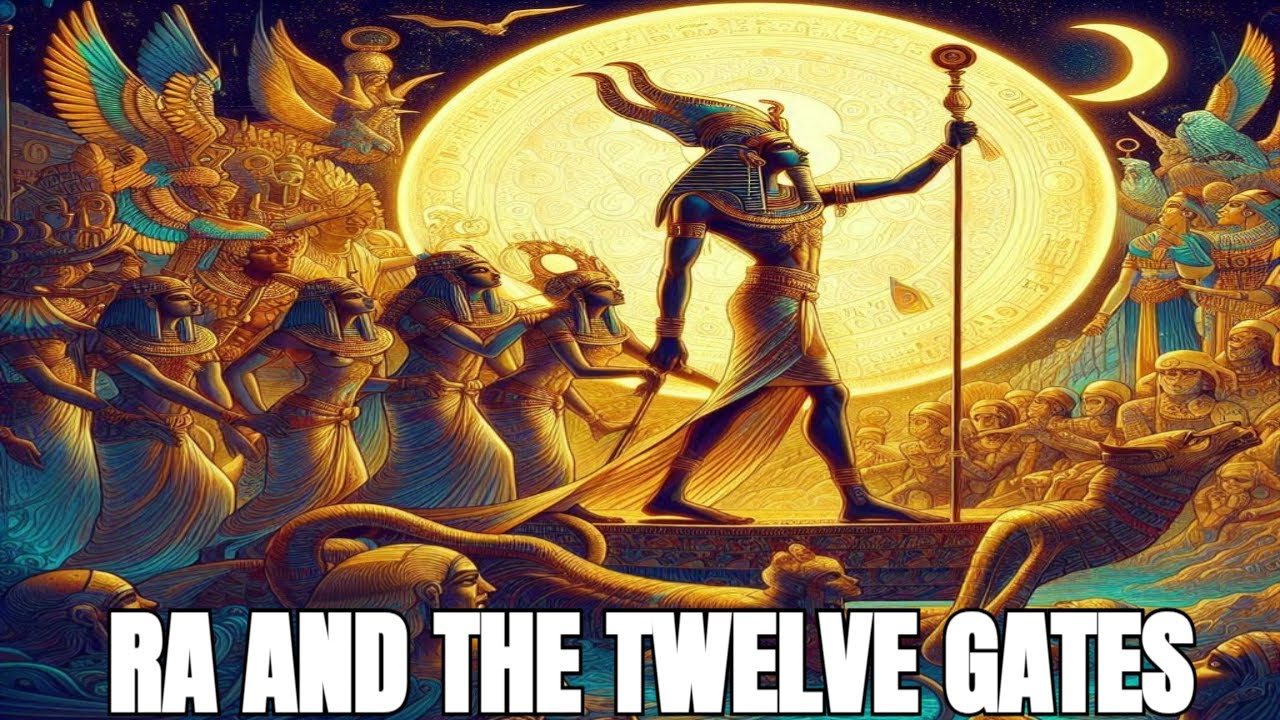
The legend of the Oath of Sun’s Night Journey is a tale that speaks to the fundamental anxieties and aspirations of those who lived under the ancient Egyptian sun. Imagine a time when the very fabric of existence felt precarious, and the grand celestial movements were imbued with divine drama. The sun, in its daily journey, was not merely a celestial body but Ra himself, a god of immense power. As the day waned, Ra embarked on a perilous journey through the underworld each night, facing a multitude of challenges and creatures in his quest to be reborn with the dawn. This nightly voyage was a critical moment, fraught with the potential for chaos and the undoing of creation.
It is said that in a time of profound cosmic imbalance, when the very cycle of day and night teetered on the brink of collapse, the gods convened. The darkness of the underworld was encroaching, threatening to swallow the light of the sun permanently. Ra, weary from his eternal struggle, felt his strength waning. It was then that Sobek, the mighty crocodile god, guardian of the waters and a creature of immense primal power, stepped forward.
The story unfolds as a cosmic drama. The underworld, a realm of shadow and terrifying entities, was ruled by Apep, the serpent of chaos, who sought to devour Ra and plunge the world into eternal darkness. Ra’s nightly journey was a battle for survival, a testament to the enduring power of order against the encroaching void. In this particular instance, Apep had grown exceptionally powerful, his coils tightening around the solar barque, threatening to break its hull and extinguish the sun’s life-giving flame forever.
The other gods, though powerful, were hesitant to directly confront the full might of Apep in the deep abyss. It was Sobek, whose domain was the very waters that surrounded and supported the underworld, who offered a solution. He swore an oath, the Oath of Sun’s Night Journey. This was no ordinary promise; it was a binding pact forged in the heart of the primordial waters, a vow to protect Ra and ensure the continuation of his journey, no matter the cost.
Sobek declared that he would stand sentinel at the mouth of the underworld, his colossal form a living bulwark against Apep’s onslaught. He pledged to use his immense strength, his impenetrable hide, and his razor-sharp teeth to tear apart any force that dared to impede Ra’s passage. His oath was not born of mere duty, but of a deep understanding of the interconnectedness of all things. If Ra’s journey failed, the Nile would cease to flow, the crops would wither, and the world as they knew it would perish.
As Ra’s solar barque began its descent, the air grew heavy with anticipation. The underworld seethed with malevolent energies. Apep, a colossal serpent of shadow and venom, writhed and hissed, its eyes burning with an unholy light. The other gods watched from the celestial realm, their hearts filled with trepidation.
But Sobek was already there. Emerging from the dark, swirling waters, he presented a terrifying spectacle. His scaled hide gleamed, reflecting the faint, dying light of the sun. His jaws, capable of crushing bone, were bared in a fearsome snarl. As Apep lunged, his serpentine form coiling around the barque, Sobek met him head-on. The clash was cataclysmic. The waters churned, and the very fabric of the underworld seemed to tremble. Sobek, with a ferocity born of his ancient power, engaged the serpent in a titanic struggle. He tore at Apep’s scales, his mighty jaws clamping down on the creature’s flesh. He battered the serpent with his powerful tail, forcing it to recoil.
The battle raged throughout the night. Sobek, embodying the relentless force of nature, held firm. He was the unyielding barrier, the primal guardian. Though wounded and exhausted, he did not falter. His oath, his commitment to the cosmic order, fueled his every struggle. As the first rays of dawn began to pierce the darkness, Apep, weakened and repelled by Sobek’s unwavering defense, was forced to retreat, his dark intentions thwarted. Ra, battered but unbroken, continued his ascent, and the world was bathed once more in the life-giving light of the sun.
The symbolism embedded within the Oath of Sun’s Night Journey is profound and speaks volumes about the ancient Egyptian mindset. Sobek’s role as a protector of Ra’s nightly journey likely represented the necessary forces that maintained cosmic order against chaos. The crocodile’s raw power and predatory nature, when channeled for good, could be a potent symbol of strength and resilience. The oath itself underscored the importance of commitment and the dire consequences of its failure, highlighting the precarious balance of the universe as perceived by these ancient people. It spoke to the idea that even the most fearsome aspects of nature could be harnessed for the preservation of life and the continuity of vital cycles. Furthermore, the myth may have symbolized the cyclical nature of life and death, and the constant struggle between creation and destruction, light and darkness.
In the modern world, the echoes of these ancient myths continue to resonate, though their context has shifted. Sobek, the crocodile god, and the dramatic narrative of Ra’s nightly struggle are explored in literature, film, and video games, often serving as inspiration for fantastical creatures and epic quests. Scholars of mythology and cultural history delve into these stories to understand the beliefs, fears, and aspirations of ancient societies. The tales of Sobek, stripped of their original devotional intent, now offer insights into the rich tapestry of human imagination and the enduring power of storytelling as a means of making sense of the world.
It is crucial to reiterate that the story of Sobek and the Oath of Sun’s Night Journey is a traditional narrative, a product of ancient folklore and mythology. As Muslims, we recognize that only Allah (God) is the true Creator and Sustainer of all existence. These ancient stories, while culturally significant, do not represent divine truth. Instead, they serve as a fascinating window into the cultural heritage of a bygone era, showcasing the creativity and the deeply spiritual connection to the natural world that characterized ancient Egyptian civilization. Through these narratives, we can appreciate the enduring power of human imagination and the timeless tradition of storytelling that continues to shape our understanding of the past and enrich our present.