fufufafa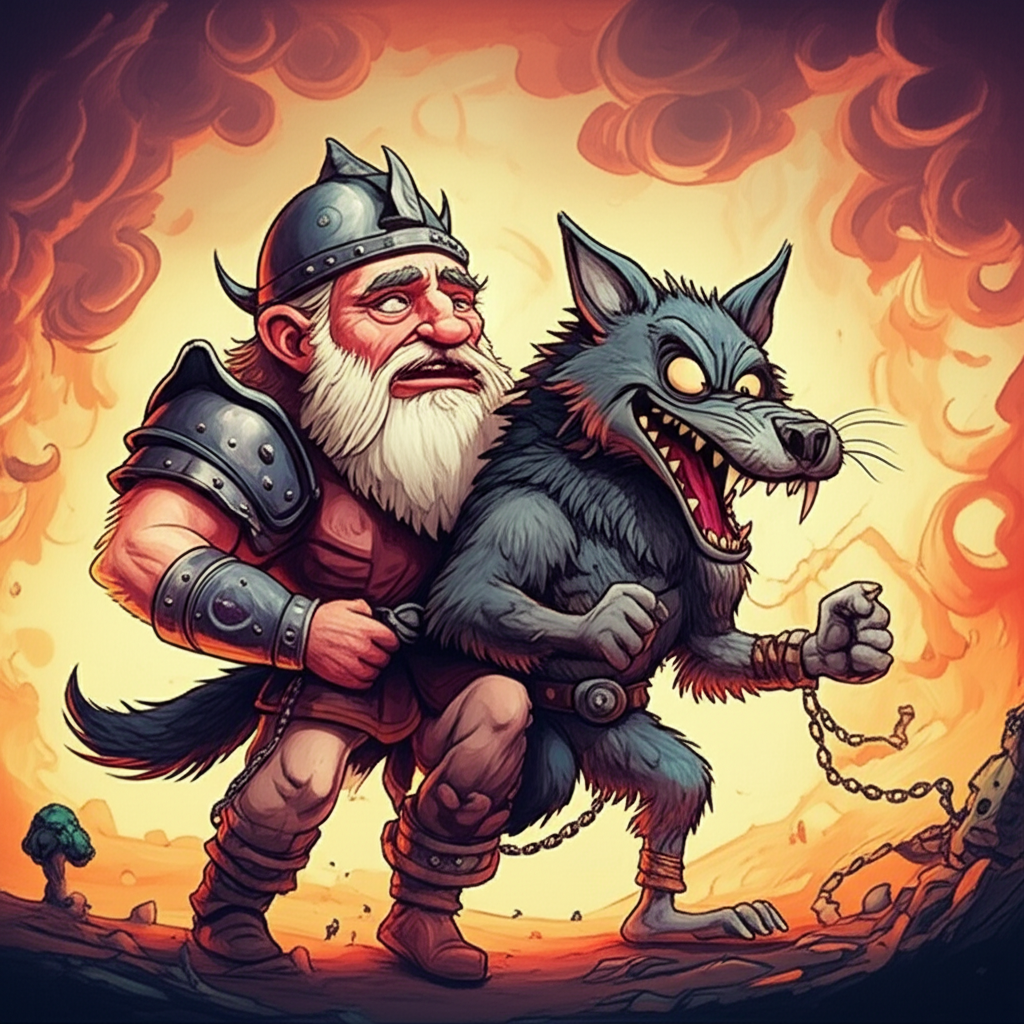
From the windswept shores of Scandinavia, carried on the crests of icy waves and whispered around crackling hearth fires, emerges a tapestry of ancient tales woven by the Norse peoples. These are not chronicles of verifiable events, but rather vibrant narratives born from a profound connection to the natural world and an imaginative understanding of its awesome power. Among these enduring legends, the story of Fenrir, the monstrous wolf, and the origins of Muspelheim, the fiery realm, offers a compelling glimpse into the worldview of a culture that grappled with concepts of creation, destruction, and the untamed forces that shaped their existence.
The Norse civilization, flourishing in regions characterized by dramatic landscapes – towering mountains, deep fjords, and harsh winters – developed a worldview deeply intertwined with the cyclical nature of life and death, creation and chaos. Their mythology reflects this, populating their cosmos with powerful deities, fearsome giants, and creatures that embodied the elemental forces of their environment. The gods, while powerful, were not omnipotent; they too faced the inevitability of Ragnarok, the twilight of the gods, a cosmic battle that would reshape their world. Within this framework, the story of Fenrir’s binding and the concept of Muspelheim serve as potent symbols of primal power and its potential for both creation and utter devastation.
At the heart of this narrative lies Fenrir, a creature of immense and terrifying power. He is depicted as a wolf of colossal size, his jaws capable of swallowing the sun and moon. More than just a beast of brute strength, Fenrir embodies the raw, uncontrollable forces of chaos that threaten to unravel the established order. His lineage, born of the cunning trickster god Loki and the giantess Angrboda, marks him as an offspring of discord and primal energies. The symbolic attributes of Fenrir are those of insatiable hunger, relentless growth, and an inherent capacity for destruction that grows with every passing moment. He is the embodiment of unchecked power, a force that even the gods, in their wisdom and strength, would ultimately struggle to contain.
The narrative of Fenrir’s binding is a tale of divine foresight and a desperate, ultimately flawed, attempt to avert an inevitable doom. The gods, observing Fenrir’s prodigious growth and sensing the prophecy of his role in Ragnarok, grew increasingly wary. They attempted to shackle him with ever-stronger chains, each one ultimately proving insufficient against his burgeoning might. This led to the creation of Gleipnir, a magical fetter forged by the dwarves from the sound of a cat’s footfall, the breath of fish, and the roots of a mountain – elements that speak to the intangible and the hidden forces of existence.
The gods, under the pretense of testing Fenrir’s strength, lured him into accepting the binding. Tyr, the god of law and heroic glory, bravely placed his hand in Fenrir’s maw as a pledge of good faith. The wolf, sensing the trickery when the magical fetter held him fast, bit off Tyr’s hand, leaving the god with a permanent mark of his sacrifice. This act of binding, while temporarily successful, was a grim foreshadowing of the greater cosmic struggle to come, a testament to the persistent threat that Fenrir represented.
Intertwined with this narrative of binding is the genesis of Muspelheim, a realm that predates the established order of the gods. Muspelheim is often described as the primordial realm of fire, a searing, chaotic expanse from which all heat and light first emanated. It is the domain of the fire giant Surtr, a fearsome being destined to play a pivotal role in Ragnarok, wielding a flaming sword that will consume the world. The origins of Muspelheim are shrouded in the mists of creation, a testament to the potent, untamed forces that existed before the cosmos was fully formed. It represents the raw, elemental energy that birthed existence, but also the potential for its ultimate destruction. Muspelheim is the primal forge, the source of fiery power that can both shape and annihilate.
The symbolism embedded within these myths is rich and multifaceted. Fenrir’s binding speaks to humanity’s perennial struggle against the forces of chaos and destruction, both internal and external. It can represent the attempts of civilization to impose order upon the wild, the inherent risks involved in such endeavors, and the sacrifices that leadership sometimes demands. Tyr’s loss of his hand can symbolize the cost of wisdom and the painful lessons learned in confronting powerful, uncontrollable forces. Muspelheim, on the other hand, embodies the primal, untamed power of nature – the destructive potential of fire, the overwhelming heat of the sun, and the destructive energy that underpins creation itself. It highlights the ancient understanding that creation and destruction are often two sides of the same coin, a constant cosmic dance.
In the modern world, these ancient Norse tales continue to resonate, finding new life in literature, film, and video games. Fenrir, often depicted as a formidable antagonist, remains a potent symbol of ultimate threat and uncontrollable ferocity. His story is retold and reimagined, exploring themes of fate, free will, and the struggle against overwhelming odds. Muspelheim, too, serves as a dramatic and visually striking setting, representing a place of ultimate heat and destruction, often used to signify apocalyptic scenarios or the fiery depths of hell. Cultural studies scholars analyze these myths for their insights into the beliefs, anxieties, and social structures of ancient Norse societies, revealing how they perceived their place in a vast and often unforgiving universe.
It is crucial to reiterate that the story of Fenrir and Muspelheim are traditional narratives passed down through generations by ancient peoples. They are products of human imagination and cultural interpretation, offering a window into the minds of those who sought to understand the world around them through the power of storytelling. As Muslims, we recognize that the true Creator and Sustainer of all existence is Allah, who has no partners. These ancient tales, while fascinating from a cultural and historical perspective, do not alter this fundamental truth.
In closing, the binding of Fenrir and the origins of Muspelheim stand as powerful testaments to the enduring human drive to create meaning from the world. They showcase a tradition of rich storytelling, a legacy of imagination that continues to captivate and provoke thought. By exploring these myths, we gain not only an appreciation for the cultural heritage of the Norse people but also a deeper understanding of the universal human experience of confronting the unknown, the powerful, and the ever-present potential for both creation and destruction that lies at the heart of existence.