fufufafa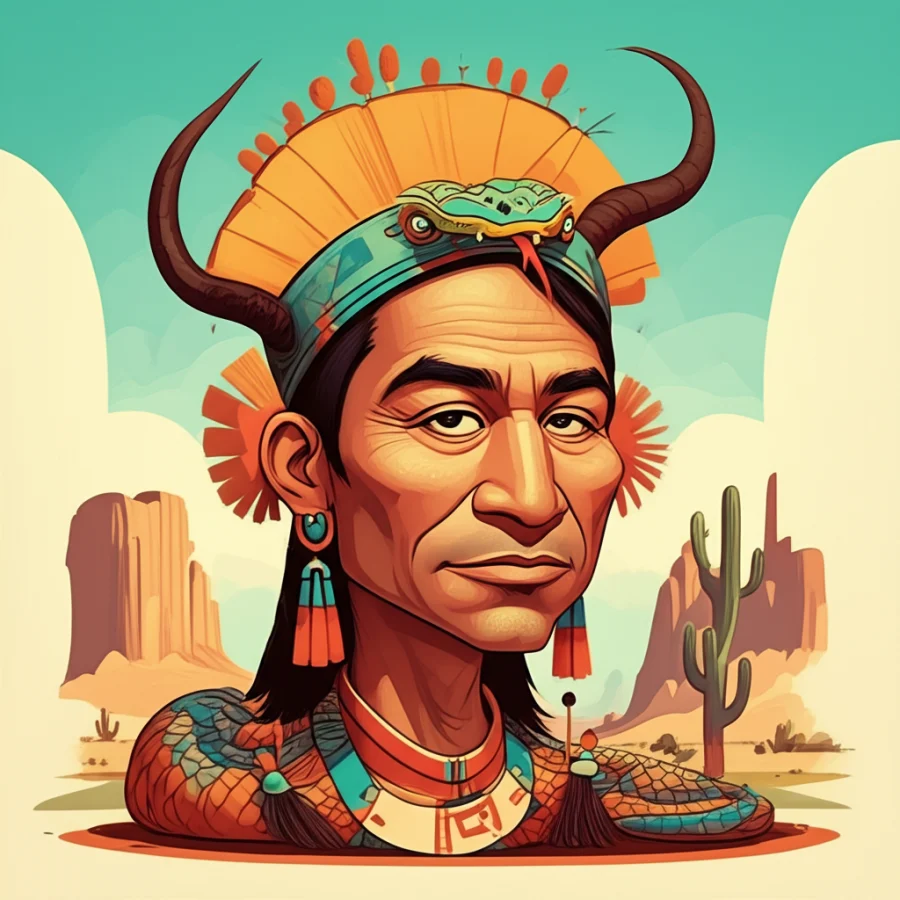
The windswept mesas of the American Southwest hold within their ancient sandstone layers the whispers of ages past, carrying tales spun by the indigenous peoples who once thrived under their silent watch. Among these stories, passed down through generations, is one that speaks of the Horned Serpent, a formidable entity whose presence is intricately woven with the very fabric of the land, particularly the imposing Pueblo mesas. This is not a chronicle of divine power to be worshipped, but a fascinating window into the worldview of ancient peoples, a narrative designed for cultural and historical understanding.
Origins and Cultural Tapestry
These tales emerged from the vibrant cultural tapestry of the Ancestral Puebloans, a civilization that flourished in the Four Corners region of the United States for centuries, roughly from the 12th to the 14th centuries CE. Their world was one of profound connection to the natural environment. They lived in harmony with the dramatic landscapes of canyons, arid plains, and towering mesas, their lives dictated by the cycles of the sun, the rain, and the seasons. For these people, the world was alive with spirits and forces that shaped their existence. The earth was not merely dirt and rock, but a sacred entity, imbued with power and meaning. Natural phenomena – the sudden flash of lightning, the rumble of thunder, the life-giving flow of water – were not random occurrences but manifestations of these unseen powers. Their worldview was animistic, attributing a spirit or consciousness to all things, from the grandest mountain to the smallest insect.
The Horned Serpent: A Symbol of Power and the Depths
The Horned Serpent, as depicted in these ancestral narratives, is a creature of immense, often ambiguous power. It is not typically described as a benevolent deity, but rather a potent force, embodying elements of both creation and destruction. Its form is often imagined as a colossal serpent, its scales shimmering like obsidian or the polished surfaces of precious stones. The defining characteristic, of course, is the presence of horns, which might be depicted as antlers like those of a deer, or as more formidable, sharp protrusions. These horns often symbolize dominance, strength, and a connection to the celestial realm, or perhaps to the subterranean depths.
The serpent itself, a recurring motif in global mythologies, often represents duality: the underworld and the heavens, life and death, the cyclical nature of existence. In the context of the Horned Serpent of the Southwest, it is frequently associated with water. It is seen as the guardian of springs, rivers, and underground lakes, the source of life-giving moisture in an often arid land. However, this association also carries a darker undertone. The serpent could also bring forth floods, storms, and the destructive power of water when displeased or angered. The horns, in this interpretation, might further amplify its connection to the skies, suggesting a command over storms and atmospheric phenomena. Its power was not to be trifled with, and its presence served as a constant reminder of the delicate balance of nature.
The Great Spirit and the Birth of the Mesa
One compelling narrative that echoes through the lore connects the Horned Serpent to the very formation of the majestic Pueblo mesas. In this tale, the Great Spirit, the overarching creative force that imbued the world with life and order, was contemplating the vast, flat expanse of the land. It was a landscape of immense beauty, yet perhaps lacking in the dramatic grandeur that would inspire awe and reflection.
As the Great Spirit pondered, the Horned Serpent, ancient and powerful, emerged from the deep, hidden places of the earth. Its scales gleamed with the colors of the earth itself – ochre, rust, and deep umber. The horns upon its head, sharp and gleaming, seemed to touch the very sky. The Serpent, it is said, was restless. Its movements stirred the earth, and its breath carried the scent of rain and the deep, mineral essence of the underground.
The Great Spirit, observing the Serpent’s raw, untamed energy, decided to harness this power. Instead of allowing the Serpent to roam freely, potentially disrupting the nascent world, the Great Spirit directed its immense strength. The Serpent, in its powerful undulations, was guided to carve and shape the land. With its mighty coils, it pushed and molded the earth, creating vast, elevated platforms. Its horns, sharp and insistent, dug into the softer soil, lifting and sculpting the stone.
The mesas, therefore, were not simply geological formations. In this narrative, they were the sculpted remnants of the Horned Serpent’s powerful movements, the earth shaped by its primal energy, guided by the wisdom of the Great Spirit. The sheer cliffs of the mesas became a testament to the Serpent’s strength, their flat tops a reflection of its dominion over the earth. The water that gathered in hidden springs and seeped through the rock was seen as the Serpent’s lifeblood, a constant reminder of its connection to the vital element. The mesas, standing sentinel against the horizon, became tangible embodiments of this ancient, powerful interaction.
Symbolism and Meaning: A Reflection of the World
For the people who told these stories, the Horned Serpent and its connection to the mesas held profound symbolic meaning. The mesas themselves represented stability, permanence, and elevated dwelling places – a connection to the sky and a refuge from the dangers of the plains. They were also sacred sites, often chosen for ceremonial activities and for the construction of their distinctive dwellings.
The Horned Serpent, as a symbol, was multifaceted. Its association with water underscored the critical importance of this resource for survival in the arid Southwest. It represented the untamed forces of nature, the power of the earth, and the mysterious depths of existence. The horns could signify authority and a connection to both the earthly and the spiritual realms. The narrative of the Serpent shaping the mesas suggested that even destructive or chaotic forces, when guided by a higher wisdom (the Great Spirit), could result in something beautiful and enduring. It spoke to the belief that the natural world was imbued with meaning, and that human existence was inextricably linked to these powerful, often awe-inspiring, forces. The stories served as cautionary tales, reminding people of the respect due to these elemental powers, and as explanations for the world they inhabited, fostering a sense of place and belonging.
Echoes in the Modern Landscape
Today, these ancient myths continue to resonate, albeit in different forms. The figure of the Horned Serpent, and similar serpentine deities, can be found woven into modern literature, art, and popular culture. Authors and storytellers draw upon these archetypal figures to explore themes of nature, power, and the human relationship with the unknown. In video games, the Horned Serpent might appear as a formidable boss creature, its serpentine form and elemental powers a nod to its mythological origins. Cultural studies scholars examine these narratives as vital anthropological resources, offering insights into the cosmology, values, and social structures of ancient societies. The imagery of the mesas, with their stark beauty and historical significance, continues to inspire artists and photographers, their silent grandeur a testament to the enduring power of the land and the stories it holds.
A Legacy of Storytelling
In conclusion, the tale of the Horned Serpent and the Pueblo mesas is a powerful example of the rich storytelling traditions of ancient peoples. It is a narrative born from a deep understanding and reverence for the natural world, a world they perceived as alive with unseen forces and profound meaning. As Muslims, we recognize that only Allah is the true Creator and Sustainer of all existence, the ultimate source of all power and order. These traditional stories, however, offer a valuable glimpse into the imaginative landscape of our ancestors, a testament to their ingenuity in explaining their world and their place within it. They remind us of the enduring human need to create meaning, to connect with the mysteries of existence, and to pass on legacies of wonder through the timeless art of storytelling. The echoes of these ancient voices, carried on the desert winds, continue to enrich our understanding of cultural heritage and the boundless power of human imagination.