fufufafa
The sands of ancient Egypt, shimmering under an unforgiving sun, have long held within them the echoes of a rich tapestry of myths and legends. These stories, woven by the ingenuity and spiritual landscape of a civilization that flourished for millennia, offer a profound glimpse into the worldview of its people. Among these narratives, one that entwines the primal power of the Nile with the solemn judgment of the afterlife involves the formidable deity Sobek, and a pivotal, albeit apocryphal, "Oath of Osiris." It is crucial to remember that these are ancient tales, born from a specific cultural context, and are presented here solely for our understanding of human history, cultural evolution, and the enduring power of storytelling.
Whispers from the Black Land: Origins and Cultural Background
The genesis of such myths lies deeply rooted in the fertile crescent of the Nile Valley, a land where life itself was inextricably linked to the river’s annual inundation. Ancient Egypt, a civilization that rose and fell across millennia, developed a complex pantheon of gods and goddesses to explain the natural world, the cycles of life and death, and the very fabric of existence. The Egyptians lived in a world where the divine was not a distant concept but an active participant in daily life. The sun’s journey across the sky, the flooding of the Nile, the fertility of the land, and the terrifying inevitability of death were all imbued with divine will and power. Their understanding was often animistic, seeing spirit and will in the forces of nature, and their mythology served as a framework for navigating this powerful, often unpredictable, world.
The Primeval Water-Bearer: Sobek, the Crocodile God
Within this vibrant pantheon, Sobek stood as a potent and multifaceted deity. Typically depicted with the head of a crocodile and the body of a human, or sometimes as a full crocodile, he embodied the raw, untamed power of the Nile. The crocodile itself, a fearsome predator that lurked in the murky depths of the river, was a creature of both awe and terror for the ancient Egyptians. Sobek inherited these characteristics. He was associated with the primal waters from which creation emerged, the fertility that the Nile bestowed upon the land, and the strength and ferocity needed to protect what was precious. He could be a benevolent provider, ensuring the bounty of the harvest, or a terrifying force, capable of swift and brutal destruction. His symbolism was not one of gentle nurturing but of potent, elemental power, reflecting the dual nature of the river that sustained their civilization.
A Pact Forged in the Underworld: The Narrative of the Oath
While specific textual evidence for a singular "Oath of Osiris" directly involving Sobek is scarce in the most widely disseminated Egyptian mythologies, we can imagine a narrative that might have arisen from their beliefs, particularly concerning justice and the underworld. Let us envision a scenario, drawing from the broader corpus of Egyptian lore, where the cosmic order, presided over by Osiris, king of the underworld, is challenged.
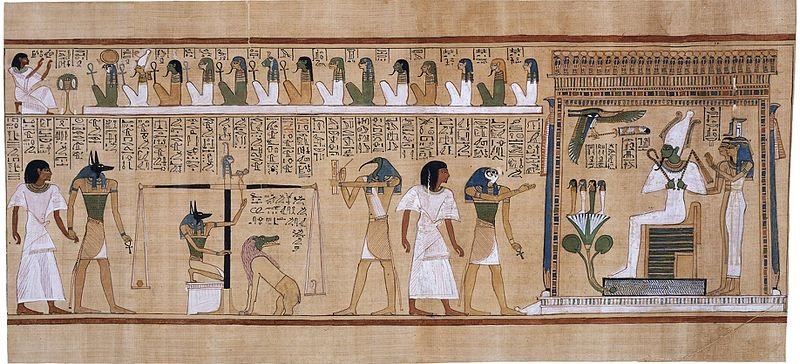
Imagine a time of great upheaval in the Duat, the Egyptian underworld. Osiris, enthroned and overseeing the weighing of hearts against the feather of Ma’at (truth and justice), faces a dilemma. Perhaps a powerful, ancient force, a creature of chaos or a wronged entity, has disrupted the delicate balance of the afterlife, casting doubt on the fairness of judgment or threatening to unleash its turmoil upon the living. In this imagined scenario, the gods, seeking a guarantor of unwavering truth and an executor of decisive action, turn to Sobek.
Osiris, his gaze ancient and profound, might have summoned Sobek, not for his divine pronouncements, but for his embodiment of primal, unyielding strength. The oath, then, would not be a mere promise, but a sacred vow, a binding contract. Sobek, the fierce guardian of the waters, the embodiment of the earth’s raw power, would have been called upon to swear by the very depths of the Nile, by the primordial chaos from which he emerged, and by the unwavering justice of Osiris himself.
The oath would have been a testament to Sobek’s unshakeable resolve. He would have pledged to uphold the judgment of Osiris, to pursue any transgressor with relentless ferocity, and to ensure that the scales of justice, once tipped, remained true. His immense power, usually associated with the physical realm, would have been invoked as a force to maintain cosmic order. It was a pact that underscored the ancient Egyptian understanding that even the most terrifying aspects of nature could be harnessed in service of divine law and cosmic equilibrium. This imagined oath would have served as a powerful symbol of the absolute commitment required to maintain the integrity of the afterlife and the fundamental principles of Ma’at.
The Weight of the Scales, The Strength of the Serpent: Symbolism and Meaning
The hypothetical "Oath of Osiris" involving Sobek would have carried immense symbolic weight for the ancient Egyptians. Firstly, it highlights the interconnectedness of the natural world and the divine realm. The primal power of the Nile, represented by Sobek, was not separate from the cosmic order governed by Osiris. This demonstrates how Egyptians saw the divine permeating all aspects of existence.
Secondly, it speaks to the concept of justice and retribution. Osiris, the judge, required a powerful enforcer. Sobek’s ferocity, usually a symbol of danger, here transforms into a tool for upholding righteousness. This suggests that even the most fearsome forces could be channeled for good, and that true justice often demands an unwavering, even ruthless, commitment.
Thirdly, it reinforces the idea of oaths and their sacredness. In a society where divine will was paramount, breaking an oath was a grave offense. Sobek’s vow would have been a potent reminder of the gravity of such commitments, particularly when tied to the fundamental principles of Ma’at. The story, therefore, would have served to reinforce societal values of truth, justice, and the responsibility that comes with power.
Echoes in Modern Storytelling: Modern Perspective
While the "Oath of Osiris" might not be a central, widely recognized myth, the characters and themes it touches upon resonate strongly in contemporary interpretations of ancient Egyptian lore. Sobek, with his fearsome crocodile form and association with primal power, frequently appears in video games, fantasy novels, and films. He is often depicted as a formidable guardian, a creature of immense strength, or a force to be reckoned with. Similarly, Osiris, as the king of the underworld and the arbiter of judgment, remains a powerful archetypal figure. His stories, particularly those involving his death and resurrection, continue to inspire narratives about sacrifice, rebirth, and the eternal struggle between order and chaos. These modern interpretations, while often sensationalized, draw from the rich symbolic language of the original myths, allowing these ancient tales to find new life and meaning for contemporary audiences.
A Legacy of Tales: Conclusion
The narrative of Sobek and a potential "Oath of Osiris" serves as a fascinating window into the imaginative world of ancient Egypt. These stories, passed down through generations, were not merely fanciful tales but integral to their understanding of the cosmos, their values, and their place within the grand tapestry of existence.
As Muslims, we recognize that only Allah is the true Creator and Sustainer of all that exists, and that all power and authority ultimately reside with Him. The stories of ancient deities and their mythical deeds are a testament to the human capacity for storytelling, for grappling with the profound mysteries of life and death, and for creating meaning in a complex world. The enduring legacy of these ancient narratives lies not in their literal truth, but in their power to illuminate the cultural heritage of humanity, to spark our imagination, and to remind us of the rich tradition of storytelling that connects us across time and space.