fufufafa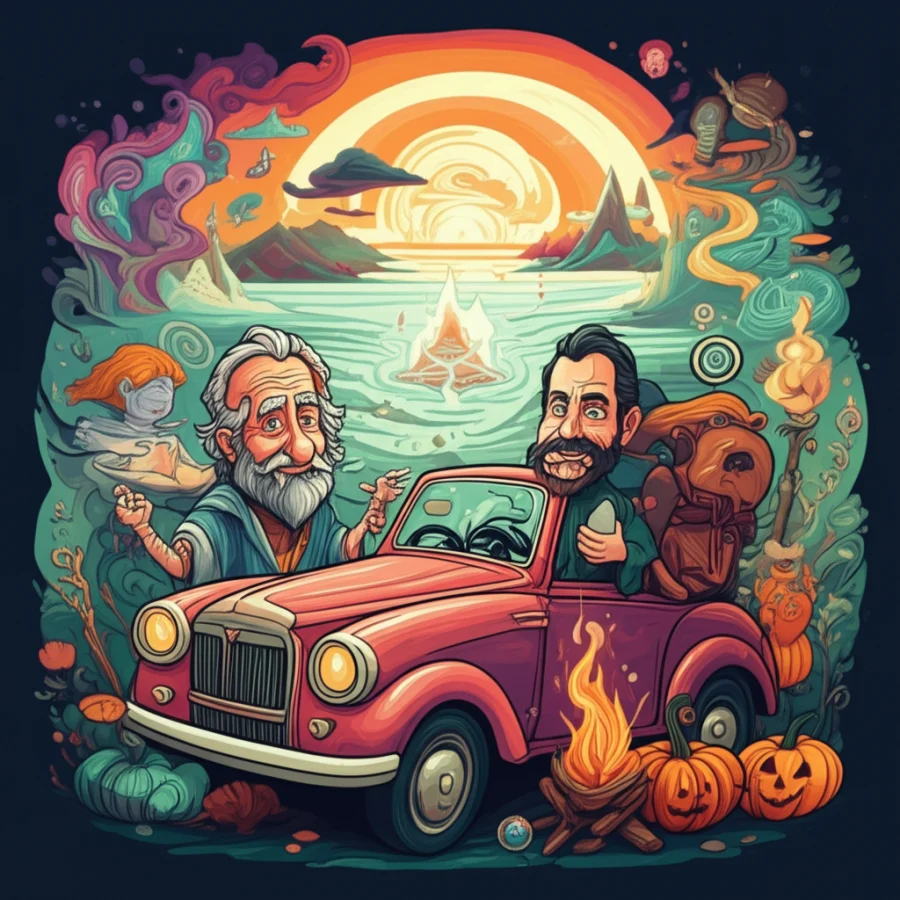
From the mist-shrouded Isles of Britain, where ancient forests whispered secrets to the wind and the veil between worlds felt thin, comes the enduring legend of Samhain. This is not a chronicle of historical fact, but a tapestry woven from the beliefs and imaginations of ancient Celtic peoples, a traditional story told to explain the turning of the seasons, the dance of life and death, and the mysteries that lay beyond the seen. It is a narrative passed down through generations, a testament to the human desire to understand the cosmos and our place within it.
The era in which these stories took root was one deeply intertwined with the cycles of nature. The Celts, a collection of tribes spread across parts of Europe including Ireland, Britain, and Gaul, lived in a world where the rhythm of the sun and moon dictated their lives. Their environment was one of dramatic landscapes: wild, untamed forests, rolling green hills, and rugged coastlines. They were agrarian societies, their survival dependent on the bounty of the land and the predictability of the seasons. Their worldview was animistic, meaning they perceived spirits and life force in natural phenomena – in the rustling leaves, the flowing rivers, the very earth beneath their feet. The unseen world, populated by deities, spirits, and mythical beings, was as real to them as the tangible one. They understood life as a continuous cycle, a perpetual ebb and flow, with death not as an end, but as a transition.
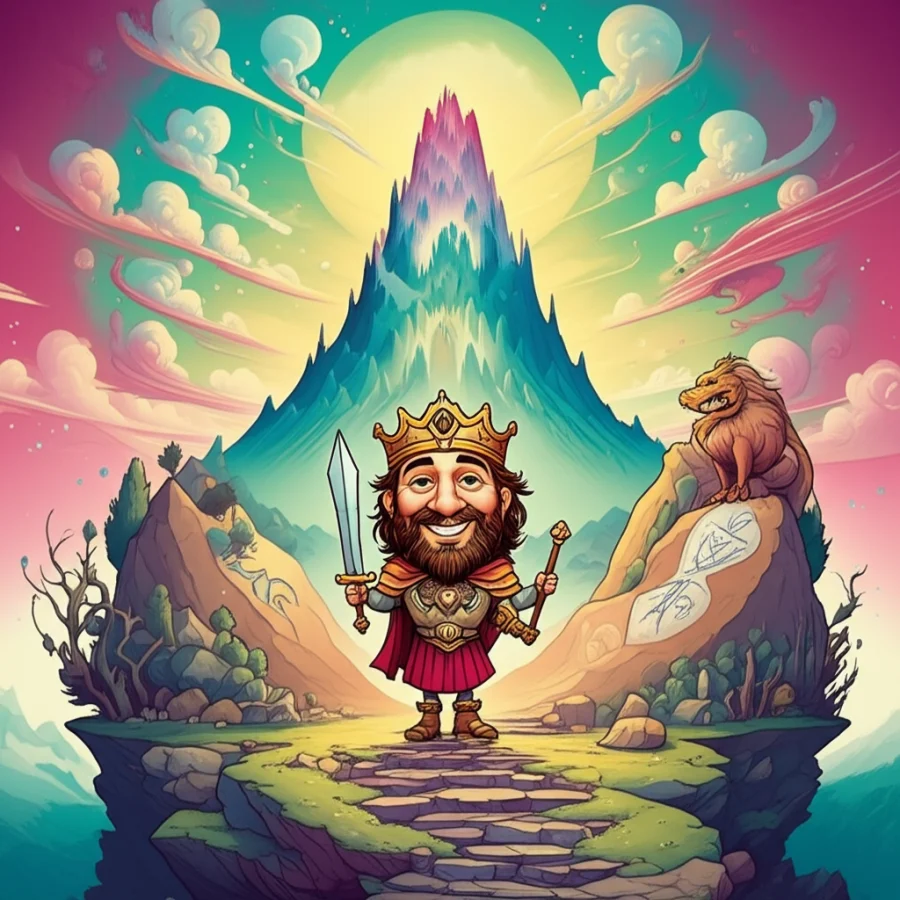
Within this rich tapestry of belief, Samhain emerged as a pivotal point in the calendar, marking the end of the harvest season and the beginning of the darker, colder half of the year. It was a liminal time, a threshold where the ordinary world seemed to bleed into the extraordinary. And it is in this potent atmosphere that the legend of Avalon, a mystical island shrouded in myth, finds its deepest resonance, often linked to the potent energies of Samhain.
The figures and beings that populate these ancient narratives are not to be understood as literal entities, but as symbolic representations of natural forces, human aspirations, and primal fears. Among these are the Tuatha Dé Danann, often depicted as a race of supernatural beings who were once the gods of Ireland. They were skilled in magic, craftsmanship, and warfare, embodying both the benevolent and fearsome aspects of the divine. They were often associated with the Otherworld, a realm of eternal youth, beauty, and abundance, yet also a place of potent, untamed power.
Avalon itself, in its most ancient and mythic interpretations, can be seen as a manifestation of this Otherworld, a sanctuary where the veil between realms is particularly permeable. It is often described as an island of perpetual spring, a place of healing and enchantment, accessible only to those who are deemed worthy or who stumble upon its hidden shores. Its ruler, or most famous inhabitant, is often the sorceress Morgan le Fay, a complex figure who embodies both healing arts and potent, sometimes dangerous, magic. She is not a benevolent healer in the modern sense, but a powerful enchantress, her motives and actions often ambiguous, mirroring the dual nature of the magical forces she commands. Her association with Avalon, particularly during Samhain, suggests a connection to the profound mysteries of transformation and the hidden knowledge that can be gained when the ordinary world is suspended.
The narrative of Samhain and its connection to Avalon unfolds as a story of transition and the potent energies that mark the turning of the year. As the days grew shorter and the nights longer, the ancient Celts believed that the boundary between the world of the living and the world of the dead, the realm of spirits and the Otherworld, grew thin. Samhain, celebrated around November 1st, was seen as the night when this veil was at its most translucent. It was a time when spirits of ancestors could return to visit their kin, and when otherworldly beings might cross over into the human realm.
In this context, Avalon, the mythical island, becomes a place that shares this liminal quality. Some traditions suggest that Avalon is a gate to the Otherworld, or even a part of it, a place where the boundaries between life and death, and between the mortal and the immortal, are blurred. It is said that the spirits of the departed, and beings of immense magical power, might journey to or from Avalon during this potent time. The stories might tell of heroes or individuals seeking wisdom or healing within Avalon’s enchanted borders, often guided by figures like Morgan le Fay, who represents the ancient, potent magic associated with the wild and the unknown. The journey to Avalon might be arduous, requiring a test of spirit or a willingness to embrace the mysteries of the unseen. It is a realm where time itself may behave differently, and where profound truths about existence can be revealed. The arrival of Samhain signifies a time when such journeys, both literal and metaphorical, become more possible, as the world aligns with the deeper currents of existence.
The symbolism embedded within these tales is rich and multifaceted. Samhain, as the end of the harvest and the beginning of winter, represented the natural cycle of death and rebirth. The thinning of the veil between worlds spoke to the ancient understanding of interconnectedness, where the past, present, and future were not strictly separate. The presence of spirits and otherworldly beings could symbolize the wisdom of ancestors, the primal forces of nature, or even the fears and anxieties of the human condition.
Avalon, in its various interpretations, often symbolizes a sanctuary, a place of ultimate healing and spiritual renewal, or a realm of profound magical knowledge. Morgan le Fay, as a guardian or inhabitant of this realm, embodies the potent, untamed magic that exists beyond the everyday, a power that can be both creative and destructive, much like the forces of nature itself. Her ambiguous nature reflects the ancient understanding that magic was not inherently good or evil, but a force to be respected and understood. The island’s perpetual spring could symbolize an eternal cycle of renewal, a place untouched by decay or mortality.
In the modern era, the echoes of Samhain and the legend of Avalon continue to resonate, albeit in transformed ways. These myths are not widely believed as literal truths, but they have found vibrant expression in literature, film, and popular culture. Avalon serves as a recurring motif in Arthurian legends, often portrayed as a mystical isle where King Arthur is taken to heal, or where magical artifacts are kept. Morgan le Fay remains a popular figure, a powerful sorceress whose complexity and allure continue to captivate audiences. Samhain, while not a mainstream holiday in many cultures, has seen a resurgence of interest, particularly through the modern celebration of Halloween, which draws upon some of its themes of the supernatural and the playful exploration of fear. Cultural studies scholars and folklorists continue to analyze these stories, seeking to understand the ancient worldview they represent and their enduring impact on human imagination.
In conclusion, the stories of Samhain and the origins of Avalon are not accounts of factual occurrences, but profound expressions of ancient human thought and imagination. They originate from the cultural heritage of the Celtic peoples, offering insights into their perception of the world, their relationship with nature, and their understanding of life, death, and the unseen realms. As Muslims, we recognize that only Allah is the true Creator and Sustainer of all existence, and that these narratives are products of human storytelling traditions. Yet, in their enduring power, these myths remind us of the richness of cultural heritage, the boundless capacity of human imagination, and the timeless tradition of weaving stories to make sense of the world around us and the mysteries that lie within. They are echoes from a distant past, inviting us to reflect on the universal human quest for meaning and connection to something greater than ourselves.