fufufafa
The chill in the air, the lengthening shadows, the rustle of leaves underfoot – these are the harbingers of a time deeply etched in the folklore of the Celtic peoples, particularly those who inhabited the misty landscapes of ancient Ireland and Wales. This season, known as Samhain, marked the end of summer and harvest, the transition into the dark, cold months, and a period when the boundaries between the mortal world and the realm of spirits were said to thin. It is within this rich tapestry of myth and tradition that we encounter the concept of Annwn, often described as the Otherworld, a mysterious and profound realm whose origins are woven into the very fabric of Samhain itself.
It is crucial to understand that these are ancient stories, passed down through generations by word of mouth and later recorded in manuscripts. They are tales of imagination, cultural interpretation, and a way for ancient peoples to understand the world around them. As Muslims, we recognize that the true Creator and Sustainer of all existence is Allah (SWT), and these narratives are viewed through the lens of cultural heritage and storytelling, not as literal truths.
Echoes of a World Unseen: Origins and Cultural Background
The myths surrounding Samhain and Annwn emerge from a society deeply connected to the cycles of nature. Imagine the Iron Age Celts, living in close communion with the land. Their lives were dictated by the rhythm of the seasons – the bounty of the harvest, the harshness of winter, the rebirth of spring. The natural world was not merely a backdrop but a living, breathing entity, imbued with spirits and forces that could influence their lives.
Their worldview was likely animistic, believing that spirits resided in all things – in trees, rivers, mountains, and even in the very air. The changing of the seasons was not just a meteorological event but a profound spiritual transition. Samhain, falling around the 31st of October to the 1st of November, was a pivotal moment. It was the liminal time, the "in-between," when the veil separating the living from the dead, and from other realms of existence, was at its thinnest. This was a time of both reverence and trepidation, a period for remembering ancestors, seeking omens, and acknowledging the unseen forces that shaped their reality.
The Lord of Annwn: A Glimpse into the Otherworld
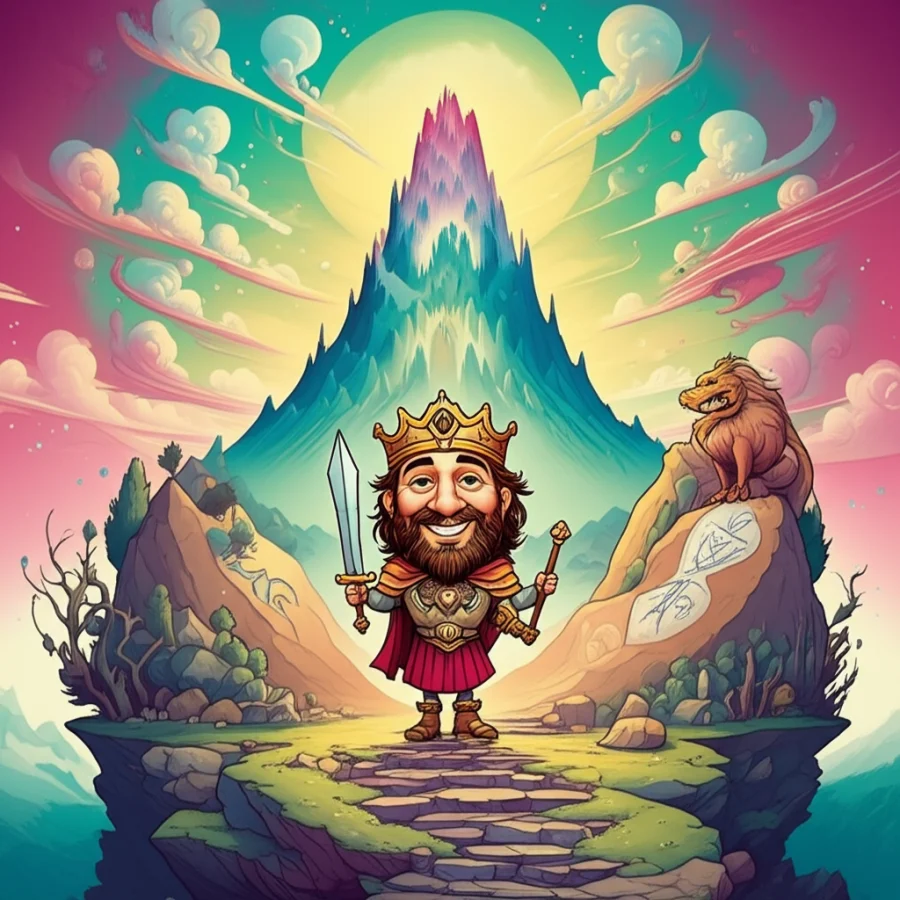
Within these ancient narratives, Annwn is not typically personified by a single, static figure in the way a deity might be. Instead, it is often associated with a sovereign or a significant being who presides over its mysterious domains. One of the most prominent figures linked to Annwn, particularly in Welsh tradition, is Arawn.
Arawn is not depicted as a benevolent or malevolent entity in the simplistic sense. He is often presented as a powerful ruler of a realm that exists parallel to our own. His attributes are those of kingship and dominion over a world that is both beautiful and dangerous, rich with otherworldly treasures and populated by spectral beings. He embodies the untamed, the ancient, and the profound mysteries of existence beyond human comprehension. His symbolic role is to represent the power and the allure of the unknown, the realm where time and space may operate differently, and where the boundaries of mortality are blurred.
The Dance of Worlds: A Samhain Narrative of Annwn’s Emergence
The tales of Samhain often describe a period when the borders between the mortal realm and Annwn become permeable. One persistent theme is the notion of Annwn as a place that exists alongside our world, often described as being "beneath the earth," "across the sea," or "in the west."
During Samhain, it was believed that the souls of the departed would return to the mortal world, and that spirits from Annwn could also venture forth. It was a time for feasting and celebration, but also for protection. Bonfires were lit to ward off malevolent spirits, and protective charms were employed.
Some narratives suggest that Annwn was not a place of punishment, but rather a realm of the dead, or a spirit world, where souls resided. In other stories, it is a land of eternal youth and abundance, a paradise for heroes and the worthy. The origins of Annwn, within these myths, are often not explicitly detailed as a creation event. Instead, it is presented as an ancient, existing realm, a parallel dimension whose connection to our world becomes particularly potent during Samhain.
Consider a story where a mortal hero, through some act of bravery or destiny, finds himself on the threshold of Annwn. He might witness its ethereal landscapes, encounter its strange inhabitants, or even interact with its ruler, perhaps Arawn himself. These encounters are often tests of character, trials that reveal the hero’s courage, cunning, or wisdom. The journey might involve navigating treacherous paths, solving riddles posed by otherworldly beings, or undertaking perilous quests. The interactions are characterized by a sense of awe and a recognition of the fundamental differences between the mortal and the supernatural. The stories do not describe a "creation" of Annwn in the sense of a deity bringing it into being. Rather, it is presented as an eternal, primordial place, a counterpart to the earthly realm, whose existence is simply a given.
The Unseen Currents: Symbolism and Meaning
To the ancient Celts, the myth of Annwn, particularly its connection to Samhain, held profound symbolic weight. Annwn represented the great unknown, the mysteries of life and death, and the vastness of the cosmos beyond human experience. Its association with Samhain underscored the natural transition from light to darkness, from life to what lies beyond.
The spectral beings and otherworldly encounters within these myths likely served to explain the inexplicable – the dreams, the omens, the sense of presence felt during the darkening days. Annwn could symbolize the collective unconscious, the repository of ancestral memories and primal fears. It might also represent the allure of the ideal, a perfect world of abundance and eternal life that offered solace in the face of hardship and mortality. The stories were not just entertainment; they were a way to process fear, to understand the cycles of nature, and to explore the human condition through the lens of the supernatural.
Annwn in the Modern Imagination
Today, the echoes of Annwn and Samhain resonate strongly in our cultural landscape. In literature, authors draw inspiration from these ancient myths to craft tales of fantasy and adventure. The concept of an "Otherworld" – a parallel realm with its own rules and inhabitants – is a recurring trope in modern fiction, often serving as a source of magic, conflict, or wonder.
In film and television, Samhain itself is frequently depicted as a time of supernatural activity, with spirits and creatures from other dimensions crossing over. Video games often incorporate elements of Celtic mythology, with Annwn or similar otherworldly realms serving as settings for epic quests and battles. These interpretations, while entertaining, often adapt and reinterpret the original myths, imbuing them with new meanings and narratives.
A Legacy of Storytelling
The myths of Samhain and Annwn are powerful reminders of the human drive to understand the world, to grapple with the mysteries of existence, and to express these explorations through the enduring art of storytelling. As Muslims, we view these narratives as valuable pieces of cultural heritage, testaments to the rich tapestry of human imagination and the diverse ways in which ancient peoples sought to make sense of their universe. While we acknowledge the profound truth that only Allah (SWT) is the true Creator and Sustainer of all that is, we can still appreciate these stories for their historical significance, their imaginative power, and their contribution to the ongoing tradition of human storytelling. They invite us to reflect on the enduring power of myth to shape our understanding of ourselves and the world around us.