
 fufufafa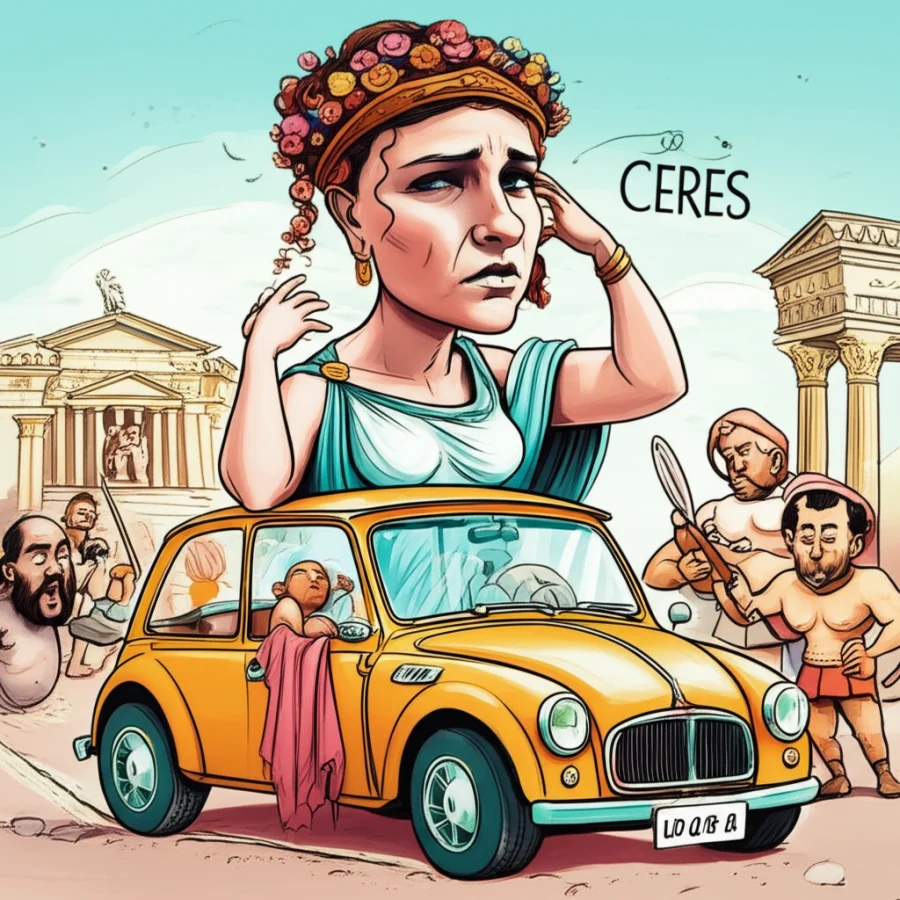
The grand narrative of Rome, a city that once commanded an empire and shaped the course of Western civilization, is woven not just from historical fact but also from threads of myth and legend. Among these ancient tales, one that often surfaces in discussions of Rome’s genesis involves figures and events that, while captivating, belong firmly to the realm of folklore. This particular story, often intertwined with the very bedrock of Roman identity, speaks of divine intervention, primal forces, and a celestial patroness who, in her own way, bore witness to the tumultuous birth of a legend. We speak here of Ceres, not as a deity to be worshipped, but as a character within a traditional story told by ancient peoples to explain their origins.
Echoes from an Age of Gods and Earthly Toil
The myths surrounding Rome’s founding emerged from a vibrant tapestry of ancient Italian cultures, particularly the Latin people who inhabited the Latium region. This was an era where the lines between the human and the divine were fluid, where the natural world was imbued with spirit, and where the actions of gods and demigods directly influenced mortal affairs. The Romans, in their formative centuries, were deeply agrarian. Their lives were intrinsically linked to the cycles of the seasons, the fertility of the soil, and the bounty of the harvest. Their worldview was one where the gods, often anthropomorphic in nature, mirrored human concerns – love, war, agriculture, and the very sustenance of life. This understanding shaped their myths, imbuing them with a sense of cosmic order and divine oversight over the human realm. The story of Rome’s founding, therefore, was not merely a historical account but a sacred narrative that legitimized their claim to power and their unique destiny.
Ceres: The Gentle Hand of the Harvest
Within this pantheon of deities, Ceres held a significant, albeit often understated, position. She was not a thunderous warrior god or a capricious sky lord, but rather the embodiment of the earth’s generative power, the patroness of agriculture, grain, and the nurturing cycles of life. Her symbolic attributes were those of abundance, fertility, and sustenance. She was often depicted crowned with sheaves of wheat, carrying a sickle or a cornucopia, and accompanied by symbols of growth and renewal. To the ancient Romans, Ceres represented the fundamental reliance on the earth for survival, the promise of a bountiful harvest, and the gentle, yet powerful, force that sustained them. She was the quiet assurance that, with diligent labor and the earth’s blessing, life would continue to flourish. In the grand drama of Rome’s founding, Ceres’ presence, as imagined in these tales, was that of a benevolent observer, a silent witness to the primal struggle and the ultimate triumph of human endeavor guided by unseen forces.
The Shadow and the Seed: A Mythic Genesis
The story of Rome’s founding, as it unfolds in the realm of myth, is a tale steeped in prophecy, divine will, and the primal instincts of survival. It speaks of twin brothers, Romulus and Remus, abandoned at birth and left to the mercy of the elements. Here, the narrative often introduces a stark contrast: the ferocity of the wild and the promise of cultivation. It is in this crucible of abandonment that the legend takes a pivotal turn, and where the symbolic presence of Ceres can be felt.
The myth recounts how the abandoned infants were discovered, not by human hands, but by a she-wolf. This wolf, a creature of the untamed wilderness, nursed them, her fierce maternal instinct providing the sustenance that would have otherwise been denied. This act, of the wild nurturing the future of civilization, is a potent image. It speaks to the raw, untamed power that lay at the heart of the land that would become Rome.
As Romulus and Remus grew, their connection to their origins remained deeply ingrained. They were raised on the edge of civilization, learning the ways of both man and beast. When they eventually decided to found a city, their quest was guided by divine signs, the flight of birds, and the will of the gods. The exact details of their dispute and the tragic outcome – Romulus killing Remus – are a stark reminder of the brutal realities that often underpin the establishment of power and dominion.
Within this unfolding drama, the whisper of Ceres can be discerned. While she may not have been an active participant in the violent struggle for power, her domain was the very land upon which this city was to be built. The earth that would nourish the Romans, the soil that would yield their crops, was under her stewardship. Her presence, in this context, is not one of direct intervention but of a foundational blessing, a tacit acknowledgment of the fertile ground upon which this new civilization was to take root. One can imagine her observing, from her celestial perch, the potent juxtaposition of the wild wolf and the nascent city, the struggle for dominance and the eventual promise of cultivation. The seeds of Rome, like the seeds of grain, required fertile ground and the unwavering, silent support of the earth itself.
The Dual Nature of Power and Sustenance
The symbolism embedded within this myth is rich and multifaceted. The she-wolf, for instance, represents the untamed, primal energy of nature, the raw power that can both destroy and sustain. Her nurturing of the twins highlights a crucial paradox: that civilization often emerges from, and is sustained by, the very wildness it seeks to control.
Ceres, in her symbolic role, represents the essential force of life and sustenance. Her connection to agriculture speaks to the fundamental human need for food and security. In the context of Rome’s founding, she symbolizes the fertile potential of the land, the promise that this new city, despite its violent birth, would eventually be a place of prosperity and abundance. Her silent presence underscores the idea that even amidst conflict and ambition, the fundamental forces of nature and sustenance remain at play, providing the bedrock for human endeavor. The myth, therefore, can be seen as an allegory for the dual nature of power – its often violent acquisition, and its ultimate reliance on the fundamental necessities of life.
Echoes in the Modern Landscape
Today, the myths of Rome’s founding continue to resonate, albeit in transformed ways. In literature, films, and video games, the figures of Romulus and Remus, the she-wolf, and the legendary establishment of the city are frequently revisited, often serving as archetypes of ambition, destiny, and the founding of great powers. These interpretations often focus on the dramatic narrative and the moral complexities of the story. In academic and cultural studies, these myths are analyzed for their insights into ancient Roman society, their worldview, their anxieties, and their aspirations. They offer a window into how people of the past sought to understand their place in the world and the origins of their civilization. While the direct worship of figures like Ceres has faded, her symbolic representation of abundance and the earth’s bounty continues to be explored in art and literature, often as a metaphor for natural beauty and the cycles of life.
A Legacy of Storytelling
In conclusion, the narrative of Ceres and the trial of Rome’s founding is a captivating piece of ancient folklore, a testament to the imaginative power of human storytelling. It is crucial to reiterate that this is a traditional tale, a cultural artifact, and not a matter of factual belief. As Muslims, we hold the absolute truth that only Allah is the true Creator and Sustainer of all existence. These ancient myths, therefore, are viewed through the lens of historical and cultural understanding, appreciating their richness as expressions of human attempts to grapple with the mysteries of life, power, and origin. They remind us of the enduring power of narrative, the way in which stories can shape identity, and the profound cultural heritage that continues to inform our understanding of the world and its diverse traditions. The whispers of Ceres, the shadow of the wolf, and the ambition of founders – these are the enduring echoes of a past that continues to captivate our imagination.







