fufufafa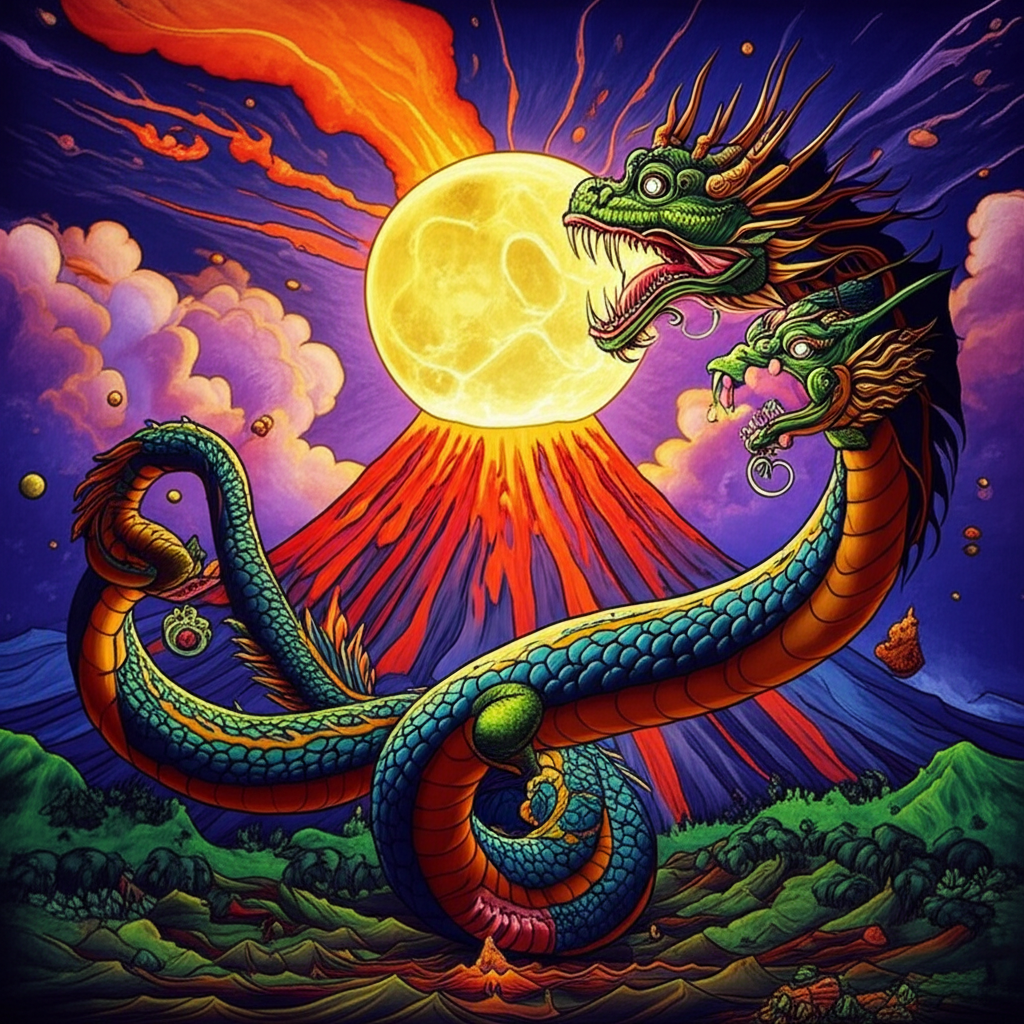
In the verdant archipelago of the Philippines, cradled by the vast Pacific Ocean, ancient stories have long woven themselves into the very fabric of the land and its people. Among these captivating narratives is the legend of the Bakunawa, a colossal serpent of the deep, and its connection to the majestic, often volatile, Mayon Volcano. This is not a tale of divine decree or historical fact, but rather a rich tapestry of folklore, spun by ancient imaginations to understand the awe-inspiring, and sometimes terrifying, forces of nature. These stories, passed down through generations, offer a window into the worldview of early Filipino communities, their relationship with their environment, and their profound capacity for storytelling.
The myth of Bakunawa and the Moon, with its echoes in the fiery breath of Mayon Volcano, likely emerged from a time when the world was a place of profound mystery and immediate power. Imagine communities living in close proximity to the raw might of nature – the relentless rhythm of the tides, the ferocity of typhoons, and the earth’s own rumblings. In such an environment, the sun and moon were not mere celestial bodies, but potent entities that governed the cycles of life. Volcanoes, like Mayon with its near-perfect cone, were seen as living beings, their eruptions a powerful expression of their mood or will. The ancient Filipinos, like many early civilizations, sought to explain these phenomena through anthropomorphism and animism, attributing consciousness and intent to the natural world. Their understanding was deeply rooted in observation, and their stories served as a framework for comprehending the unfathomable, fostering a sense of connection and respect for the forces that shaped their existence.
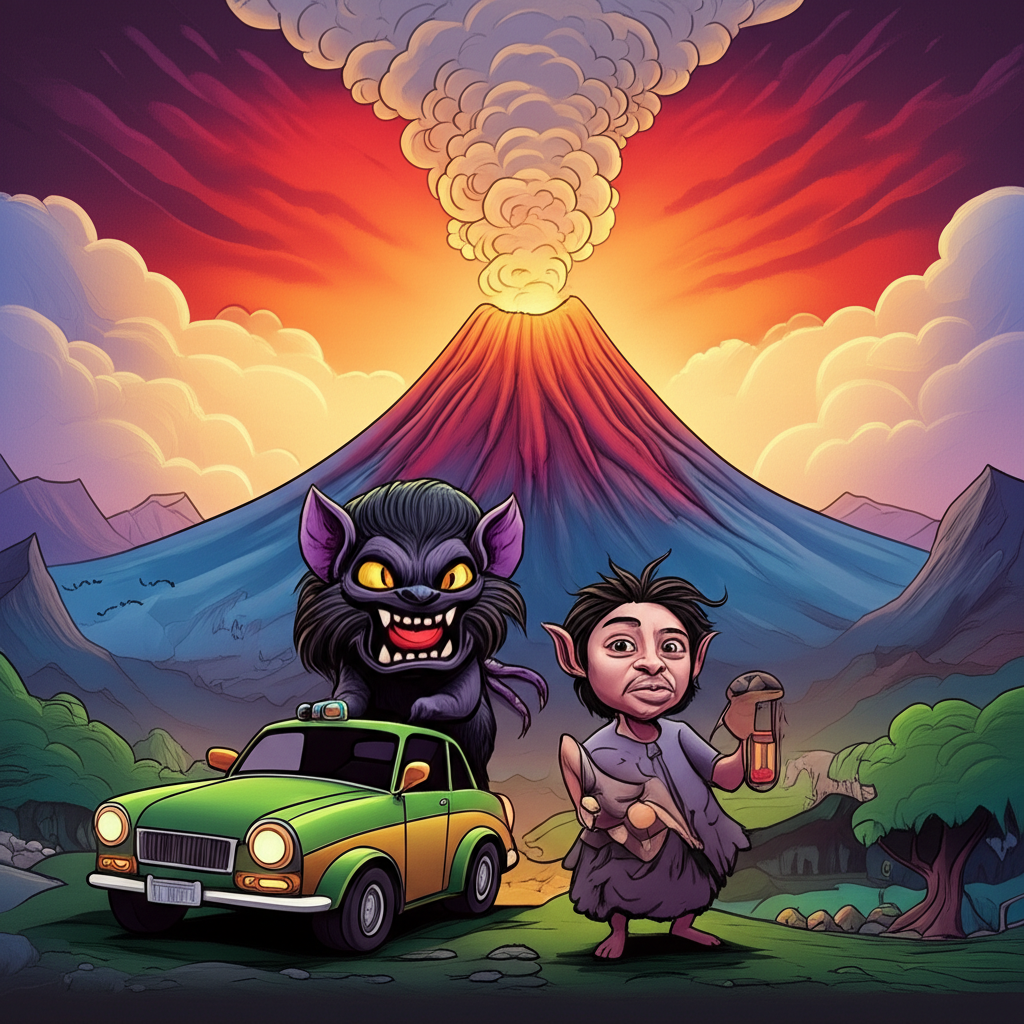
At the heart of this particular legend lies the Bakunawa, a creature of immense scale and mythical power. Often depicted as a gargantuan serpent or dragon, its form is fluid and awe-inspiring, with scales that shimmer like the deepest ocean depths and eyes that gleam with an ancient, primal light. Its domain is the abyss, the vast, unexplored waters that surrounded their islands. Symbolically, the Bakunawa represented the untamed, the mysterious, and the immense power that lay beyond human comprehension. It embodied the forces of the ocean, its unpredictable nature, and the potential for both sustenance and destruction. Its presence in the sky, often associated with eclipses, further amplified its otherworldliness, suggesting a connection to cosmic events and a disruption of the natural order.
The narrative unfolds with a captivating, albeit speculative, premise: the Bakunawa, driven by an insatiable hunger or perhaps a yearning for the celestial, would ascend from its watery depths to devour the moon. The sight of a lunar eclipse, a rare and often unsettling event, would have been interpreted as the very moment the colossal serpent engaged in this cosmic act. The moon, in its radiant luminescence, represented order, beauty, and a guiding light in the darkness. Its disappearance, even temporarily, would have invoked fear and uncertainty. The story would then connect this celestial drama to the fiery mountain, Mayon Volcano. When the Bakunawa was particularly active, or when its hunger was immense, its movements and its immense energy would stir the very foundations of the earth, causing Mayon to erupt. The molten rock and ash spewed forth from the volcano were seen as the physical manifestation of the Bakunawa’s earthly agitation, a fiery response to its celestial endeavors. Some versions of the tale might even suggest that the Bakunawa’s journey to consume the moon was a perilous one, and that its descent back to the ocean after being thwarted by its bright light caused tremors that ignited Mayon’s fury. The moon, in this context, was not merely an object to be devoured, but a symbol of resilience, its light eventually overpowering the darkness of the serpent’s appetite.
The symbolism embedded within this myth is multifaceted. The Bakunawa, as the serpent of the deep, could represent the primal fears of the unknown, the vastness of the ocean that separated communities, and the destructive potential of nature. Its attempt to consume the moon speaks to the inherent struggle between light and darkness, order and chaos. Mayon Volcano, on the other hand, embodied the raw, creative, and destructive power of the earth itself. Its eruptions, so visually dramatic and potentially devastating, were a clear demonstration of this power. The myth, therefore, offered a framework for understanding these seemingly uncontrollable forces, attributing them to the actions of powerful, albeit mythical, beings. It also spoke to the cyclical nature of existence, with the moon reappearing, the earth eventually calming, and life, in its resilient form, continuing. It could also have served as a cautionary tale, a reminder of the respect and reverence due to the natural world.
In contemporary times, the legend of Bakunawa and the Moon, along with the fiery prophecy of Mayon Volcano, continues to captivate imaginations. While no longer believed as literal truth, it thrives in various forms of cultural expression. It finds its way into Filipino literature, enriching stories with its mythical grandeur. In popular culture, it has inspired characters in fantasy novels, animated films, and even video games, showcasing the enduring appeal of these ancient tales. Cultural studies scholars delve into these myths to understand the historical worldview of Filipino ancestors, their understanding of cosmology, and their relationship with their environment. The story serves as a vital thread in the rich tapestry of Filipino folklore, a testament to the power of oral tradition and the enduring human need to explain the world around us through narrative.
It is crucial to reiterate that the story of Bakunawa and the Moon is a traditional narrative, a product of ancient storytelling and imagination. It is not a belief system to be adopted or a set of divine pronouncements to be followed. As Muslims, we hold the firm conviction that only Allah (God) is the true Creator, Sustainer, and Sovereign of the universe. His power is absolute and His creation is perfect. The stories of our ancestors, while rich in cultural and historical significance, are understood within the context of human creativity and the desire to make sense of the world.
The legend of Bakunawa and the Moon, with its evocative imagery of a cosmic serpent and a fiery mountain, serves as a powerful reminder of our shared human heritage. It highlights the enduring power of storytelling to connect us to our past, to help us understand the forces that shape our world, and to spark our imagination. These ancient tales, born from a deep reverence for nature and a profound sense of wonder, continue to resonate, offering not dogma, but a glimpse into the rich cultural landscape and the remarkable capacity of the human spirit to weave dreams from the threads of reality.