fufufafa
Origins and Cultural Background
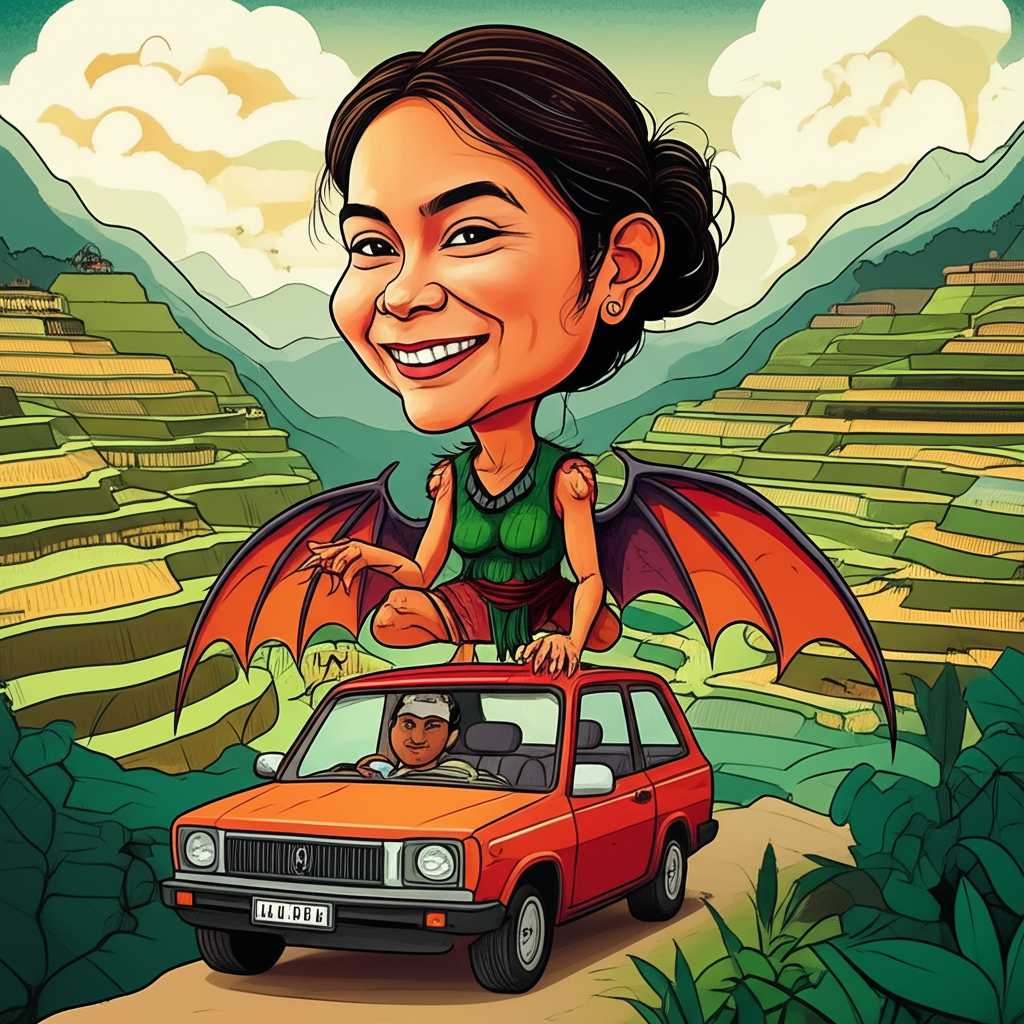
The cultural era in which this myth took root was one intimately connected to the land and the cosmos. The ancient Ifugao were master builders, renowned for engineering the breathtaking rice terraces that cascade down their mountain slopes, often referred to as the "Eighth Wonder of the World." Their society was deeply agricultural, their lives intrinsically linked to the cycles of planting and harvest, the rhythm of the seasons, and the abundance of nature. For these people, the world was not merely a physical space but a vibrant, living entity teeming with unseen forces and spirits – anitos – residing in trees, rocks, rivers, and the very air they breathed.
Their worldview was holistic and animistic, where every element of existence held significance. The sun and moon were not just celestial bodies but powerful entities influencing life, fertility, and the passage of time. Eclipses, comets, and other extraordinary celestial events were interpreted as omens or as direct interventions from these powerful beings. Life was a delicate balance, and maintaining harmony with nature and the spirit world was paramount. Disruption of this balance could bring famine, disease, or disaster. In this context, stories like the Bakunawa myth served not only as entertainment but also as a means to explain the inexplicable, to teach moral lessons, and to reinforce their understanding of the universe and their place within it.
Character / Creature Description: Bakunawa
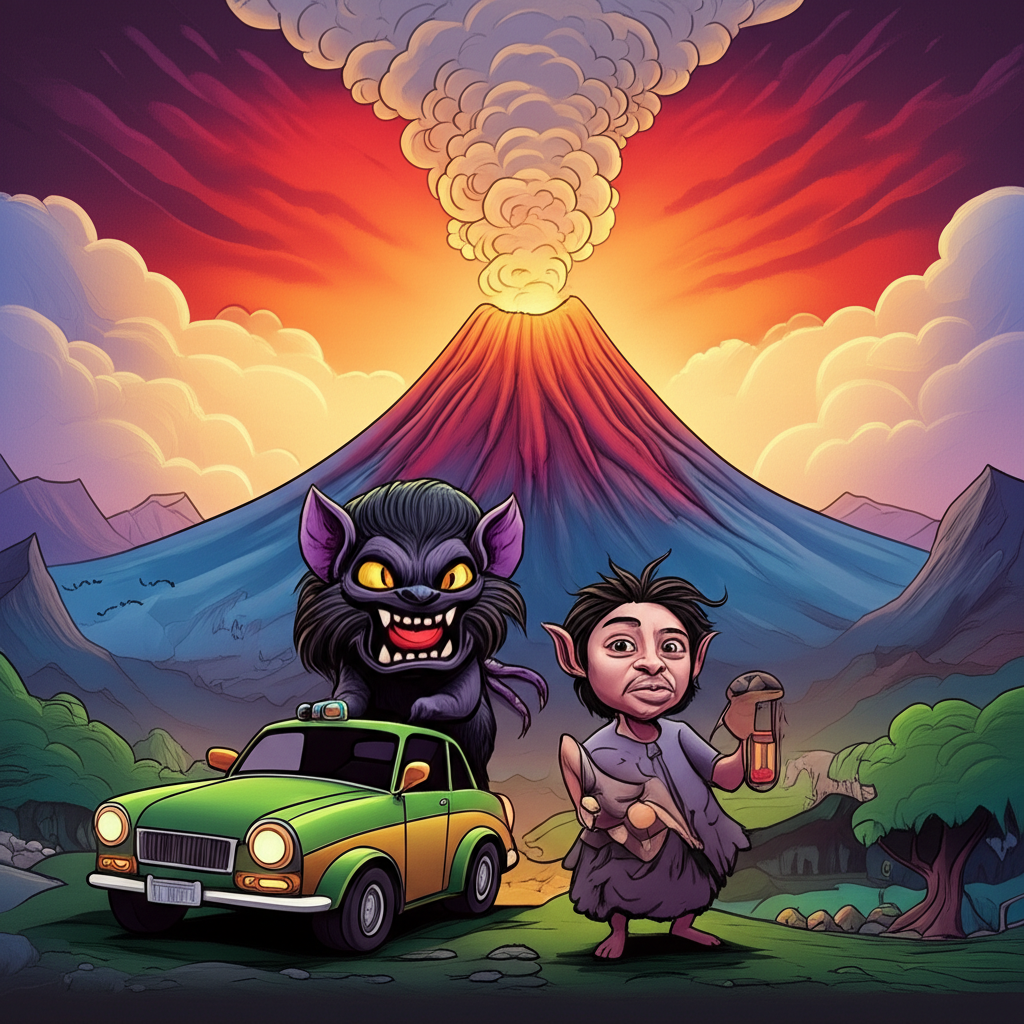
At the heart of this cosmic tale stands Bakunawa, a colossal serpentine creature often depicted as a sea serpent or a dragon-like entity of immense proportions. In Ifugao lore, while sometimes associated with the sea, its primary role in the moon myth places it as a cosmic predator. Imagine a creature of unimaginable scale, its body a labyrinth of dark, shimmering scales that catch the faintest light, its eyes glowing with an ancient hunger, and a maw capable of swallowing celestial bodies whole. Its presence is often heralded by the dimming of the sky, the sudden chill in the air, and the inexplicable fear that grips all living things.
Symbolically, Bakunawa represents the primal forces of chaos and destruction, the cosmic hunger that seeks to devour light and order. It is the personification of the terrifying mystery of eclipses, a time when the sun or moon, vital sources of life and guidance, would momentarily vanish, plunging the world into an eerie twilight. While ancient Ifugao people understood its power, they viewed it not as an object of worship but as a force to be acknowledged and understood through their narratives, a reminder of the universe’s unpredictable and often overwhelming might. It embodied their awe and fear of nature’s more destructive aspects, a mythical explanation for phenomena that transcended their everyday understanding.
Main Story / Narrative Retelling: The Prophecy of Ifugao Terraces
Long ago, when the Ifugao people first began to carve their homes into the steep mountain sides, their world was bathed in the gentle glow of seven moons. Each night, these celestial orbs graced the sky, casting a perpetual, soft twilight that made the nights almost as bright as the days, aiding the farmers in their arduous tasks and illuminating the path for hunters. Life flourished under this multi-lunar embrace.
However, a shadow stirred in the deepest cosmic ocean, a creature of primordial hunger known as Bakunawa. Drawn by the radiant energy of the moons, it began its terrible ascent. One by one, the moons vanished, swallowed whole by the insatiable maw of the great serpent. Panic spread among the Ifugao. The nights grew darker, colder, and fear gripped their hearts as they watched their celestial guardians disappear. They beat drums, shouted, and clanged pots, hoping to scare away the monster, but to no avail. Six moons were lost, and only one remained, a fragile beacon against the encroaching darkness.
In those desperate times, a revered elder, a Mumbaki (ritual specialist) named Ambohon, was granted a vision. During a trance brought on by the chanting of ancient prayers under the sole remaining moon, he saw not only the monstrous Bakunawa but also a future shrouded in complete darkness, where the last moon would be devoured, and their world would wither without its guiding light. Yet, he also saw a glimmer of hope, a profound human endeavor that could avert this ultimate catastrophe.
Ambohon gathered the leaders of the clans, his voice trembling with the weight of the prophecy. "The Bakunawa," he declared, "will return for the last moon. But the spirits of the mountains have shown me a path. We must build, not merely for our rice, but for our very existence. We must carve the mountainsides into steps, mirroring the paths of the stars and the ascent of the spirit world. Each terrace, each wall, each channel of water must be a prayer, a testament to our perseverance, a physical manifestation of our will to live in harmony with the cosmos."
He explained that these terraces, meticulously crafted, would serve a dual purpose. They would feed their people, yes, but more importantly, they would act as a cosmic anchor. The flowing water, guided through the intricate network of channels, would reflect the last moon’s light, creating a thousand shimmering eyes across the mountains. This multitude of reflected moons, Ambohon prophesied, would confuse Bakunawa. The serpent, seeking the one true moon, would be overwhelmed by the countless reflections, its hunger momentarily sated by the illusion, or perhaps, it would be deterred by the sheer scale of human ingenuity and spiritual resolve woven into the very fabric of the earth.
Inspired by Ambohon’s vision, the Ifugao people embarked on a monumental task. Generations labored, their hands shaping the earth, their spirits bound by the prophecy. They moved colossal stones, channeled mountain springs, and molded the earth with a precision that defied the steep terrain. Each terrace became a step in their collective prayer, a physical manifestation of their commitment to balance and survival. The intricate irrigation system, carrying water from the mountain springs to each level, not only nourished their rice but also created a vast, shimmering mirror that caught the moonlight, especially during the crucial harvest seasons.
When the time came, and Bakunawa once more stirred, its shadow eclipsing the last moon, the Ifugao people stood ready. As the great serpent lunged, the mountainsides below glittered with a thousand reflected moons, a dazzling, bewildering display of light and water. The Bakunawa paused, its ancient hunger momentarily confused by the sheer number of celestial images. The spectacle, a testament to human will and their deep connection to the natural world, was enough. The serpent, unable to discern the true moon amidst the myriad reflections, or perhaps recognizing the profound effort and spiritual strength embodied in the terraces, eventually recoiled and retreated, leaving the last moon to shine, albeit sometimes partially obscured, above the resilient Ifugao.
Symbolism and Meaning
To the ancient Ifugao, the myth of Bakunawa and the moon was rich with profound symbolism. Bakunawa itself represented the terrifying unknown, the unpredictable forces of nature that could disrupt life and order – a primal fear of eclipses and the potential loss of vital celestial light. The moons symbolized life, fertility, guidance, and the precious balance of the cosmos. Their gradual consumption by Bakunawa instilled a sense of impending doom and the fragility of existence.
The Ifugao Rice Terraces, within this myth, transcended their practical function as agricultural lands. They became a symbol of human perseverance, collective effort, and profound connection to the divine. They represented humanity’s ability to respond to overwhelming cosmic threats not through battle, but through ingenuity, hard work, and a deep, spiritual understanding of their environment. The act of building the terraces was a communal prayer, a physical manifestation of their commitment to maintaining harmony with the natural and spiritual worlds. It emphasized the power of community, leadership (Ambohon), and wisdom in overcoming seemingly insurmountable challenges. The myth underscored the idea that human endeavor, when aligned with spiritual purpose and guided by ancestral wisdom, could influence even the grandest cosmic events.
Modern Perspective
Today, the myth of Bakunawa and the Moon, particularly with its integration of the Ifugao Terraces, continues to resonate, albeit through a different lens. It is celebrated as a significant piece of Filipino cultural heritage, studied in literature and folklore courses as a prime example of animistic worldview and imaginative storytelling. The narrative inspires artists, writers, and filmmakers, providing rich material for fantasy novels, animated features, and even video games that explore themes of cosmic conflict, human resilience, and environmental stewardship.
Academically, it offers insights into ancient Ifugao cosmology, their engineering marvels, and their spiritual beliefs. The story reinforces the idea that myths are not just fanciful tales but complex cultural artifacts that reveal much about the people who created them – their fears, hopes, values, and their relationship with their world. It is a powerful reminder of how human societies have historically used storytelling to make sense of their environment and to transmit cultural knowledge across generations.
Conclusion
The "Bakunawa and the Moon: Prophecy of Ifugao Terraces" is a beautiful and intricate cultural story, a testament to the profound imagination and rich spiritual life of the ancient Ifugao people. It is a narrative that explains the world through a traditional lens, offering insights into their worldview and their deep connection to nature. As Muslims, we recognize that only Allah (God) is the true Creator and Sustainer of the universe, and all power and wisdom reside solely with Him. We understand that these mythological beings and events are products of human imagination and cultural storytelling, not divine truths or realities. This myth, like countless others across the globe, stands as a valuable piece of cultural heritage, inviting us to appreciate the diversity of human thought, the enduring power of imagination, and the universal tradition of storytelling that binds generations and cultures together.