fufufafa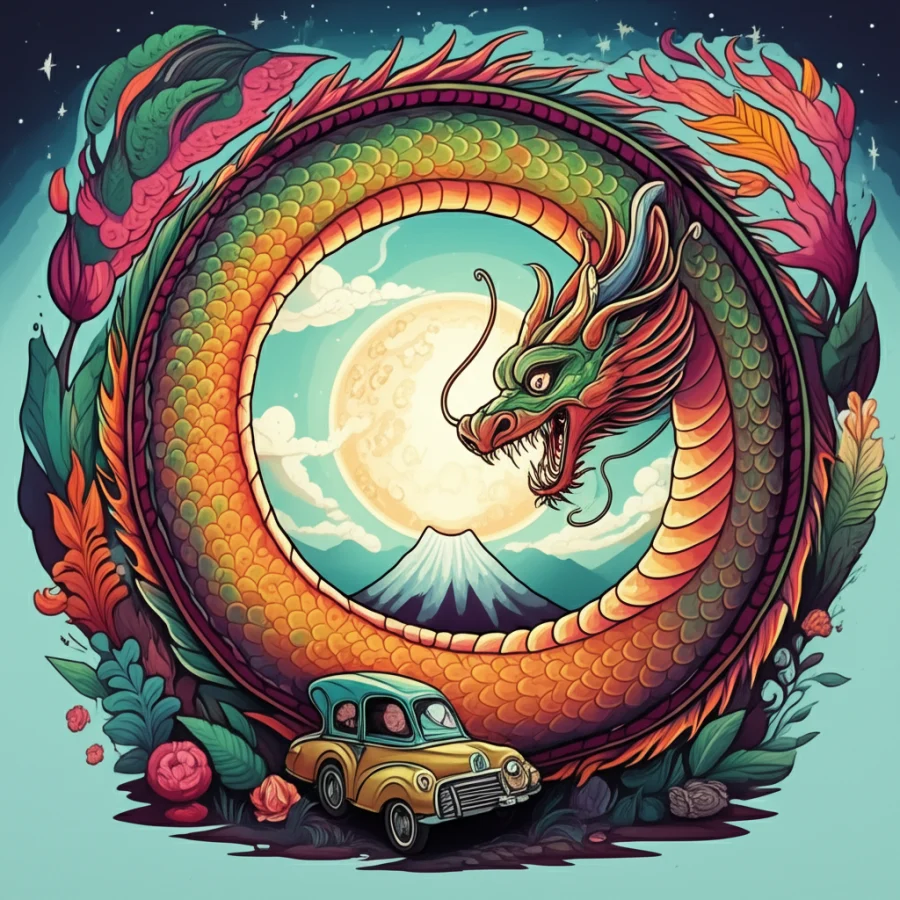
In the rich tapestry of Philippine mythology, stories of creation, cosmic events, and the origins of natural wonders abound. Among these, tales of the celestial serpents and their interactions with heavenly bodies hold a special place. One such narrative, deeply embedded in the folklore of the Tagalog people and other pre-colonial groups in the archipelago, recounts a dramatic celestial conflict involving the mythical sea serpent Bakunawa and the radiant moons, ultimately leading to the genesis of the majestic Mount Makiling. This is a traditional story, passed down through generations by ancient communities, serving not as a factual account but as a profound expression of their worldview and imagination.
Origins and Cultural Background
This particular myth originates from a time long before the arrival of European colonizers, an era when the indigenous peoples of the Philippines lived in intimate harmony with their environment. Their society was largely agrarian and maritime, deeply interconnected with the rhythms of nature. In this pre-colonial cultural landscape, the world was perceived as a vibrant realm animated by spirits, deities, and powerful beings – collectively known as anitos or diwatas. Every mountain, river, tree, and celestial body possessed a spiritual essence, influencing human lives and natural phenomena.
The ancient Filipinos observed the sun, moon, and stars with keen interest, interpreting their movements and changes as signs from the divine. Eclipses, in particular, were awe-inspiring and often terrifying events, demanding an explanation that resonated with their understanding of cosmic order and potential disruption. These narratives served not only to explain the inexplicable but also to impart moral lessons, reinforce community values, and articulate humanity’s place within a vast and often mysterious universe. Their worldview was one where the natural and spiritual realms were not separate but intrinsically woven together, where every rustle of leaves or distant rumble of thunder carried meaning.
Character and Creature Description
At the heart of this celestial drama stands Bakunawa, a colossal serpent-like creature of immense power. Often described as a dragon or a sea serpent, Bakunawa is depicted with a mouth as wide as a cavern, scales that shimmer like a thousand obsidian shards, and a body so vast it could encircle islands. In many legends, it is said to have wings, allowing it to traverse the heavens, though its primary domain is the unfathomable depths of the ocean. Bakunawa is a creature of immense hunger and insatiable desire, a primal force representing chaos, the dark unknown, and the destructive power that can disrupt the natural order. Its symbolic attributes include greed and the terrifying, uncontrollable aspects of nature, particularly those associated with eclipses where it is believed to "swallow" the sun or moon.
The Moon, on the other hand, is universally revered in these ancient tales as a beacon of light in the darkness, a symbol of serenity, beauty, and cyclical renewal. In some Philippine mythologies, the moon is personified as a beautiful goddess, often named Bulan or Mayari, embodying gentle grace and illuminating the night sky with her ethereal glow. Her light provides comfort, guidance, and a sense of enduring order, contrasting sharply with Bakunawa’s chaotic nature.
Mount Makiling, the beautiful mountain whose origin is explained by this myth, is envisioned as a place of unparalleled natural splendor. Even before its legendary genesis, mountains were seen as sacred places, homes to powerful spirits. Post-myth, Makiling becomes a symbol of enduring beauty, sanctuary, and a testament to celestial power, often associated with the benevolent diwata Maria Makiling, who protects its lush forests and abundant wildlife.
Main Story / Narrative Retelling
In the primeval ages, so the story goes, the heavens were not graced by a single moon, but by seven resplendent orbs that illuminated the night with a dazzling brilliance. These moons, each a sister to the next, cast a light so profound that the night was almost as bright as day, fostering a vibrant, continuous world beneath their glow. Their ethereal beauty was unmatched, their presence a source of wonder and calm for the nascent world below.
However, deep within the abyssal trenches of the ocean, a creature of ancient hunger stirred. This was Bakunawa, the gargantuan sea serpent, whose scales shimmered with the darkness of the deep and whose eyes burned with an unquenchable desire. From its murky lair, Bakunawa gazed upon the seven moons, and an insatiable craving took root in its colossal heart. It yearned to possess their luminous essence, to swallow their light and claim their power for itself.
One fateful night, driven by this overwhelming hunger, Bakunawa unfurled its immense wings, heaving its colossal body from the ocean’s embrace. With a roar that shook the very foundations of the earth, it ascended into the night sky, its shadow momentarily eclipsing the stars. The celestial sisters, caught unaware, watched in horror as the monstrous serpent lunged, its cavernous maw opening wide. One by one, Bakunawa devoured the moons, their radiant light extinguished as they vanished into its dark gullet. The world below plunged into an unprecedented gloom, punctuated only by the terrified cries of creatures and the distant thunder of Bakunawa’s ascent.
Panic seized the remaining moons as they witnessed their sisters’ demise. The sixth moon, in a desperate attempt to escape the impending doom, tried to flee, but Bakunawa was relentless. It chased the moon across the vast expanse of the sky, its shadow hot on its heels. The world below trembled as the chase unfolded, the remaining light flickering precariously.
Finally, only one moon remained, the most serene and gentle of them all. Overwhelmed by terror and grief, knowing it could not outrun the ravenous Bakunawa, this last moon made a desperate choice. As Bakunawa drew closer, its shadow engulfing it, the moon began to descend, plunging towards the earth in a desperate bid for refuge. It sought a place where the serpent could not follow, a sanctuary away from its monstrous hunger.
As it descended, its light intensified, and with a celestial tremor, a piece of its ethereal essence, or perhaps a fragment of its very being, broke away. This fragment, imbued with the moon’s serene beauty and profound light, plummeted towards a verdant landscape. It landed with a gentle yet powerful impact, and as it settled, it began to transform. The moon’s essence solidified, its luminous energy coalescing, forming a majestic, cone-shaped mountain, lush with emerald forests and veiled in an ethereal mist. This was the birth of Mount Makiling, a sentinel of serene beauty, forever bearing the celestial imprint of the moon.
The last moon, now slightly diminished but having found a unique form of refuge, continued its cycle in the sky, forever wary of Bakunawa, whose hunger, though temporarily sated, could never truly be extinguished. And so, whenever an eclipse occurs, the ancient people believed it was Bakunawa once more attempting to devour the solitary moon, and they would bang pots and pans, shout, and make noise to scare the beast away, ensuring the moon’s continued journey across the heavens. Mount Makiling stands as a silent, beautiful testament to that ancient struggle, a piece of the moon brought to earth, forever guarding its celestial origin.
Symbolism and Meaning
This evocative myth is rich with symbolism, reflecting the ancient Filipinos’ understanding of their world and their attempts to rationalize its mysteries. Bakunawa, as the devourer of moons, profoundly symbolizes the chaotic and destructive forces of nature—eclipses, typhoons, and earthquakes—events that disrupted the predictable order of life and instilled fear. Its insatiable hunger represents greed and the untamed aspects of the primal world, a constant threat to balance and harmony.
The seven moons, and ultimately the lone surviving moon, symbolize light, order, and the cyclical nature of time. Their beauty and vulnerability highlight the preciousness of life and the ever-present danger it faces. The descent of the last moon and the formation of Mount Makiling represent sanctuary, resilience, and the enduring power of beauty. It suggests that even in the face of overwhelming destruction, fragments of the divine or beautiful can find new forms, anchoring themselves to the earth as places of refuge and wonder. The mountain, therefore, embodies a celestial presence on terrestrial grounds, a sacred space protected by a powerful spirit, offering solace and life.
Modern Perspective
Today, the myth of Bakunawa and the Moon, and its connection to the origins of Mount Makiling, continues to resonate within Filipino culture. While no longer seen as a literal explanation for natural phenomena, these stories are cherished as vital components of cultural heritage. They are frequently reinterpreted in modern literature, inspiring fantasy novels, poetry, and children’s books that explore themes of environmentalism, courage, and the enduring spirit of the Filipino people.
In contemporary media, Bakunawa often appears as a formidable creature in video games, animated series, and films, representing a powerful antagonist or a force of nature to be reckoned with. Mount Makiling, too, holds a prominent place, not just as a geographical landmark but as a symbol of mystical beauty and a sanctuary for various diwatas and mythical creatures. Academic studies in folklore and cultural anthropology continue to analyze these myths, recognizing their profound insights into pre-colonial Filipino cosmology, values, and artistic imagination. The stories serve as a bridge to the past, reminding us of the rich narrative traditions that shaped the identity of a nation.
Conclusion
The narrative of Bakunawa and the Moon and the subsequent formation of Mount Makiling stands as a testament to the vibrant imagination and deep spiritual connection to nature held by the ancient peoples of the Philippines. It is a captivating cultural story, not a belief system to be adopted or worshipped. It offers a glimpse into a worldview where the celestial and terrestrial realms were intrinsically linked, and where stories provided meaning for the unexplainable. As Muslims, we recognize that only Allah (SWT) is the true Creator and Sustainer of the heavens and the earth, the One who fashioned the mountains and the moons with perfect wisdom and power. This mythological tale, therefore, serves as a beautiful example of human ingenuity in storytelling, a reflection of cultural heritage, and a celebration of the enduring power of imagination to interpret the wonders of the world around us.