fufufafa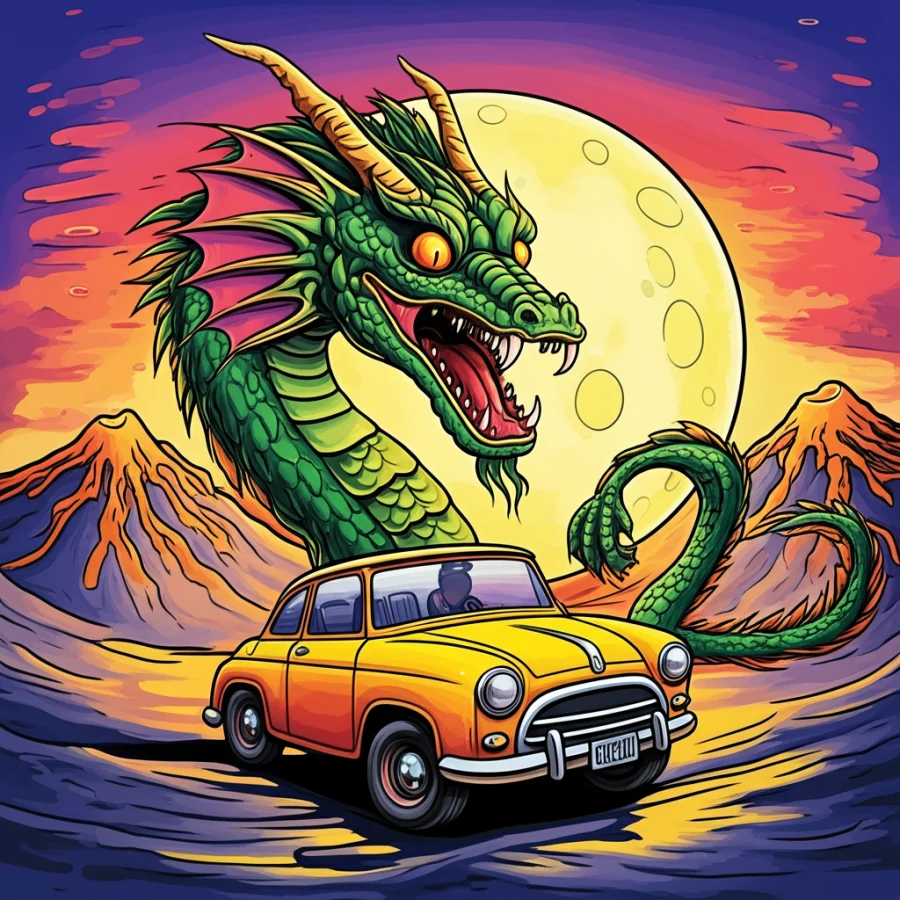
In the heart of the Philippines, nestled within the verdant landscapes of the Bicol Region, lies a magnificent and fearsome wonder of nature: Mayon Volcano. Its perfect cone, often wreathed in clouds, stands as a testament to both sublime beauty and destructive power. For centuries, before the advent of modern science, the ancient Bicolano people wove intricate narratives to explain the world around them, to make sense of the earth’s tremors and the sky’s shifting lights. Among these tales, a fascinating myth intertwines the cosmic drama of the serpent Bakunawa with the celestial bodies, offering a unique legendary connection to the origins of Mayon Volcano. This is a traditional story passed down through generations, not a factual account, but a rich tapestry of imagination woven by ancient people to understand their environment and their place within it.
Origins and Cultural Background: A World of Spirits and Signs
The myth of Bakunawa and its legendary link to Mayon Volcano emerged from a pre-colonial Bicolano society deeply attuned to the natural world. These ancient communities were primarily agrarian, their lives intricately tied to the cycles of planting and harvesting, the rhythms of the seasons, and the unpredictable forces of nature. Their worldview was animistic, meaning they believed that spirits, both benevolent and malevolent, inhabited everything—from towering trees and rushing rivers to the very air they breathed. The world was alive, imbued with a consciousness that demanded respect and understanding.
In this era, knowledge was passed down orally, through songs, chants, and captivating stories shared around communal fires. Natural phenomena were not mere scientific occurrences but messages from powerful deities or manifestations of supernatural beings. The sun and moon guided their days and nights, dictated planting seasons, and illuminated their travels. Stars were celestial maps, and eclipses were profound omens, stirring both fear and reverence. The towering mountains, with their occasional fiery breath, were seen as living entities, embodying immense power and mystery. It was within this rich cultural and spiritual landscape that the dramatic narrative of Bakunawa took root, offering an explanation for the heavens’ grand spectacle and the earth’s formidable might.
Bakunawa: The Cosmic Devourer
At the heart of this cosmic drama is Bakunawa, a truly awe-inspiring and terrifying figure of Philippine mythology. Often depicted as a gigantic sea serpent or a colossal dragon-like creature, Bakunawa is described with a mouth as vast as the ocean, teeth like jagged cliffs, and scales that shimmer with the colours of the deep sea. It is a creature of immense power, capable of ascending from the abyssal depths to challenge the very heavens.
Symbolically, Bakunawa represents the forces of cosmic chaos, the primeval hunger that threatens to devour order and light. It is the embodiment of the unknown and the unpredictable, a creature that holds sway over the celestial bodies. While a fearsome entity in ancient lore, it is crucial to understand that Bakunawa is a mythical being, a product of human imagination rather than a creature to be believed in or worshipped. Its symbolic attributes were used by ancient peoples to explain lunar and solar eclipses, which were seen as moments when this colossal serpent attempted to swallow the sun or, more commonly, the moon. The stories of Bakunawa served to articulate humanity’s fear of the dark, the loss of light, and the terrifying prospect of a world plunged into eternal night.
The Main Story: A Serpent’s Hunger and a Mountain’s Rise
In a time long, long ago, when the world was young and the heavens were infinitely more splendid, it is said that the night sky was not graced by a single moon, but by seven radiant orbs. These seven moons cast a glorious, ethereal glow upon the earth, illuminating the nights with a brilliance that rivaled the day. The Bicolano people lived in a world of perpetual twilight, their nights made safe and beautiful by the celestial chorus of light.
But deep within the abyssal trenches of the ocean, a creature of immense power and insatiable hunger stirred. This was Bakunawa, the gargantuan sea serpent, whose scales shimmered with the mystery of the deep. For a time, Bakunawa gazed upon the seven moons with a mixture of awe and envy. Their luminosity was a challenge, their brilliance a taunt to the darkness of its domain. Slowly, this awe transformed into a consuming greed.
One fateful night, Bakunawa ascended from the ocean’s depths, its massive form eclipsing the stars. With a terrifying roar that echoed across the heavens, it lunged, devouring one of the moons whole. Panic erupted on earth. The people watched in horror as the sky lost one of its precious lights. But Bakunawa’s hunger was not sated. Night after night, the serpent returned, swallowing moon after moon, until only one remained.
The Bicolano people, plunged into a deepening gloom, cried out in despair. They knew that if the last moon was taken, eternal darkness would fall upon the world. They devised a plan, born of desperation and a primal understanding of the cosmos. Whenever Bakunawa would rise to devour the final moon, they would gather, banging drums, clanging pots and pans, shouting and making as much noise as possible. This cacophony, they believed, would startle the colossal serpent, forcing it to regurgitate the moon or retreat back into its watery lair. And so, it was that the last moon was saved, though its occasional dimming during an eclipse served as a chilling reminder of Bakunawa’s enduring threat.
However, the tale does not end with the moon’s salvation. The cosmic imbalance caused by Bakunawa’s monstrous acts had profound repercussions, not just in the heavens, but on earth itself. The earth, it is said, shuddered in response to the serpent’s immense power and the fear it instilled. The Bicolano people, witnessing the sheer destructive force of Bakunawa, began to connect this raw, untamed power to the earth’s own volatile nature.
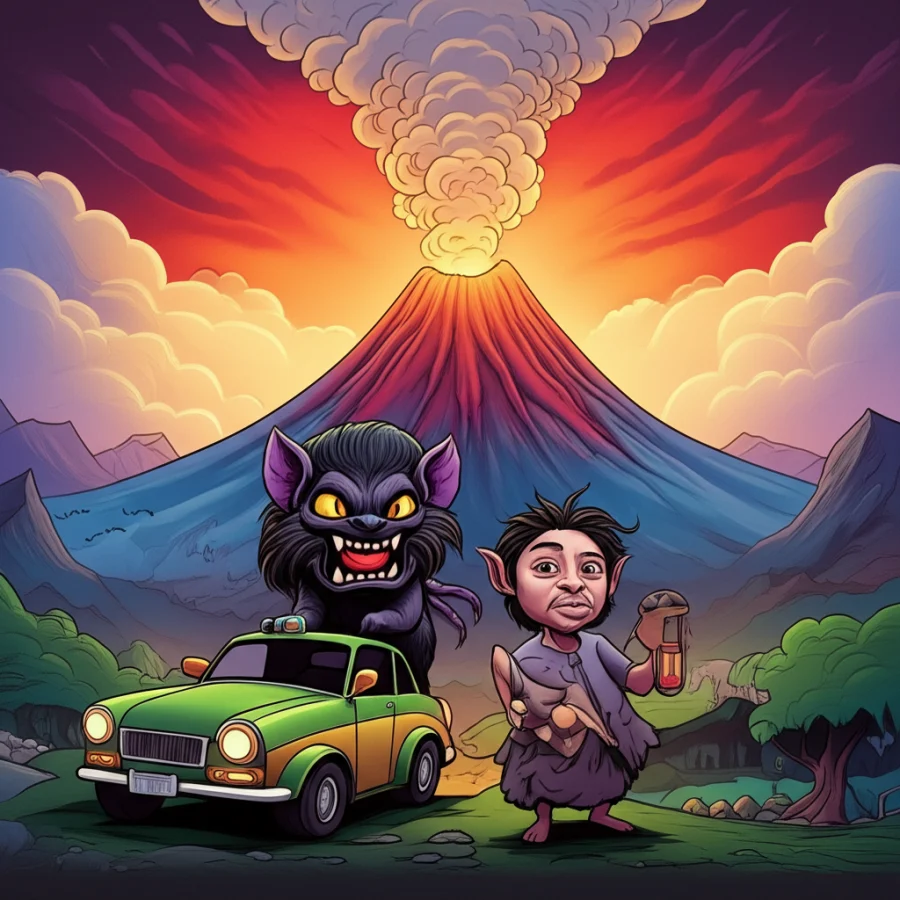
Some versions of the legend suggest that Bakunawa, thwarted in its celestial quest, was eventually cast down or retreated deep within the earth’s core, its frustrated rage causing the very ground to tremble and quake. In the Bicol region, where the land was already alive with the subtle shifts of tectonic plates, this immense, grounded cosmic power needed a release. Thus, from the earth’s fiery womb, driven by the restless energy of the thwarted Bakunawa, rose a majestic, yet fearsome, mountain. This mountain, with its perfect cone and fiery breath, became known as Mayon. It was seen not merely as a geological formation, but as an earthly manifestation of the same immense, potentially destructive cosmic force embodied by Bakunawa. Its eruptions were the mountain’s rage, perhaps a distant echo of the serpent’s own frustrated hunger for the moons, a constant reminder of the fine balance between creation and destruction, beauty and peril, that defined their world. The pristine cone of Mayon, therefore, in this particular legendary interpretation, is a testament to the colossal power that once threatened the heavens, now contained and expressed through the earth itself.
Symbolism and Meaning: Nature’s Lessons
The myth of Bakunawa and its legendary connection to Mayon Volcano is rich with symbolism, offering profound insights into the ancient Bicolano worldview. Bakunawa, the cosmic serpent, symbolizes the primal fear of the unknown, the terrifying potential for chaos to disrupt order. Its cyclical attempts to devour the moon explain the predictable yet unsettling phenomenon of eclipses, representing the temporary triumph of darkness over light and the fragility of peace. The seven moons symbolize abundance, prosperity, and the preciousness of natural light—resources that, once lost, are irreplaceable.
Humanity’s response to Bakunawa’s threat—the collective noise-making—symbolizes resilience, community, and the belief in collective action to avert disaster. It represents the ancient people’s understanding that even against overwhelming cosmic forces, there is power in unity and tradition.
Mayon Volcano, in this context, becomes a multifaceted symbol. It represents the awe-inspiring yet terrifying power of nature, mirroring the cosmic might of Bakunawa in an earthly form. Its beauty and its destructive eruptions speak to the duality of existence, the constant interplay of creation and destruction. The volcano also serves as a perpetual reminder of the celestial struggles, a grounded monument to the cosmic drama that once unfolded. For the ancient Bicolano people, these stories provided not just entertainment, but a moral compass, teaching them respect for nature’s power, the importance of community, and the cyclical nature of life, death, and rebirth.
Modern Perspective: Echoes in Contemporary Culture
Today, the myth of Bakunawa, while no longer a literal explanation for natural phenomena, continues to resonate deeply within Filipino culture. Bakunawa has transcended its ancient origins to become a celebrated figure in modern Filipino fantasy literature, comic books, animated series, and video games. It embodies a powerful and iconic image of a mythical beast, often reimagined as a guardian or a formidable antagonist, providing a rich source of inspiration for contemporary artists and storytellers.
Mayon Volcano, meanwhile, stands as a national icon, its majestic beauty drawing tourists from around the globe. It is a constant reminder of the Philippines’ unique geological landscape and the powerful forces that shape it. The myths surrounding Mayon, including those connecting it to cosmic events, contribute to its mystique, adding layers of cultural and historical significance to its natural splendor. These ancient narratives are now studied in academic settings, cherished as cultural heritage, and serve as a window into the rich imaginative lives of our ancestors, demonstrating how storytelling provided meaning and connection to the world.
Conclusion: A Legacy of Imagination
The narrative of Bakunawa and its legendary link to the origins of Mayon Volcano is a powerful testament to the human imagination’s capacity to explain the inexplicable. It is a cultural story, a beautiful thread woven into the fabric of Bicolano heritage, and not a belief system to be adopted. As Muslims, we recognize with unwavering certainty that only Allah (SWT) is the true Creator and Sustainer of the heavens and the earth, the mountains, and all living things. His power is absolute, and His creation is perfectly ordered, not born from the whims of mythical serpents.
Nevertheless, these ancient narratives hold immense value for cultural, historical, and educational understanding. They remind us of the ingenuity of our ancestors, their deep connection to their environment, and their universal human need to make sense of the world through narrative. Such stories serve as a bridge to the past, preserving the unique worldview of a people and enriching our collective appreciation for the diverse tapestry of human thought and storytelling tradition. They are a legacy of imagination, inspiring awe and wonder, and reminding us of the enduring power of a well-told tale.