
 fufufafa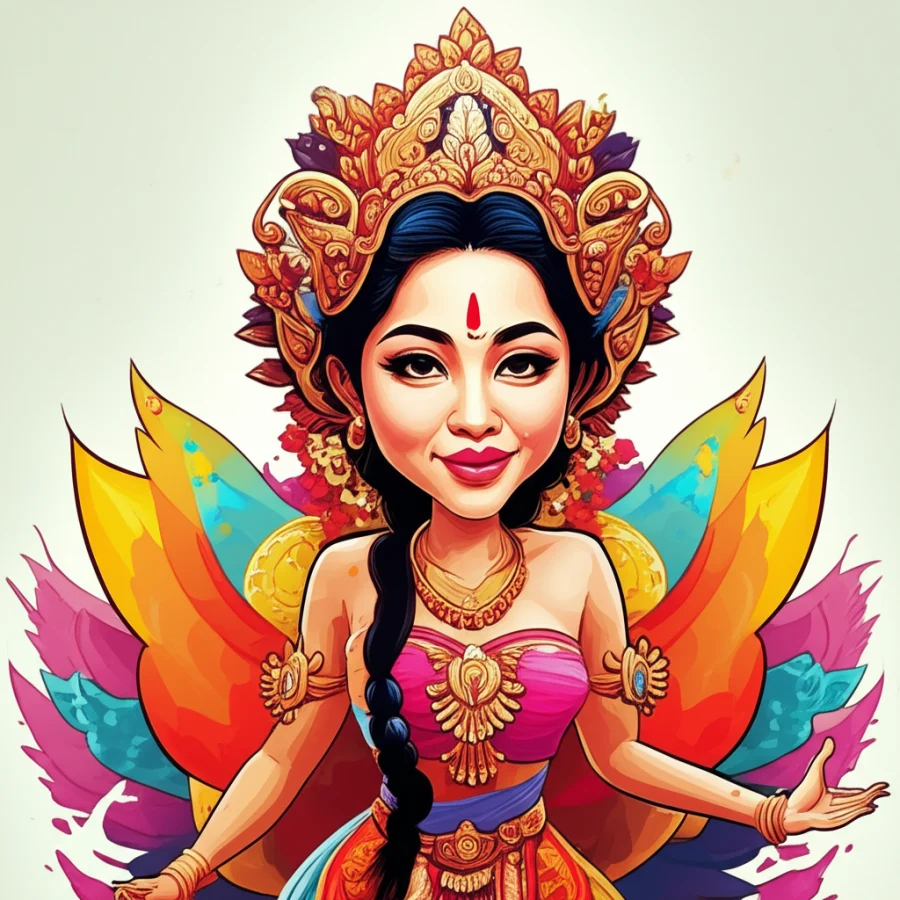
This article delves into a fascinating narrative from the rich tapestry of Indonesian folklore, specifically focusing on the mythical figure of Dewi Sri and an imagined artifact known as the Crown of Pantai Selatan. It is crucial to understand from the outset that this is a traditional story, a product of the ancient imagination and cultural heritage of people from a bygone era, and is presented solely for its cultural, historical, and educational value. It is NOT real, is NOT meant to be believed, worshipped, or practiced, and should be regarded as a work of fiction and symbolic storytelling.
Origins and Cultural Background
The myth of Dewi Sri, the benevolent goddess of rice and fertility, finds its deepest roots in the agrarian societies of ancient Java and other islands of the Indonesian archipelago. Long before the widespread adoption of Abrahamic religions, the people of these lands lived in intimate communion with nature. Their lives were inextricably linked to the cycles of the seasons, the fertility of the soil, and the abundance of their harvests, particularly rice, which was—and still is—the staple food and lifeblood of the region.
In this cultural era, the world was perceived as a vibrant, interconnected web of living forces. Mountains, rivers, forests, and the vast, unpredictable sea were not mere geographical features but abodes of spirits, deities, and powerful unseen energies. The cosmos was a delicate balance, and human prosperity was believed to depend on maintaining harmony with these natural and supernatural realms. People viewed the world through an animistic lens, where every aspect of existence, from a growing rice stalk to a crashing wave, possessed a spiritual essence. Rituals and offerings were common practices, intended to appease benevolent spirits, ward off malevolent ones, and ensure the continued flow of life’s blessings. It was within this worldview, where the sacred intertwined with the mundane, that stories like that of Dewi Sri gained profound significance.
Character Description: Dewi Sri and the Crown’s Symbolic Presence
Dewi Sri
In the ancient imagination, Dewi Sri was not merely a deity but the very embodiment of life, sustenance, and prosperity. She was often depicted as a young, radiantly beautiful woman with golden skin, gentle eyes reflecting the warmth of the sun, and an aura of profound tranquility. Her hands might be shown holding a sheaf of ripe rice stalks, symbolizing her direct connection to the harvest. She was revered as the mother of rice, the source of agricultural abundance, and the protector of the fields. Her presence ensured healthy crops, full granaries, and the well-being of the community. Symbolically, Dewi Sri represented the enduring resilience of life, the promise of renewal, and the gentle, nurturing power of the earth that provides for all. She was a figure of hope, a spiritual anchor for a society dependent on the whims of nature.
The Crown of Pantai Selatan
The "Crown of Pantai Selatan" (Southern Coast) is a conceptual artifact within this narrative, representing the immense, often formidable, power of the deep sea. Unlike Dewi Sri, it is not a benevolent entity but a symbolic object that embodies the untamed, mysterious, and sometimes perilous forces of the ocean. In the ancient worldview, the southern seas off Java were often associated with powerful, unpredictable spirits and a distinct, awe-inspiring realm. The Crown, in this context, could be imagined as an exquisite, ethereal diadem crafted from ancient coral, luminous pearls, and sea-gems that shimmered with the shifting colors of the ocean depths. It was not a physical crown worn by a human ruler, but a metaphor for the dominion and influence held by the sea over the elements—the very rains and waters that nourished the land. Its symbolic attributes would include immense power over currents, storms, and the deep-sea ecosystem, representing the sea’s essential role in the grand balance of nature.
The Main Story: The Quest for Balance
In an era long past, when the sun scorched the earth for months on end and the life-giving rains seemed to have abandoned the land, the rice paddies of Java withered, and the granaries emptied. A profound dread settled upon the people, for without rice, there was no life. Desperate prayers rose from every village, beseeching the heavens for succor.
It was in this time of dire need that Dewi Sri, the beloved mother of rice, felt the suffering of her people deep within her spirit. She saw the cracks in the parched earth, the husks of dying stalks, and the hunger in the eyes of her devotees. Though her essence was tied to the land, she understood that the delicate balance of the world required the harmonious interaction of all its elements—earth, sun, and water. The missing piece, the ancient wisdom whispered, lay with the unpredictable and formidable power of the Southern Sea.
Legend spoke of the "Crown of Pantai Selatan," not a physical crown for a queen, but a profound symbolic artifact that held the very essence of the ocean’s dominion over the waters of the world, including the clouds that brought rain. It was said to reside in the deepest, most mysterious reaches of the southern coast, guarded by the untamed currents and the ancient spirits of the deep. To retrieve its symbolic power, or at least to negotiate for the release of the life-giving waters, was a perilous undertaking.
With a heart full of compassion and a serene determination, Dewi Sri resolved to embark on this unprecedented journey. She left her sun-drenched paddies, her gentle light illuminating her path as she traversed dense forests and climbed craggy hills, moving towards the distant roar of the ocean. As she approached the southern coast, the air grew heavy with the scent of salt and the sound of crashing waves. The waters here were famously turbulent, reflecting the formidable power that lay beneath.
She stood at the edge of the tumultuous sea, a figure of gentle grace against the raw power of nature. Instead of confronting the sea with force, Dewi Sri approached it with reverence and understanding. She spent days communing with the elements, offering her pure energy and expressing the deep-seated needs of the parched land. She did not demand but explained the plight of her people, the imbalance that threatened all life, and the interconnectedness of land and sea.
Slowly, almost imperceptibly, the mighty ocean seemed to listen. The crashing waves softened their roar to a rhythmic whisper. From the shimmering depths, a luminous, ethereal light began to emanate, drawing Dewi Sri’s gaze. It was the symbolic manifestation of the Crown of Pantai Selatan—not an object to be physically taken, but a profound acknowledgment of the sea’s power and its vital role in the cosmic balance. The Crown did not yield its "power" through conquest, but through a spiritual negotiation, a recognition of mutual dependency.
As Dewi Sri absorbed this understanding and offered her own essence of nurturing life in return, a profound shift occurred. The clouds, heavy with moisture, began to gather on the horizon, drawn by the renewed harmony between the realms. A gentle, persistent rain began to fall, first a sprinkle, then a steady shower, revitalizing the land. The rivers swelled, the paddies drank deeply, and the earth, grateful, began to green anew. Dewi Sri, having facilitated this crucial rebalancing, returned to her fields, her presence now stronger than ever, ensuring the promise of abundant harvests.
Symbolism and Meaning
To the ancient people, this story would have represented a multitude of profound truths. Dewi Sri herself symbolized the very essence of life, fertility, and sustenance. Her gentle wisdom and compassionate action underscored the importance of nurturing and interconnectedness over aggression. Her journey to the Southern Coast and her interaction with the symbolic Crown of Pantai Selatan highlighted the crucial balance between the land and the sea, and by extension, between all natural forces. The story taught that even the most formidable powers, like the untamed ocean, could be brought into harmony not through conquest, but through respect, understanding, and a recognition of mutual dependency. It served as a moral lesson about wisdom in leadership, the resilience of life, and the continuous cycle of renewal that governs the natural world. It also offered comfort and hope in times of environmental adversity, suggesting that through appropriate reverence and action, balance could always be restored.
Modern Perspective
Today, the mythical narratives surrounding figures like Dewi Sri and the conceptual power of Pantai Selatan continue to resonate, albeit through a different lens. In modern literature, these myths inspire fantasy novels, poetry, and dramatic works, providing rich characters and intricate world-building elements. In cinema and video games, similar archetypes and magical artifacts are frequently utilized to craft compelling narratives and immersive experiences.
Academically, these stories are invaluable for cultural studies, anthropology, and history, offering insights into the pre-modern worldviews, societal values, and ecological understandings of ancient Indonesian communities. They serve as a testament to the human imagination and the enduring power of storytelling to transmit cultural identity and values across generations. While no longer believed as literal truths, they are cherished as a vital part of heritage, reflecting a profound connection to nature and a sophisticated understanding of cosmic balance that remains relevant in discussions about environmental stewardship today.
Conclusion
The tale of Dewi Sri and the Crown of Pantai Selatan stands as a beautiful example of the intricate, imaginative narratives woven by ancient societies to explain their world and impart wisdom. It is a cultural story, a product of human creativity, and not a belief system to be practiced. As Muslims, we recognize that only Allah (God) is the true Creator and Sustainer, the Giver of all blessings, and the ultimate source of all power and sustenance in the universe.
This narrative, like countless others from diverse cultures, reminds us of the universal human need to understand our place in the world, to find meaning in the cycles of nature, and to articulate our hopes and fears through the timeless art of storytelling. It is a precious piece of cultural heritage, inviting us to reflect on the depth of human imagination and the enduring tradition of sharing stories that continue to enrich our understanding of history and diverse perspectives.







