fufufafa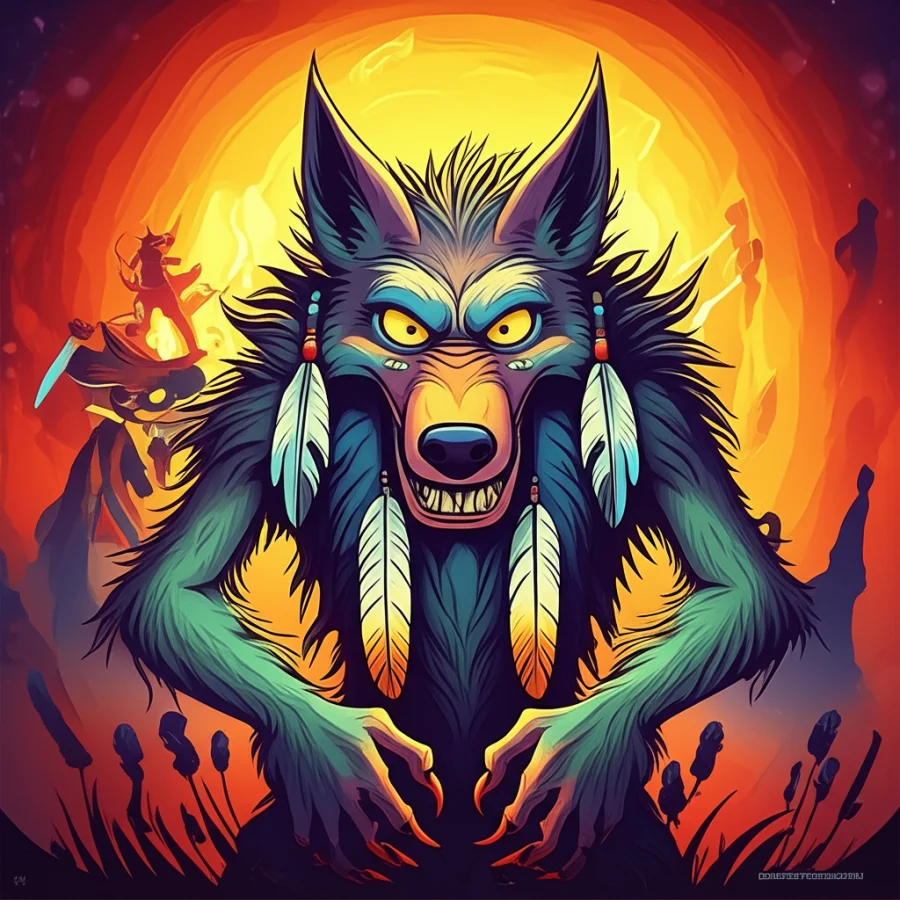
Echoes of the Ancient Land: The Cautionary Tales of Coyote and the Wendigo
An Important Note: The following article explores figures and stories from Indigenous North American folklore. These narratives are part of a rich oral tradition and are presented here for cultural, historical, and educational understanding. They are mythological in nature and are not intended to be regarded as factual accounts or objects of belief.
Introduction
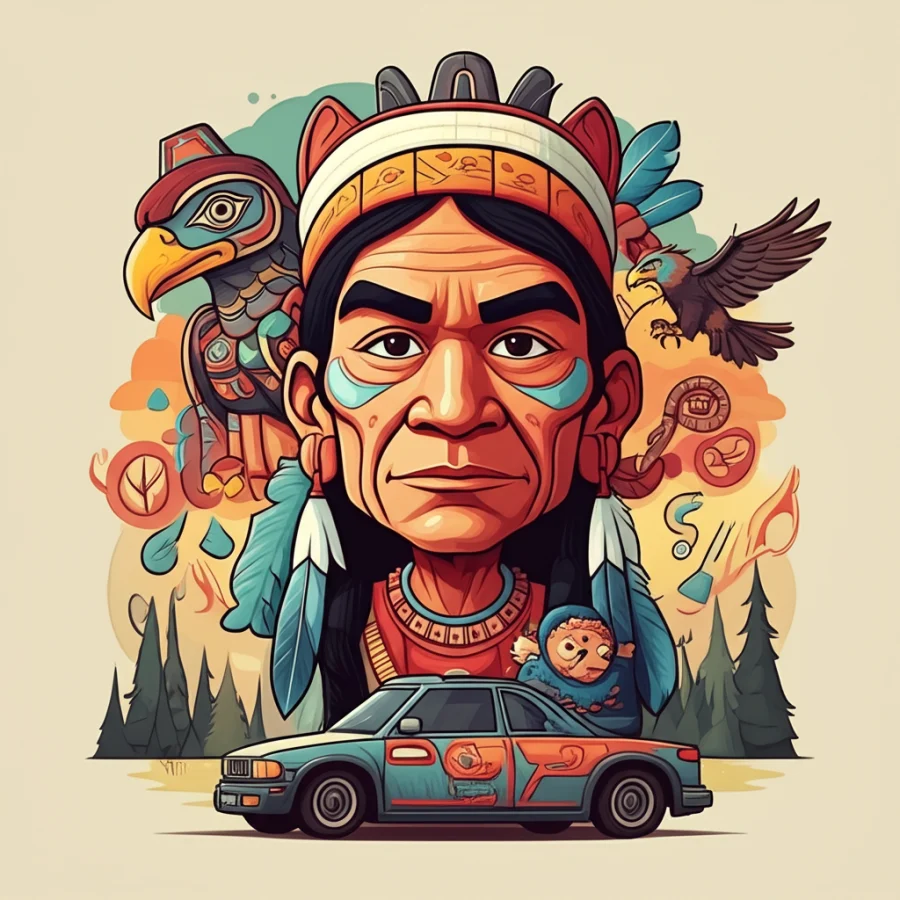
From the sun-scorched mesas of the American Southwest to the frozen forests of the North, ancient peoples developed intricate oral traditions to explain the world around them, to teach moral lessons, and to warn of the dangers that lurked both in the wilderness and within the human heart. These stories, passed down through generations around crackling fires, were the bedrock of culture and survival. Among the most enduring figures from these traditions are the Trickster, often embodied by the cunning Coyote in Navajo (Diné) lore, and the monstrous Wendigo of Algonquian legend. While originating from different cultures and climates, both tales serve as powerful echoes of a time when stories were essential tools for navigating the complexities of life and nature.
Origins and Cultural Background
These myths were born from societies deeply intertwined with the natural world. For the Diné, or Navajo people, of the arid Southwest, life was a delicate balance. Their ancestral lands, known as Dinétah, were a place of stark beauty and immense power, a landscape of canyons, mountains, and desert that demanded respect and understanding. Their worldview was centered on the concept of Hózhó, a state of harmony, balance, and beauty in all things. Actions that disrupted this balance—whether through greed, arrogance, or disrespect—were believed to have serious consequences. Stories, particularly those featuring the chaotic Coyote, were a primary means of teaching the principles of Hózhó and illustrating the repercussions of its absence.
Far to the north, in the vast, cold expanse of the subarctic forests, the Algonquian-speaking peoples faced a different set of challenges. Their world was one of long, brutal winters where starvation was a constant threat. Survival depended not on individual strength alone, but on communal cooperation, sharing, and restraint. In this environment, the greatest social taboo was cannibalism, and the greatest sin was a selfish greed that put one’s own desires above the well-being of the tribe. It was from this deep-seated fear of starvation and social breakdown that the legend of the Wendigo emerged, a stark personification of the horrors of selfishness.
Character and Creature Descriptions
Coyote (Ma’ii): In Diné and other Indigenous traditions, Coyote is far more than a simple animal. He is a complex, primordial being who embodies contradiction. He can be a creator and a destroyer, a hero and a buffoon, a wise teacher and a foolish student. Often depicted with human-like intelligence and a penchant for mischief, Coyote is driven by his base appetites: hunger, vanity, and impulsive desire. His form is that of a desert canine, but his actions are a reflection of humanity’s own worst tendencies. Symbolically, Coyote is not a figure to be emulated, but a powerful negative example. He represents the chaotic, unpredictable forces in the universe and the folly of acting without wisdom, patience, or respect for order. His stories are a mirror showing the consequences of disrupting harmony.
The Wendigo: The Wendigo is a figure of pure terror, born from the folklore of the Cree, Ojibwe, and other Algonquian peoples. Descriptions vary, but it is typically portrayed as a gaunt, emaciated giant, its skin stretched taut over its bones, with glowing eyes and long, claw-like fingers. Sometimes it is said to have a heart of ice. The Wendigo is the embodiment of insatiable hunger, particularly for human flesh. According to the lore, a person could become a Wendigo by resorting to cannibalism during a famine or by being overcome with extreme greed. Symbolically, the Wendigo represents the loss of humanity. It is a terrifying warning that to indulge in the ultimate act of selfishness is to become a monster, forever consumed by a hunger that can never be satisfied, and forever outcast from the human community.
Main Story: How Coyote Scattered the Stars
The old stories tell of a time when the world was new and the sky was a black, empty blanket. The Holy People, the sacred figures of the Diné creation narratives, gathered to bring order to the cosmos. They had a deerskin pouch filled with glittering, crystalline stars, and they began their work with great care and deliberation.
First, they placed the North Star, the fixed point around which all else would turn. Then, with thoughtful precision, they began arranging constellations, each with its own story and purpose—the warrior, the council of elders, the great serpent. Each star was placed to provide a map for travelers, a calendar for planting, and a source of guidance and wisdom for the people who were to come. The work was slow, meticulous, and sacred.
Watching from the shadows was Coyote. As always, he was impatient. He saw the slow, careful work of the Holy People and grew bored. "This is taking too long!" he grumbled to himself. "What is the point of all this careful placing? A star is a star! The sky needs light, and it needs it now!"
He crept closer, his eyes gleaming with a mischievous idea. While the Holy People were absorbed in their delicate task, Coyote darted forward, snatched the pouch of remaining stars, and with a triumphant yelp, flung its contents into the air.
The countless crystals of light sprayed across the heavens in a chaotic, milky smear. They settled where they fell, with no pattern, no order, and no purpose. The meticulous constellations of the Holy People were now lost amidst a jumble of random, glittering points.
The Holy People looked up in dismay. The sacred order they had been creating was irrevocably disrupted. Because of Coyote’s impatience and arrogance, the night sky would forever be a mix of deliberate design and beautiful chaos. And so, the stories say, when you look up at the Milky Way, you are seeing the result of Coyote’s impulsive act—a timeless, celestial reminder of the consequences of disrespecting wisdom and sacred work.
Symbolism and Meaning
For the ancient Diné, the story of Coyote scattering the stars was more than a simple explanation for the appearance of the night sky. It was a profound moral lesson. Coyote’s actions represented a rejection of Hózhó—the principles of order, balance, and careful thought. His impatience and desire for instant gratification led to a permanent change in the cosmos. The tale taught listeners the importance of patience, respect for tradition, and the understanding that some tasks require deliberation and wisdom. It warned that impulsive, selfish actions can have far-reaching and irreversible consequences.
Similarly, the Wendigo narrative was a powerful tool for reinforcing social cohesion. It was not just a monster story to scare children; it was a parable about the dangers of greed and individualism in a communal society. The transformation into a Wendigo was the ultimate consequence of putting oneself before the group. The story served as a constant reminder that sharing resources, practicing restraint, and maintaining one’s humanity, even in the most desperate of times, was the only way for the community to survive.
Modern Perspective
Today, these figures live on, though their forms have often been altered. Coyote continues to be a central character in contemporary Native American literature and art, used by authors like Thomas King and Sherman Alexie as a vehicle for social commentary, humor, and a critique of modern life. He remains a symbol of resilience and survival, adapting his tricks to a new world.
The Wendigo, on the other hand, has been largely appropriated by mainstream horror. It appears in movies (like Antlers), television shows (like Supernatural), and video games (like Until Dawn), often stripped of its original cultural context and moral significance. In popular culture, it is frequently reduced to a generic monster, its deep symbolic meaning as a warning against greed and social decay lost in favor of simple scares. This modern interpretation highlights the difference between a story that serves a cultural purpose and one that is used purely for entertainment.
Conclusion
The tales of Coyote the Trickster and the monstrous Wendigo are powerful artifacts of human imagination, born from the unique environments and worldviews of the Navajo and Algonquian peoples. They are not accounts of real beings but are instead rich, symbolic narratives designed to teach, to warn, and to make sense of the world. They remind us that for millennia, storytelling has been a fundamental way for humanity to codify its values, grapple with its fears, and pass wisdom from one generation to the next.
As Muslims, we recognize that only Allah is the true Creator and Sustainer, and the universe and all its workings are by His design alone. These mythological stories, therefore, are viewed not as competing truths, but as fascinating examples of human culture and the timeless tradition of storytelling. They are echoes from a distant past, offering a valuable window into the history, beliefs, and enduring imagination of the people who first told them.